
It’s bad enough that the retail industry took a major hit in recent years from online shopping venues (and, largely, survived); now, it’s taken yet another blow with COVID-19 closed stores designated as nonessential for months. Then add in the looting and boarding up that took place in many metropolitan areas as a result of protests related to the death of George Floyd and the opportunistic thieves who sought to profit from the situation.
As rolling phases of re-opening take place across our country, there is so much information available regarding best practices and safety protocols that it could make one’s head spin. How does a retailer determine what protocols to put in place for the safety and protection of their employees and the general public? I won’t pretend to have all the answers in this piece, but I will lay out some of the challenges and some of the solutions that have been put in place to overcome them. In the end, every retailer has the responsibility to put together their own safety plans and do what they can to survive in this challenging world.
Employee Safety
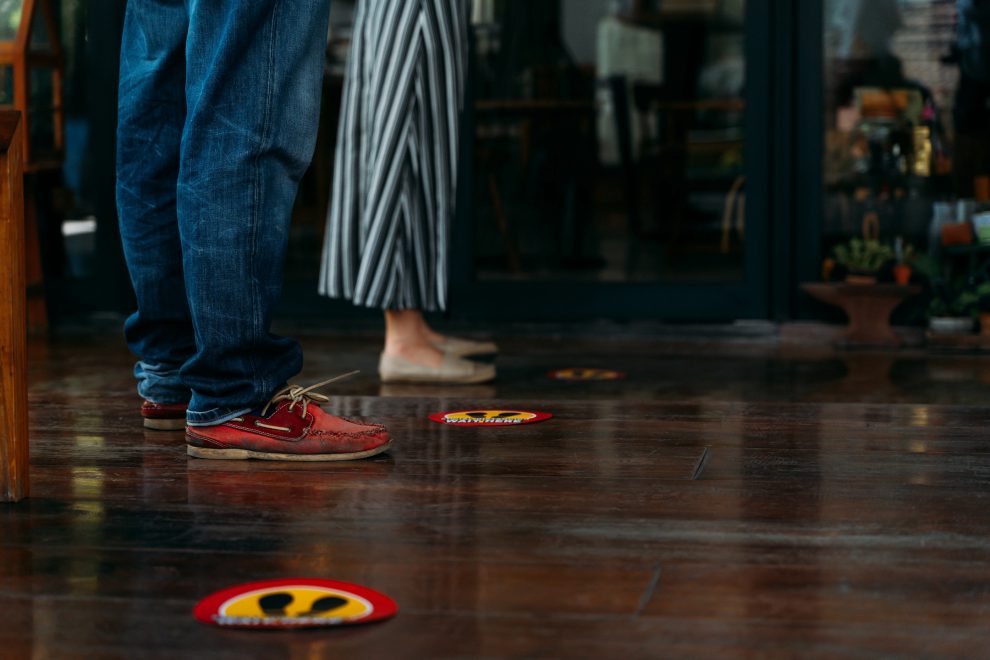
First and foremost, employers must be concerned for the safety of their employees, not just for obvious reasons, but for insurance and liability reasons as well. That means ensuring there is space and ability for social distancing. Some employers may need to screen their employees daily, including performing temperature checks. Finally, guidelines need to be set up for customer interaction.
Customers
Customer safety is paramount for the successful reopening of retail businesses. Customer screening seems only to be happening when direct physical contact, such as in nail or hair salons, is necessary. In some circumstances, venues are requiring guests to sanitize their hands upon entry. I have even seen facilities that ask customers to lift their feet and spray disinfectant on the soles of their shoes, but I am not sure of the benefits of that practice.
Point of Sale
Most retail businesses have quickly adopted safe POS transaction areas with plexiglass screens or other types of barriers, and this has greatly reduced the risk at the point of check-out. Some retailers have resorted to accepting non-cash transactions only in order to limit any hand-to-hand transactions.
Fitting Rooms & Restrooms
Fitting rooms and restrooms require constant sanitizing above and beyond daily maintenance. Some retail businesses bring in outside services for this, while others use existing staff . Some have limited occupancy of their restrooms to one customer at a time. Some smaller retailers have closed their fitting rooms.
Some retailers that have fitting rooms spray a disinfectant in them between customers. Normally, this would not be acceptable as the only form of disinfecting, as it does not allow enough dwell time of the product on surfaces to actually kill a virus. However, if they are performing a more thorough disinfecting process daily, some could argue that this is better than doing nothing in between customers.
In my opinion, it is not better than nothing; it is worse. It does not do an effective job of disinfecting the surfaces in the room and in fact subjects shoppers to even more of a chemical that we are all exposed to way too much at this time, with little or no benefit.
Merchandise
Merchandise becomes the retailer’s biggest challenge. For starters, the whole reason that the brick-and-mortar retail industry still exists (as opposed to the online experience) is that it allows the customer to see, feel and try on the item before buying it. But many items cannot be disinfected or they will no longer be “new.” Even worse, the disinfectant may damage the item. I have seen one retailer display a box of rubber gloves with a sign reading, “Feel free to touch the merchandise, but please wear gloves while doing so.”
There is no doubt that the new world we live in does contain challenges for all industries and facets of life. For retailers, the challenges are more pronounced. However, it is both my opinion and hope that the retail industry will adapt to and overcome these challenges.