
Design-build, a process in which a project owner contracts with a single company to coordinate both construction and design, has become the most widely-used delivery method for new projects. FMI Corporation reports that design-build is anticipated to account for 44% of construction spending from 2018-2021. The rate of adoption increases each year as owners, general contractors, architects, designers and other project partners see the advantages.
But what are the benefits of design-build, and should all projects use this delivery method? Here are the top factors when considering whether to use design-build for your next project.
Single Point of Contact
Design-build allows owners to communicate with a single, fully-integrated entity, streamlining communication and improving management ease. It creates a much simpler experience for owners by reducing the miscommunication that can occur when an owner is working with several separate entities with varying points of view. Having a single point of contact is so valuable that after owners complete their first design-build project, it’s often their preferred method for subsequent ventures.
Increased Collaboration
Design-build ensures the general contractor, architect, designer and subcontractors are all on the same team from the preconstruction and planning phases through to completion. In contrast, other delivery methods often bring in each project partner at various times, which can result in conflicting visions and may necessitate some negotiation to align on the ultimate plan. In some cases, the builder or architect may even need to adjust or redo previously completed work, as a plan may not have been agreed upon prior to work commencing. By going through the planning process together, it often allows materials to be produced earlier than in other methods. This helps save on raw material costs, which is a significant benefit to the overall budget.

One project where this increased collaboration was particularly important was C.W. Driver Companies and Miller Hull Partnership’s work on the county of San Diego’s new East County and Archives Office in Santee, California — the nation’s first zero-net energy archive facility. Special attention was needed to ensure a climate-controlled space suitable for storing delicate documents from the 1800s as well as a letter from President Abraham Lincoln granting land to the Mission San Luis Rey de Francia.
Achieving zero net-energy status relied on careful energy modeling and a collaborative approach among project partners and with the County of San Diego, which could have been challenging without the design-build delivery model. The team worked together using a “reduce before you produce” methodology, focused on minimizing energy usage, so less renewable generation is necessary. This encompassed a 252-kWh per year photovoltaic system as well as a combination of passive systems, such as strategic building orientation and natural ventilation, high-efficiency envelope and mechanical systems, lighting power reductions, plug-load reductions and operational changes to reduce energy consumption by the end-user. In addition, the facility uses bioswales — a vegetated stormwater management system — to reduce runoff and improve water quality.

Shortened Timeline
According to the Design-Build Industry Association (DBIA), design-build projects are delivered 102% faster than traditional design-bid-build (DBB) and 61% faster than construction manager-at-risk (CMR). The shortened timelines of design-build are an immense benefit to owners, as it helps cut costs and ensures the property can open and start generating a return sooner.
Reduced Risk
Design-build ultimately reduces the risk for owners, as they are contracted with one company that is solely responsible for the project. The lead firm is responsible for its own actions and employees, and those they have contracted. Paperwork, billing and other administrative items need to be coordinated with just one company. It also allows owners to manage and negotiate fewer contracts.
Lower Cost
Based on research published by DBIA, design-build projects are 1.9% less expensive than CMR and 0.3% less expensive than DBB on a cost-per-square-foot basis. Design-build projects also see 2.4% less cost growth than CMR, and 3.8% less than DBB. These savings are significant, and prove the efficiencies generated by this delivery method.

Project Type
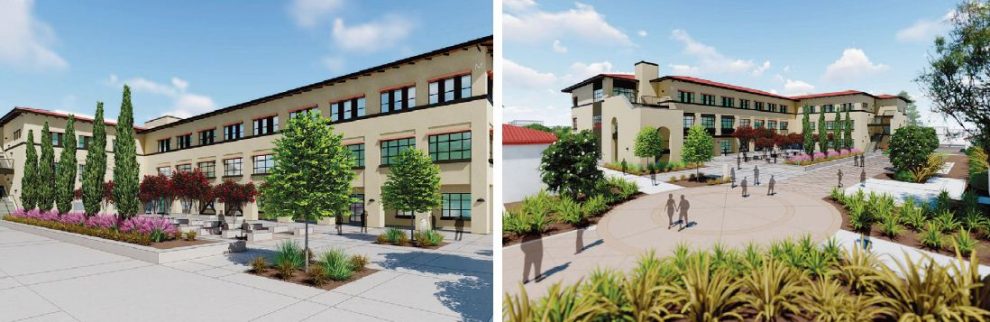
While design-build has a multitude of benefits, it’s important to evaluate the project at hand before deciding on a delivery method. Recently, C.W. Driver Companies broke ground on the first design-build project funded by the state of California — a $48.2 million, 94,426-square-foot multidisciplinary facility for Long Beach City College. The college specified a design that nods to the historic character and Spanish colonial revival style of the college’s Liberal Arts Campus, while simultaneously introducing contemporary elements.
These design specifications are typical for higher education projects, as buildings are almost always incorporated into an existing campus master plan. Because of this, education projects can be particularly well suited to design-build because the architects and designers execute on a set framework. Less back-and-forth is needed with the owner, so going through a single point of contact can work extremely well. In projects where the design is up for interpretation or needs to be created from scratch, design-build can still work, but owners may want to consider how much contact they’d prefer to have with the designer. If it’s a priority to choose the designers and work closely with them on an ongoing basis, owners may want to look into other delivery methods.
The design-build delivery method has a host of benefits for owners and project partners alike from cost and time savings to improved collaboration and reduced risk. It may not be right for every project, but for many it can significantly improve the experience of bringing a project to fruition.
Chris Myers is senior project manager at C.W. Driver Companies, a builder serving California since 1919. He is responsible for the oversight and success of projects. He can be reached at cmyers@cwdriver.com.