More than 50 years after we celebrated the very first International Earth Day, the world is a changed planet, one that continues to work to overcome a global pandemic and one that is more aware and awakened than ever to the realities of climate change. There has never been more clarity on what is needed to create a sustainable world or understanding of the implications for those who shape the built environment. In fact, over the last several years, a noticeable step change in what is expected of spaces and places has been unfolding.
The role that the built environment plays in the fight against climate change is clear (it accounts for almost 40% of global emissions), and the part it plays in keeping people healthy has never been more understood. In short, people expect more of buildings.Few companies understand the benefits of clean buildings better than JLL, a leading professional services firm specializing in real estate and investment management and a Fortune 500 firm with annual revenues of $19.4 billion.
JLL has pledged to achieve net zero carbon emissions within its own global operation by 2040. As a signatory to The Climate Pledge, the company ranks alongside Amazon and Global Optimism in committing to being net zero by 2040 and is a proud participant in the World Green Building Council’s Net Zero Carbon Buildings Commitment. The company is partnering with investors and organizations globally to deliver smart and sustainable design, innovative technology and health and well-being solutions that won’t cost the earth. To date, it has achieved 295 sustainable building certifications for clients.
As it accelerates towards its own net zero goal, JLL Project and Development Services recently secured both LEED Gold (Leadership in Energy and Environmental Design) and Fitwel certification for the company’s new office at 1 Station Place in the First Stamford Place complex in Stamford, Connecticut. The achievement brings the number of JLL corporate offices worldwide with sustainable building certifications to 79 and highlights the company’s efforts to lead the real estate industry into a healthier and more environmentally sustainable future.
The Stamford project serves as a platform to showcase the workplace strategies JLL advocates for its clients while increasing the appeal of the 1 Station Place space for the firm’s Stamford team.
Thought leadership is central to JLL’s culture. Creating our offices at 1 Station Place gave us the opportunity to walk our talk while adhering to JLL’s core values for a sustainable future. We have executed a strategy that we advise our clients to follow, and the result has been a tremendous success in terms of sustainability and in inspiring our workers and clients.
Working hand-in-hand with experts from JLL’s Energy and Sustainability team, led by senior project manager Hrisa Gatzoulis, LEED AP, Well AP, every aspect of the office transformation was guided by best-practices in the kind of resilient and responsible environmental design that are helping accelerate the world’s acceptance of green practices. To achieve the 60 LEED points required for
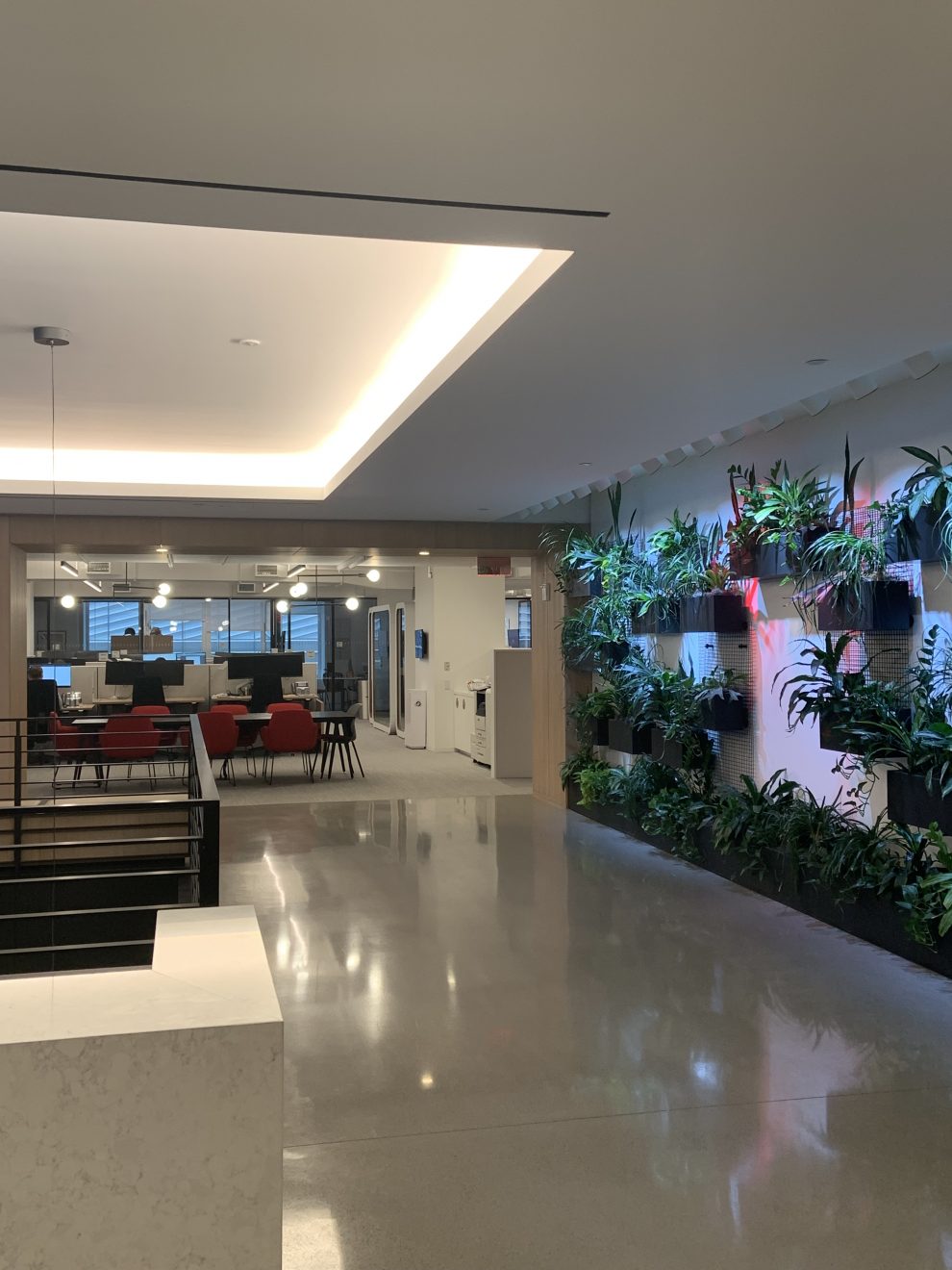
Gold certification at 1 Station Place, JLL repurposed the approximately 12,000-square-foot space on the building’s ground floor previously occupied by the management office for landlord Empire State Realty Trust and a vacant pre-built unit. JLL pursued pragmatic and quantifiable green building design, construction, operations and maintenance solutions at 1 Station Place that included low-flow water fixtures to reduce annual water consumption, 100% LED lighting, Energy Star-rated equipment and comprehensive waste and recycling programs. An open layout created a variety of work settings while helping foster teamwork and interaction, and natural light was maximized with floor-to-ceiling windows and 18-foot ceilings.
To secure accreditation from Fitwell — a certification to support healthier workplace environments and improve occupant health and productivity — JLL employed a range of strategies at 1 Station Place, from the provision of active workstations to indoor air-quality control, as well as walkable amenities including outdoor space, fitness facilities and a wellness room for activities such as nursing.
Fulfilling JLL’s vision of a healthy, sustainable workplace was much simpler than many of our clients may expect. The incremental cost and effort were insignificant, while the resulting enthusiasm of both staff and visitors, and the enhanced attendance and productivity that resulted, are invaluable. The focus on the well-being of building occupants is part of the global transformation underway to create better and more productive workspaces, and this project in particular spotlights the importance of leveraging the expertise of people both within and without your organization to combine the best of real estate, technology and sustainability solutions to create positive workspaces.
JLL last year launched Sustainable Operations, the real estate industry’s only technology-enabled, end-to-end sustainability service developed to help companies configure, launch and manage portfolio-wide sustainability programs aligned with their sustainability commitments. Together with its Work Dynamics platform, the company is meeting organizations where they are on their journey, whether that’s their first environmental, social and governance goal, or a demonstration of their leadership in inspiring places.
Occupiers and investors are starting to translate their green intent into ambitious sustainability targets and the industry is reaching a real tipping point on how to drive the decarbonization of the built environment. However, JLL found that 96% of its top 500-plus global clients have set ambitious, publicly stated sustainability goals — but only 19% have a clear sustainability action plan with committed spend to achieve those goals.
As people demand more of the built environment, our action-oriented and designed platform is designed to help organizations reach their sustainability goals more cost-effectively and efficiently and, one space at a time, we are working to galvanize the industry into action that will ultimately normalize sustainability in the built environment.