
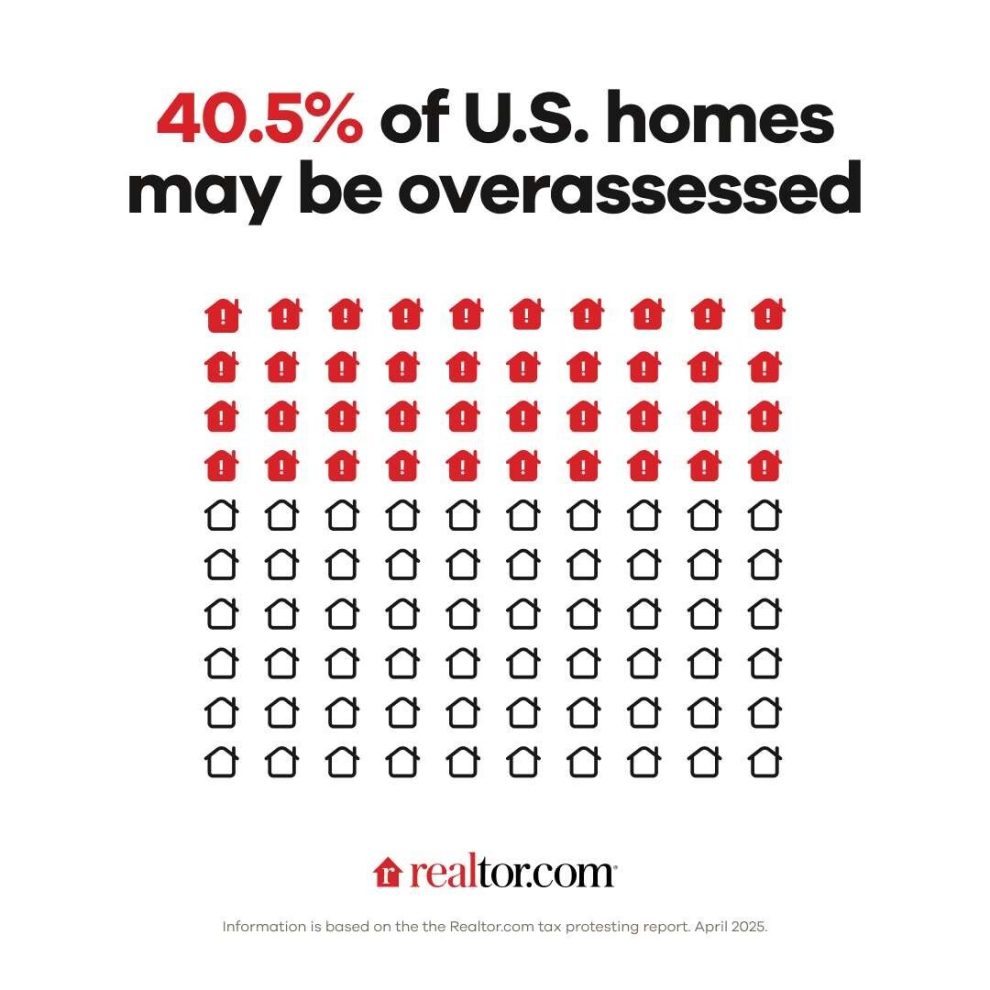
Many homeowners could be overpaying their property taxes and not even know it. In fact, 40.5% of properties in the U.S. may be overassessed, according to a new Realtor.com Property Tax Report. Now, the organization has introduced a tax protesting resource to its platform to help homeowners get the evidence they need to challenge over-assessed property values.
“Most homeowners don’t realize they can protest their property taxes, and even fewer know how to do it,” said David Masters, senior director of product at Realtor.com. “We built this resource to simplify what has traditionally been a confusing and intimidating process. By integrating it into the My Home dashboard, we’re giving homeowners a clear view into what they might be overpaying, equipping them with solid evidence and making it easy to take action. Our goal is to help people feel more confident navigating the protest process and potentially save money.”
A Realtor.com analysis found that over 40% of U.S. homes are potentially overassessed to the point that the owner could save $100 or more by protesting. The median potential savings is $539 per year, equivalent to more than 15% of the average property tax bill. Some states offer especially high opportunities for tax relief.
The median property tax bill in the U.S. climbed to $3,500 in 2024, a 2.8% increase from 2023. This uptick is largely due to rising home values, with median assessed values increasing by 2.0%, alongside changes in local tax rates.
In states like California, long-standing caps on annual assessment increases have created significant variation between similar homes, which makes it more complicated to collect comparable properties because neighbors might be locked into an old assessment. This can inflate the number of properties that look like they are overassessed. Meanwhile, Texas and Illinois, with their relatively high effective tax rates, offer even small-assessment adjustments that result in major savings.
With homeownership costs rising, property taxes are often overlooked, despite being one of the most significant recurring expenses homeowners face. This resource is designed to shine a light on the hidden costs of over-assessment while educating users and making the tax protest process approachable and actionable to millions of Americans who could benefit from it.
Home owners will be able to estimate potential savings, access downloadable evidence and use market comparisons to build a case.
The tax protesting resource is now available on desktop, mobile web, iOS and Android for all homeowners who claim their property through Realtor.com.