
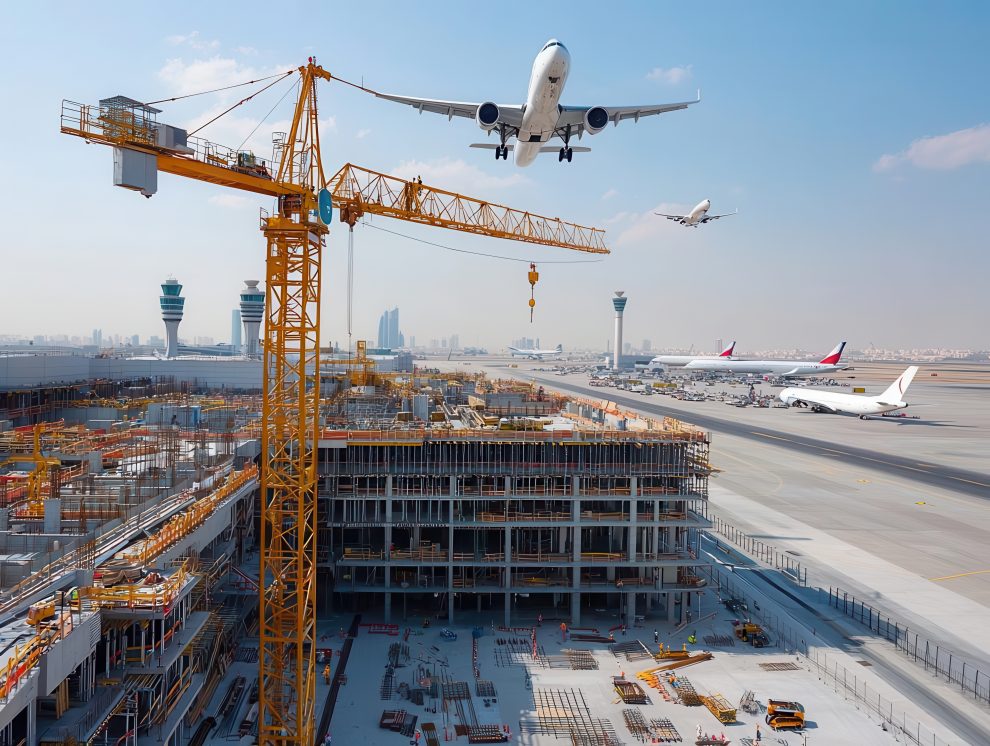
Air traffic keeps climbing, and terminals built for a smaller era are under constant pressure to expand and modernize.
The one thing an airport cannot do is close for construction. That leaves the general contractor who wins the bid with a hard assignment: build inside a facility that never stops, on the airport’s schedule, in full view of every traveler. As more of these projects head to bid, specialists at Temporary Wall Systems are helping teams think through how to contain airport work without slowing the terminal or the job.
“When an airport hands out a renovation contract, the building never stops working, and neither can the people moving through it,” said Patrick Kiessling, president of Temporary Wall Systems. “The contractor who wins that bid has to build inside a live terminal, on the airport’s schedule, in front of every traveler. Containment is what makes that possible and handing it to a provider that manages the whole thing keeps their crew on the work that actually finishes the job.”
Why Airport Renovations Can’t Wait for a Closure
Unlike an office buildout or a retail refresh, an airport runs around the clock, and shutting a concourse to work in peace is rarely an option. With more terminals moving toward modernization, the volume of live-facility construction is rising. That puts a premium on separating active work zones from occupied terminal space quickly, cleanly and without narrowing the paths passengers and security depend on.
What Contractors Should Weigh Before They Break Ground
On an airport job, the containment plan shapes the schedule as much as the scope does. Before mobilizing, contractors should think through the full picture:
- Plan Containment Around Passenger Flow: Work zones sit close to active gates, walkways and security lines, so containment barriers must maintain egress without cutting into the sightlines travelers and TSA rely on.
- Account for Speed Between Phases: Airport work moves in tight, off-peak windows and phased sections, so containment that installs and reconfigures fast keeps a crew from losing a shift to building and tearing down barriers.
- Separate Renting a Product From Renting a Solution: Renting panels alone still leaves a crew to install, maintain and remove them. A serviced model, like Temporary Wall Systems, that includes design, installation, maintenance and removal takes much of that labor and liability off the contractor and allows the crew to focus on work that moves the project forward.
- Prioritize a Finished Appearance: The terminal is the airport’s storefront, so a clean, professional barrier protects the passenger experience the client is measured on rather than leaving the space looking like a jobsite. A neat construction space provides a great client experience that reflects well on the general contractor.
- Factor in Dust, Air and Noise Control: Occupied terminals carry strict air-quality and noise expectations, so containment has to actually seal the work, not simply screen it from view.
- Confirm Who Carries Compliance: Airports layer life-safety and security requirements on top of standard code, and full-service providers maintain current, code-compliant systems so the internal crew is not tracking it all.
Why a Live Terminal Demands More Than a Barrier
An occupied airport gives a contractor almost none of the working conditions a vacant site would. The building has to keep functioning while construction happens, which means containment has to go up fast, adjust as scope shifts and take work off the crew rather than add to it. Because a full-service provider handles (delivery), installation, reconfiguration and removal, the contractor keeps skilled labor on the core scope and gets more predictable costs, with pricing set before work begins and no separate storage or transport surprises.
“On a live airport, there is no after-hours in the way most jobsites have it,” said Kiessling. “The work happens in short windows around the operation, so contractors need containment that goes up fast, comes down clean and adjusts as the phases move. That is the difference between keeping a schedule and chasing it.
Temporary Wall Systems has helped teams maintain clean, safe, functional spaces during construction across public transportation, healthcare, hospitality, education, retail and other commercial settings. For more information on turnkey containment rentals, visit tempwallsystems.com/.