
The 485-x program, formally known as Affordable Neighborhoods for New Yorkers, replaced 421-a as New York City’s tax exemption for new rental construction. According to the New York City Department of Housing Preservation and Development (HPD), the program was enacted on April 20, 2024. It applies to projects commencing between June 15, 2022 and June 15, 2034, with completion required by June 15, 2038.
Local coverage over the past year has focused on developers capping projects at 99 units to bypass the wage mandate entirely.
According to The Real Deal this spring, “A push for 485x reform is coming from both sides: Developers and their lobbying groups want the wage standard weakened and Gary LaBarbera, head of the Building and Construction Trades Council of Greater New York, wants it strengthened.”
More recently, the publication reported union leaders calling out developers for confi guring multi-building sites with shared walkways, facades and amenities while keeping each certificate of occupancy capped at 99 units to escape the $40-plus-per-hour wage mandate.
“With such a polarizing bit of legislation causing controversy it’s important to fully understand the construction wage requirements – particularly which projects they apply to, and the consequences of noncompliance,” said Robert Rahmanian, co-founder of Real New York, a full-service brokerage with 3,000 units in the pipeline, many subject to 485x.
How the Exemption Works
When new construction replaces a vacant lot or existing building, the New York City Department of Finance reassesses the property, usually well above its prior value. Since property tax runs off assessed value, 485-x exempts some or all of that increase for a set term, though the land’s pre-construction value stays taxable throughout.
Under Real Property Tax Law Section 485-x, the benefi t is as-of- right: a project meeting one of fi ve options qualifi es automatically, and HPD confirms eligibility rather than approving it. In exchange, developers commit to an affordable, rent-stabilized unit set-aside and above certain unit counts, a construction wage floor, both for the life of the benefit.
The five options scale by size and location, as detailed in Table 1 below.
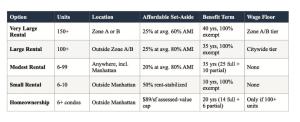
Table 1. Comparison of the fi ve 485-x program options.
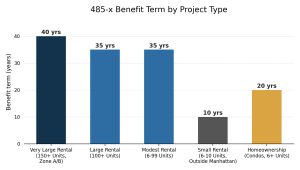
Exhibit 1. 485-x benefit term by project type.
The Wage Floor Structure
The wage requirement marks the sharpest break from 421-a’s single site-wide average: 485-x sets a trade-by-trade fl oor, measured against whichever rate is highest and capped, and the figure includes benefits and supplements, not just cash pay.
Projects with 100 or more units, anywhere in the city, face a wage-and-benefit floor that started at $40.00/hour and rises 2.5% each July 1, reaching $42.03 in 2026. At 150 or more units in Zone A (Manhattan below 96th Street, Long Island City/Hunters Point, Williamsburg/Greenpoint), the cap is the lesser of $76.11/hour or 65% of the prevailing trade rate. In Zone B (parts of Astoria, Queensbridge and several Brooklyn neighborhoods), it’s the lesser of $66.19/hour or 60% of prevailing.
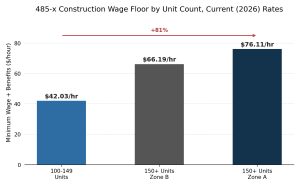
Exhibit 2. 485-x construction wage floor by unit-count tier, current (2026) rates.
Covered workers now include materials and equipment haulers, and projects above 100 units inherit public-works rules from NY Labor Law §§220 and 220-b: an eight-hour day, five-day week, mandatory subcontractor language, apprenticeship ratios and advance Comptroller reporting.
The 99-Unit Threshold
For buildings with fewer than 100 units, none of these rules apply. According to Bloomberg, that cliff has driven a documented trend toward 99-unit buildings, since staying under it avoids the wage mandate entirely.
MaryAnne Gilmartin, founder and CEO of MAG Partners, is a case in point: she once envisioned a pair of 400-unit rental towers on a New York City lot but is now considering as many as six smaller buildings to sidestep the wage mandates.
The wage requirements “are a huge burden,” Gilmartin told Bloomberg. “We’ll build less housing, less quickly, and it’s less financially viable. Frankly, we just have less ability to address this housing crisis.”
The math compounds the incentive. A 99-unit project sets aside 20% of its units as affordable but gets a full exemption for only 25 of its 35 years. Crossing to 100 units raises the set-aside to 25% but extends the full exemption across the entire term. For many projects, that trade-off is not worth the added wage cost.
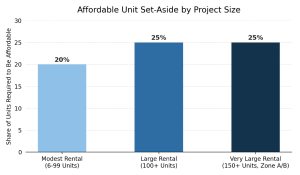
Exhibit 1. 485-x benefi t term by project type.
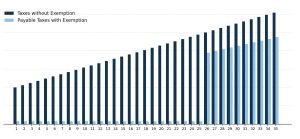
Exhibit 4. Illustrative payable-tax comparison, with and without exemption, for a hypothetical 99-unit Modest Rental project over the benefit term.
Splitting sites carries its own costs: elevators, cores, lobbies and life-safety systems don’t get cheaper per unit in a smaller building, so per-unit construction costs rise even as wage expense falls. The Real Deal reports developers criticizing 485-x for encouraging this fragmentation over production at scale.
Commercial Observer and The City both report the pattern has done little for the city’s broader housing shortfall. The tax break’s affordable-housing and wage goals have been flipped by workarounds, resulting in fewer apartments and lower pay.
“It feels very counter to the overall goal of what we’re trying to achieve here,” one critic noted to The City. A brokerage estimate cited by the publication found that more than 5,000 separate 99-unit buildings would be needed to close New York’s housing gap this way alone.
Enforcement and Noncompliance
The New York City Comptroller enforces compliance. Projects with 100 or more units must notify the Comptroller and HPD at least three months before construction begins. Missing that filing brings a $5,000-a-day fine and can forfeit the benefit outright. Once underway, contractors must post a wage notice, submit certified payroll and keep records for six years after completion.
Per the Comptroller’s rules, three uncured wage violations within five years can trigger termination or recapture of a project’s benefits. A confi rmed violation proceeds through a subpoena, a back-pay calculation with interest and a settlement window before unresolved cases reach a hearing at the Office of Administrative Trials and Hearings.
As law firm Rosenberg & Estis has noted, HPD approval and wage compliance are separate tracks: an approved project can fall out of compliance later, and the obligation follows the property through a sale.
“The 485-x program trades a longer tax exemption for permanent affordability and an annually rising wage floor,” Rahmanian said. “Which option fits a site depends on unit count and location, and the 2034 and 2038 deadlines don’t move withthe market. Because the wage floor escalates every July, labor budgeting on a multi-year build stays a moving target.”
ALL CHARTS COMPILED EXCLUSIVELY BY REAL NEW YORK BASED ON THE FIRM’S DATA, POLICY AND RESEARCH