
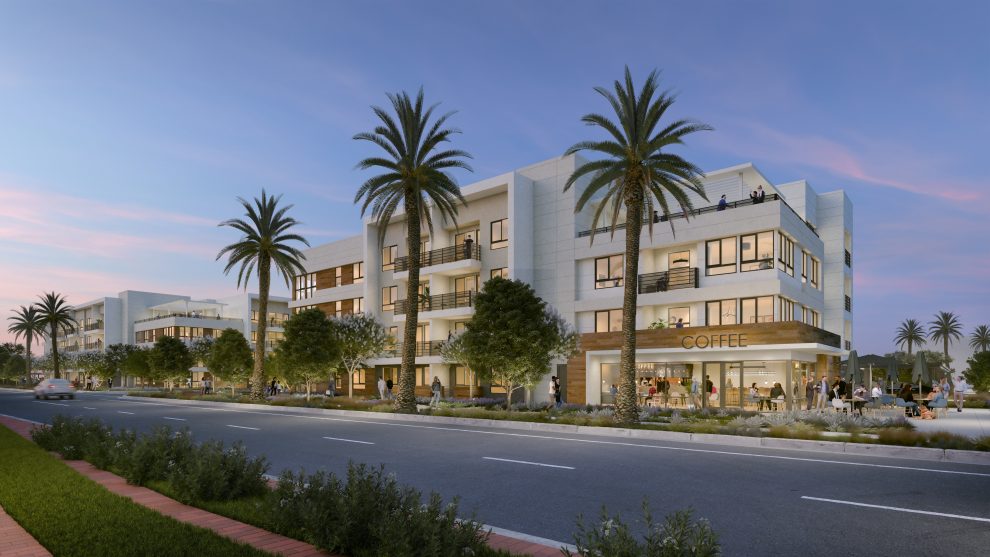
Following what the industry dubs a “retail apocalypse” with the closing of numerous brick-and-mortar retail stores, especially those of large chains and department stores worldwide, many shopping center owners and operators are looking to breathe new life into their properties by repositioning them through the introduction of new uses, including multifamily, hospitality, healthcare and industrial. While many of the nation’s largest shopping center owners and operators (Simon, Westfield, Kimco Realty, Regency Centers) have already been assessing the viability of repositioning their existing assets over the past five to 10 years, many retail property owners with smaller portfolios have yet to consider the potential of retail repositioning.
With a lack of resources and commercial real estate expertise, multi-generational owners and investors of smaller retail properties and neighborhood strip centers often find the challenges of property redevelopment daunting. They may find it difficult to see a clear path forward as they consider options to transform their retail centers into successful income-generating properties for the future with continued growth potential.
Furthermore, introducing a new mix of uses such as multifamily or a medical office can be intimidating as property owners wade into unfamiliar territory. Nonetheless, the potential that can be realized through a new, responsible, mixed-use program cannot be disregarded, with uses such as multifamily development continuing to be a strong asset class with a growing renter population and demand outpacing supply in most major markets. In California, for example, the housing deficit is so severe that the state passed Senate Bill SB9, which allowed for multifamily development in single family-zoned neighborhoods, as well as relaxed the laws for accessory dwelling units (ADUs) on single-family properties.
Additional areas of continued growth include medical offices as healthcare groups position clinics closer to where patients live and industrial distribution as needed for last-mile delivery increases.
Owners of shopping centers located near residential neighborhoods have a unique opportunity to reposition their underutilized or stagnant assets into thriving, mixed-use properties by incorporating additional uses that respond to current market demands. They just need a team of trusted navigators to unlock the potential of their properties.
Three primary development milestones determine the potential for repositioning a retail property. At IMG, a professional development, utility and construction management services firm covering the greater Southern California area, land residual studies are conducted to determine the property value at different phases.
The first phase of a land residual analysis determines the property value if it is kept 100% retail. When keeping the property as-is without any upgrades, stabilized value is a function of net operating income (NOI) and cap rates. Typically, a two-to-three-acre commercial corner, operated as retail, may be worth $2 million to $8 million per acre, depending on location and zoning.
The entitlement round defines what the property is worth per square foot after it is approved for maximum density. Once these properties can move past the existing commercial use and be entitled for an alternative use, such as by incorporating a mixed-use/multifamily element, higher returns can be realized. While the entitlement process takes time and money (soft costs and city fees), it’s shown that property values can significantly increase upon receipt of new entitlements, which typically takes 12 to 18 months.
The third milestone is stabilizing the new mixed-use/multifamily asset with new tenants (residential and commercial). This is where the maximum value can be realized. The value will be a function of NOI and cap rates; however, the returns are far greater.
The single biggest constraint to redevelopment is the lead agency. Owners will need to check zoning, land use and a city’s political appetite for the proposal. The design needs to be an illustration of an entitlement strategy, market positioning and underlying business plan.
If pursuing multifamily redevelopment, an analysis of comparable rents and vacancy rates in the surrounding location should be conducted to determine the number of appropriate residential units. A knowledgeable team comprising a development consultant and architect with expertise in retail, mixed-use, multifamily and office development can help determine what type of apartment complex and mix of retail would best be supported by the market and ensure that the development is financially viable.
Although significant drivers are changing the economics of retail, with the right team in place, shopping centers can be transformed to fill the significant demand for housing while providing value for owners, investors, communities and cities.
The partners at AO and IMG are highly specialized in the design and development of retail, mixed-use, multifamily and more. Based in Orange, California, the retail, multifamily and mixed-use studios share knowledge through a collaborative relationship that enables big ideas to happen.