
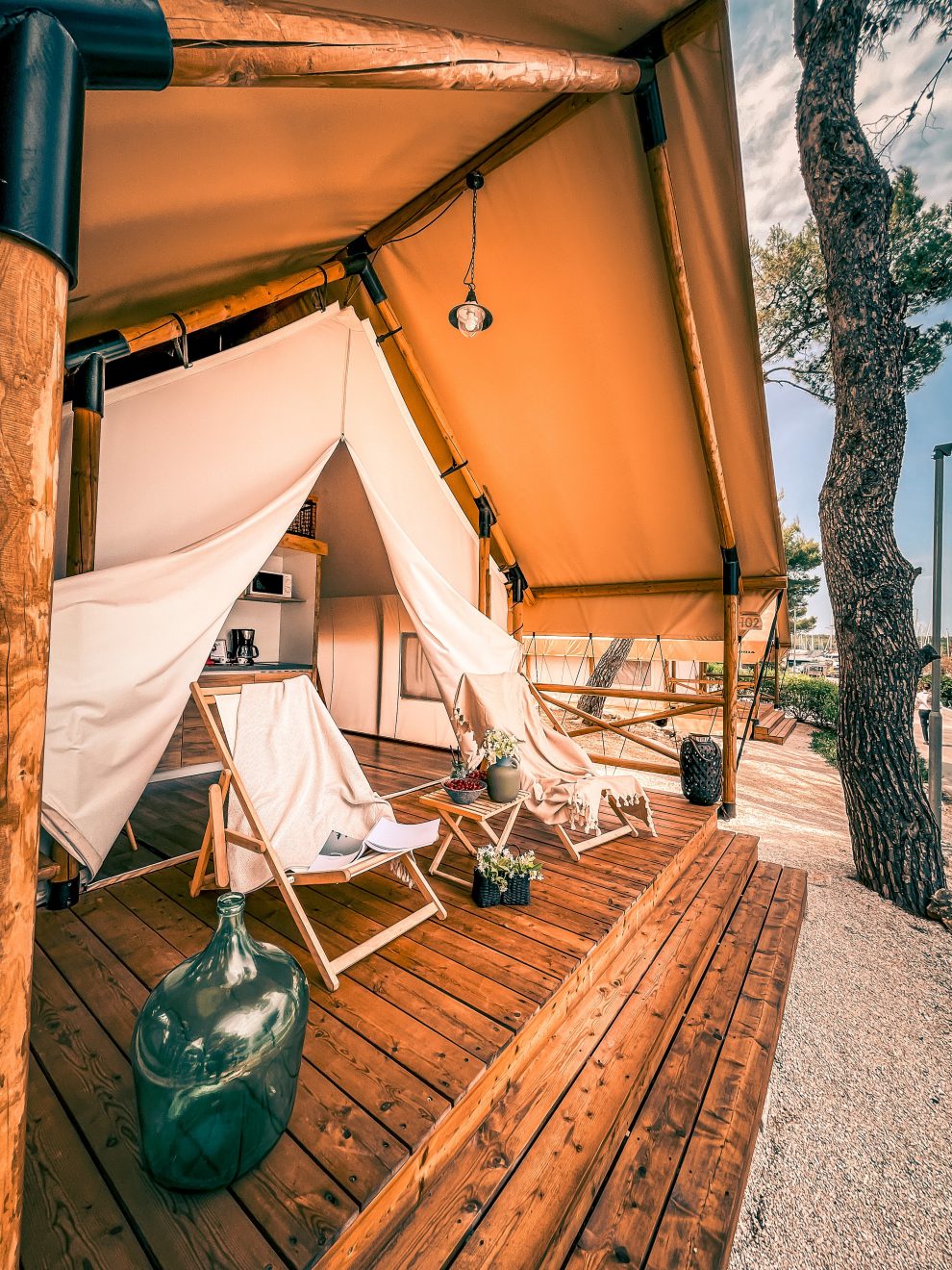
Over the last few years, glamping, the trend where people go camping in cabins that come with hitherto unseen comfort and amenities, has steadily risen in popularity. In 2022, the U.S. glamping market is valued at $569.21 million and has an expected compound annual growth rate of 18.26% (2020-2026), according to a report by research firm Arizton.
With over 67% of travelers considering glamping as a unique vacation experience and 81% of glampers wanting more, says a Kampgrounds of America (KOA) report, this rising trend has no intentions of stopping. If landowners have “campable” land — close to a popular outdoor attraction such as a river or lake — then glamping can offer a welcome source of additional income.
There is room for a differentiated approach to how landowners set up glamping facilities. Depending on their financial resources, landowners can choose to build different types of lodging that come with varying levels of comfort — and price tags. The most basic approach offers large, beautifully designed and protective tents to campers. There are no amenities in the basic scenario — campers must provide their power and potable water. There are shared showers and restrooms available for the campers. The cost of acquiring such a tent is typically $500 to $2,000.
Wood frame constructions with power and electricity are a level up from the previous offering. The cost of this construction is typically between $2,000 and $4,000. Another level up from the wood frame construction is the A-frame, hand-built cabin which will typically come with power and electricity. This third option’s cost is between $10,000 and $20,000. This set-up will usually have plumbing, though that will ultimately depend on how close the cabin is to a sewage line. While the cost of some of the glamping accommodations for guests might seem steep to some landowners, a simple calculation shows that investors can be confident they will get a solid return.
Mashvisor reports that across the nation, landowners will charge on average $250 for a night in a vacation rental, which we can equate with the rental of a comfortable cabin, our third option, for the sake of this exercise. So, let’s make a conservative assessment and run a simulation where we dive 20% below that average and charge only $200 for a cabin that has cost us $20,000. We take the highest end of the cost range and go low, setting our rental fee. In this simulation, it takes no more than 100 nights of occupation to earn back the cabin, meaning that the investor earns back the investment in a year.
Any glamping accommodations will quickly be booked 200 nights a year in warm parts of the country in camping hotspots. But, of course, not every campground is in the South; in colder locales, camping seasons have highs and lows. But even in a bell-curved market, an occupancy rate of 100 nights a year is very doable. In our example, we focused on the comfortable cabin. Still, the return on investment ratios look as favorable for the other two categories for the most expensive segment.
Glamping is a camping trend that shows no signs of losing steam anytime soon. For consumers, it offers a great escape from the hustle and bustle of the city in a manner that can be enjoyed by even those who are typically not eager to roughen it up. For landowners, glamping offers a welcome stream of additional revenue, where they can choose between different levels of investments in accommodation that runs the gamut from tents to A-frame cabins.
The spectrum of options is as varied as the trails our country’s beautiful camping grounds offer, providing a solid return on investment for every investment option a landowner might choose.
Ryan Harris
National Land Realty
Little Rock, AK
(866)931-4452