
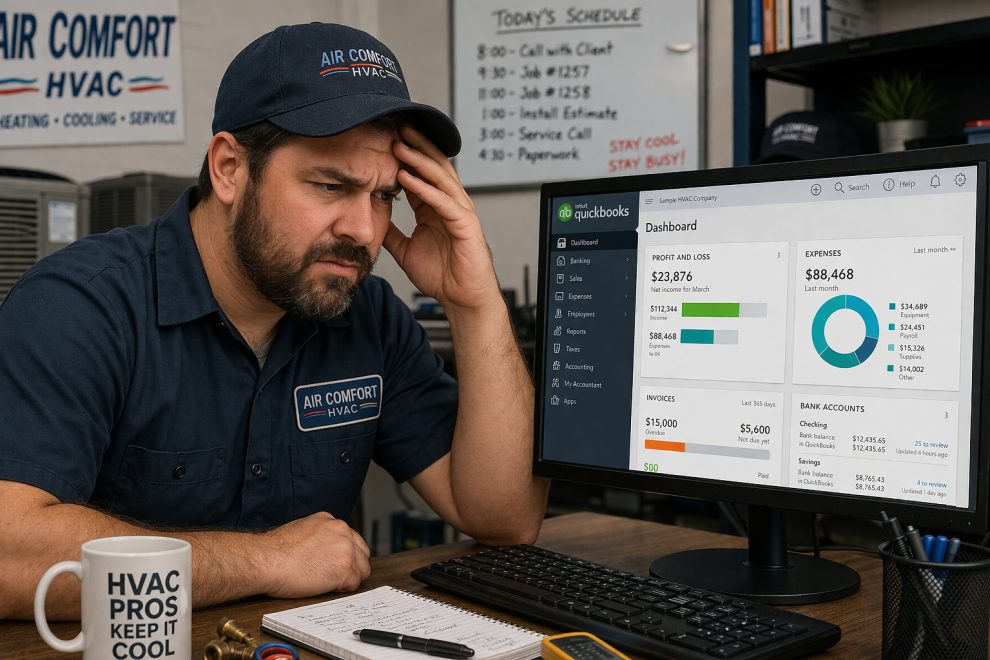
While summer brings a surge of calls and revenue for HVAC companies, many business owners are unknowingly losing money during their busiest months, according to insights from local accounting firm Acctsage.
The firm, which specializes in helping service-based businesses organize their finances and improve profitability, has identified a recurring pattern: strong revenue paired with weak cash flow and shrinking margins.
“Most HVAC owners think more jobs equal more profit, but that’s not always the case,” said Valery Celestin, founder of Acctsage. “We regularly see businesses doing $1M–$2M in revenue but struggling to take home consistent income. The issue isn’t demand, it’s financial visibility.”
The Hidden Problem in HVAC Businesses: According to Acctsage, the most common financial challenges include:
- Pricing jobs based on outdated costs instead of real data
- High revenue installs with low margins compared to service work
- Untracked expenses like fuel, labor inefficiencies and discounts
- Poor cash flow planning leading into slower seasons
These issues often go unnoticed until the off-season hits, when revenue slows but expenses remain constant.
The Off-Season Cash Flow Trap: Many HVAC companies experience a sharp slowdown in the fall and winter months. Without proper financial planning, this seasonal shift can create serious pressure on payroll, operations and growth.
“Your busy season should be building a financial cushion, not just covering past expenses,” Valery added. “Without a strategy, many owners end up starting every year from zero.”
A Shift Toward Financial Clarity: Acctsage emphasizes that improving profitability doesn’t require more leads, but better financial systems.
The firm works with business owners to:
- Clean up and organize financial records
- Track job-level profitability
- Implement cash flow forecasting strategies
- Create pricing models based on real margins