
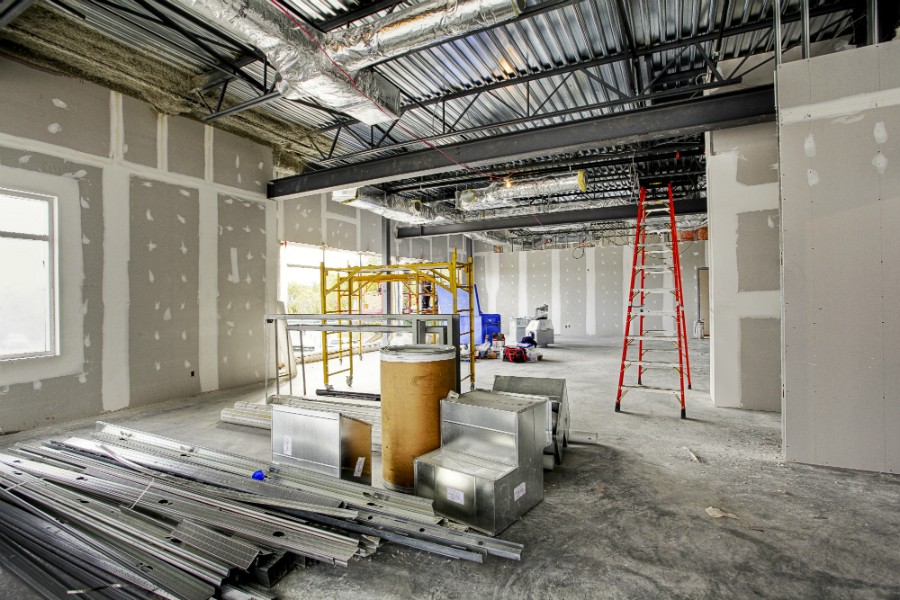
Picture this: a roof membrane fails on a ten-year-old office complex.
The insurance claim is filed. The adjuster arrives. And almost immediately, the investigation stalls. The original installation records are gone. The material specifications are buried in the files of a contractor who has since dissolved. The maintenance logs reference equipment by internal facility codes that bear no relation to the original engineering documents. What should be a straightforward claim becomes a protracted, expensive dispute—one the owner is not positioned to win.
This is not an isolated case. It is the default condition of the commercial built environment and it has direct, measurable consequences for owners, developers and investors across acquisition, operations, financing and exit.
A Problem Built Into Every Asset You Own or Develop: Commercial construction generates an enormous volume of technical documentation, such as structural specifications, commissioning data, material certifications, inspection reports. Almost none of it survives the transition from construction to operations.
The problem isn’t technology. It’s that records are organized around temporary containers—the GC’s platform, the developer’s drive, the property manager’s file share—rather than the building itself. When any of those disappear, the records go with them. The building stands for 50 years. The documentation often doesn’t make it past year five.
For owners, developers and investors, the cost is measurable: higher insurance premiums, weakened claims, lender scrutiny and compressed valuations at disposition.
What Missing Records Actually Cost You—at Acquisition, Operations and Exit: The financial impact shows up at every stage. On insurance, carriers pricing a property with no reliable maintenance history load that uncertainty directly into the premium. Owners who can demonstrate a clean documentation record negotiate from a stronger position; those who can’t pay for the ambiguity year after year and absorb the difference when a claim is disputed or reduced.
At disposition, incomplete records compress valuations and kill deal momentum. Sophisticated buyers and their lenders scrutinize building documentation as part of technical due diligence. Gaps in maintenance history, missing commissioning records, or undocumented capital improvements show up as price adjustments. Developers who built and operated assets carefully but failed to preserve that history can’t demonstrate the value they actually created.
A Permanent Record That Follows the Building, Not the Owner: The fix isn’t more software. It’s a permanent, stable identifier assigned to the building itself, one that survives platform changes, ownership transfers and contractor turnover, and that anchors all records to the physical asset they describe for the life of the structure.
This is the premise behind Persistent Infrastructure Identity (PIID), a globally unique, permanent identifier assigned to every commercial structure, independent of any owner, operator, or technology platform. Think of it as a VIN number for a building: a single reference point that accumulates the full record of what was built, how it was maintained and what work has been done, regardless of how many times the asset changes hands.
For a developer, that means commissioning data, material certifications and inspection records generated during construction are permanently linked to the asset, available to the next owner, accessible to lenders and defensible in an insurance dispute. For an investor acquiring an existing asset, it means the due diligence picture is complete rather than reconstructed. For an owner managing a portfolio through multiple property managers and software migrations, it means continuity that doesn’t depend on any single vendor’s platform surviving.
The national registry behind PIID has already begun incorporating approximately 160 million addressable U.S. structures. The infrastructure exists. The question for owners, developers and investors is whether they engage with it now, while adoption is early and the competitive advantage is real, or wait until it becomes a lender or underwriting requirement.
What Owners, Developers, and Investors Can Do Now: The starting point is an honest assessment of where documentation currently stands across your portfolio. For most owners and developers, the answer is that it’s fragmented, incomplete, or entirely dependent on a property management firm or software platform that could change at any time. That’s a risk that sits off the balance sheet but shows up on the P&L when something goes wrong.
For developers, the leverage point is at project closeout. Building documentation practices into the construction delivery process, anchoring commissioning records, material certifications and as-built drawings to a persistent building identifier from day one, costs relatively little and creates a permanent asset that transfers with the property. For owners of existing assets, the near-term priority is consolidation: pulling together what records exist, identifying the gaps and establishing a documentation baseline before the next insurance renewal, refinancing, or sale process puts those gaps on full display.
For investors, documentation quality is increasingly a due diligence variable worth pricing explicitly. Properties with continuous, verifiable building records carry lower operational risk, lower insurance costs and fewer surprises in capital planning. As underwriters and lenders begin formalizing documentation standards, a direction the market is already moving, assets that can demonstrate clean records will command better terms across the capital stack.
The Asset You’re Not Fully Protecting: Commercial real estate is, at its core, an asset management business. Owners and developers invest heavily in the physical quality of their buildings. Most invest almost nothing in preserving the documentation that proves it. That gap costs money on insurance, in claims, in due diligence and at the closing table—often without the owner ever connecting those costs to their source.
Buildings carry the weight of the businesses and investments that depend on them. They should carry their own history too—a complete, durable record that is available when it matters most. Owners and developers who build that into their operations now are protecting asset value, not just managing paperwork. In an environment where documentation is increasingly a pricing variable for insurers, lenders and buyers, that’s a competitive position worth having.
By Trevor Vick, CEO, Umip Inc.