




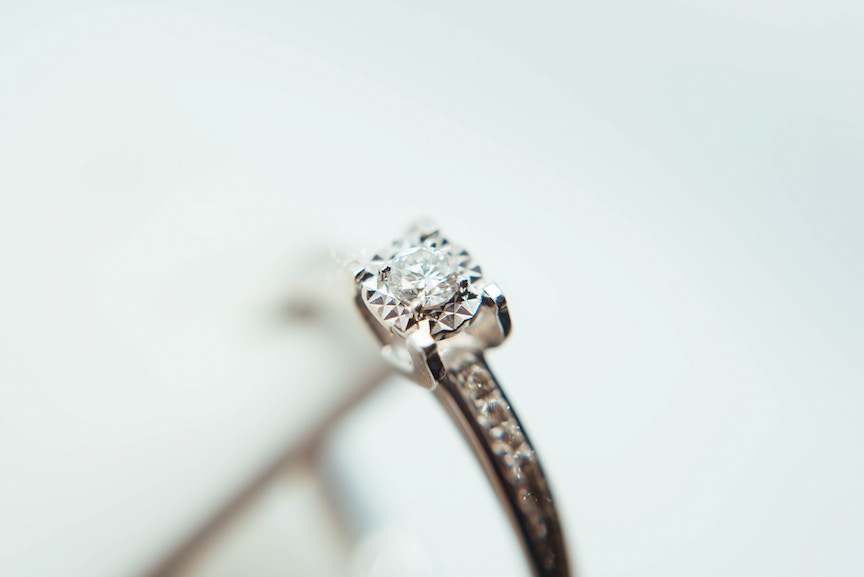
While the consumer’s naked eye may not be able to see the difference between a natural diamond and a laboratory-grown one, this article will go beyond the microscope and dive into the compositional differences.
While increasing in popularity over the last 10 years, one might be surprised to learn that laboratory-grown diamonds have been in existence since the 1950s. With organized research beginning a decade earlier, the first reproducible laboratory-grown diamond was reported in 1954. Up until this point, the only way to procure a diamond was to mine it naturally from the earth.
How can a natural process that takes millions of years be recreated in a fraction of the time? By mirroring nature with a process known as High Pressure/High Temperature (HPHT) the same result can be achieved in as little as a few weeks, depending on the size of the diamond.
The Chemical Vapor Deposition (CVD) method uses a mixture of ingredients — hydrogen and methane gas — to create diamond crystals. With these two methods in the marketplace, the industry is seeing a significant increase in the amount of laboratory-grown diamonds being certified at gemological labs worldwide as well as offered for sale online and at brick-and-mortar jewelry stores around the world.
Internally, both natural and lab-grown diamonds are made up of nearly pure carbon. For laboratory-grown diamonds, it’s important to distinguish which method (HPHT or CVD) is being used in the growth process. Genetically, with HPHT, you have a diamond that grows in the same natural crystal shape as a mined stone. With the CVD process, the diamond grows through a buildup of thin diamond layers. Regardless of the growth method, the excess diamond material is cut away to produce the final cut and polished stone. One hint as to the growth method comes through studying the internal imperfection within the stone. HPHT-grown diamonds commonly have inclusions found neither in mined nor CVD grown diamonds. These inclusions are the result of the contaminants introduced into the crystal from the HPHT growth environment.
The CVD process is completely different. There is a “seed” of diamond that is placed on the bottom of the CVD growth chamber, and then methane gas is pumped into the top of the chamber. The gas is stimulated with microwaves until the gas gets it so hot that it turns into plasma state. This plasma breaks apart the methane into its elements of carbon and hydrogen. Once the methane molecule breaks, the carbon (being heavier than the hydrogen) descends in the chamber and precipitates out on the seed. The more layers of carbon crystallizing out on the seed, the larger the diamond becomes. This growth is in a vertical direction, following in the square or rectangular shape of seed, resulting in the final uncut rough crystal looking unlike that of the mined diamond. Once you get a nicely-sized cube, you can take it out of the machine and cut and polish the CVD diamond into the desired shape. CVD grown diamonds tend to contain fewer inclusions than HPHT grown due to the vapor forming environment.
Once cut, laboratory-grown diamonds look identical to mined diamonds when viewed by the naked eye (i.e., same chemical composition). Given this, how do trained gemologists identify them for consumers? For most stones, a microscope is the first approach, and a trained and experienced gemologist can, based on internal imperfection, differentiate between them.
HPHT diamonds often contain metallic inclusions, such as nickel (a contamination introduced during growth), which the gemologist is able to detect by simply picking up the diamond with a strong magnet. Magnetism in mined and CVD-grown diamonds is not possible. Alternatively, the gemologist will measure the stone’s response to different wave lengths of light after the stone is illuminated. The use of ultraviolet light waves will often lead to phosphorescence in lab-grown diamonds, whereas mined diamonds rarely display this phenomenon. Depending on the color and brightness of the glow, the gemologist can determine the method of diamond growth. The presence of trace amounts of nitrogen in the diamond can reveal the stone’s origin and its age. The more dispersed the nitrogen particles are, the younger the stone.
One of the more indisputable tests involves the use of Raman spectroscopy. Using this technique, a single wavelength of light is shone into the diamond instead of a broad band of light wavelength. When this spectral technique is combined with cooling the diamond down to liquid nitrogen temperatures, the expert gemologist can see the very fine atomic motions of “twist” and “bending” within the diamond’s crystal lattice. Using this technique, the diamond’s crystallization (e.g., growth process) is revealed, along with the diamond’s rate and mode of formation. The use of the four “C”s (color, clarity, cut and carat weight) are also still utilized when evaluating manufactured diamonds and stones. Stones that are large enough will get laser-inscribed with the words “lab-grown,” which though not visible to the naked eye, still serves as a deterrent to misrepresentation.
When it comes to the diamond grading scale for laboratory-grown diamonds, there are two schools of thought: those who want to grade a laboratory-grown diamond like a natural mined diamond and those who want to grade it like a semi-precious stone. These two views reflect how divided the industry is on this topic. Detection and reporting of post-growth treatments are another sticking point for industry professionals. For example, with a natural diamond, any treatment to alter the color or clarity needs to be disclosed on both the laboratory report and at the consumer level; however, one could argue that since laboratory-grown diamonds are inherently treated, based on a recipe, there is no need to disclose any further treatments (e.g., enhancements). Others feel that processes performed post-growth do represent a treatment and need to be disclosed. Ultimately, the Federal Trade Commission will need to make a ruling on this debate.
With the recipe-like nature that comes with laboratory-grown diamonds, the color of a diamond, as well as clarity, is purely a function of the growing process, which can be controlled with laboratory-grown methods. For example, scientists have figured out how to grow extremely white diamonds and, for those which start off brownish or grayish in color, post-growth treatment can be used to remove most of the unwanted color. By controlling items like the ingredients, temperature and the amount of pressure, the diamond’s characteristic of choice can be made. Even very small laboratory-grown diamonds are also being made in large quantities and are finding their way into parcels of mined diamonds. This is proving to present a significant challenge to laboratories needing to identify and isolate mixed parcels of melee and jewelry items, which have been set using a mixture of natural and laboratory-grown diamonds. Through much effort, gemological labs have a strong protocol to deal with this issue.
Overall, laboratory-grown diamonds have grown a lot, getting bigger and more beautiful each year. It’s reasonable to project they will always have a place in the diamond and jewelry industry; however, they lack the one fundamental element of a true gemstone: rarity. As such, many will continue to believe that they will never replace natural, mined diamonds.


