




Why Combat Flip Flops Is Taking the Non-Violent Approach
After serving several tours in Iraq and Afghanistan, Matthew Griffin, co-founder and CEO of Combat Flip Flops, decided there had to be a better way to deal with international conflict. Along with fellow Army Ranger Donald Lee and brother-in-law Andy Sewrey, Griffin decided that a big part of the answer was education — especially for women in conflict zones. Now, the Issaquah, Washington-based team of five (plus their manufacturers in Colombia, Afghanistan and Laos) are using their shoe designs to make a difference.
 Tell me about your background.
I graduated from West Point and served in the military as a Company Fire Support Officer, A/2/75 Ranger Regiment.
Why did you start with flip flops?
After leaving the military, I was doing some work in Afghanistan and had the chance to tour a military boot manufacturer. I quickly realized that with the drawdown of troops and financial support, this manufacturer would soon be out of business. Having seen firsthand the effects of war, I believe that supporting business in conflict areas and educating women is the way forward.
As a brand initially focused on shoes, what prompted you to expand into apparel?
There was more good to be done! Afghanistan is not known for manufacturing footwear, and it became increasingly difficult to continue manufacturing there, so we found a better-suited facility, a family-owned operation, in Bogotá, Colombia. They are known for creating high-end, beautiful footwear. But we still wanted to manufacture in Afghanistan. We connected with Hassina Sherjun who owns a textile business, and started working with her to produce shemaghs (scarves) and other accessories.
Hassina also started Aid Afghanistan for Education (AAE), educating marginalized girls and women. She was born in Afghanistan, educated in the States, and during the reign of the Taliban, returned to Afghanistan to run an underground school for girls. We understood the importance of education combating radicalism and knew we needed to work with her.
Then, we also found some amazing artisans creating jewelry from unexploded ordnance (land mines) dropped on Laos during the Vietnam War. By working with them, through MAG International, each piece of jewelry purchased clears another three square meters of land mines, so farmers can safely work their land and kids can safely walk to school.
Why did you choose AAE?
We began working with AAE after a customer forwarded us an interview of her schools and factory from the BBC. I immediately sent her a Facebook message and requested a Skype meeting. After a few short minutes, it felt like an immediate fit from a business and mindset standpoint.
We support women because they are the constant in areas of conflict. They’re responsible for supporting the homes, raising the children and driving the next generation toward progress. There are multiple studies that reflect the exponentially positive ramifications of educating, training and empowering women in developing nations. We’ve been fighting in Afghanistan for nearly two decades with zero progress as a result of proven techniques that result in failure. Somebody should try the techniques that prove to be successful.
Why do you name your products after weapons? 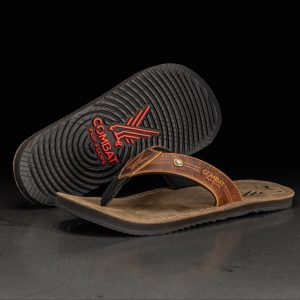
Our products tell a story. Yes, some of them are named after weapons. But we call our products “weapons for the new revolutionary.”
The Mines Advisory Group (or MAG, another partner) lives in a world of conflict. In addition to clearing land mines, they buy back weapons, conduct education and promote peace through business. We are aligned in our missions, speak the same lingo and work to have a sense of humor and promote positivity in all endeavors.
How much do you typically donate to your charities?
Each product sold puts a girl in school for a day. The jewelry does double duty by also clearing another three square meters of land mines. To date, we’ve put 750 girls in school for a year and cleared 18,000 square meters of land mines.
We want to make the world a better place. We’ve served in war-torn areas and saw that fighting wasn’t producing any good results. Business and education — that’s the way forward.
What kind of masculinity are you trying to construct with your brand?
Being a badass and having a big heart are not mutually exclusive traits. Some of the kindest, most impactful and hardworking people we know have big beards and are covered in tattoos — that’s the community we come from. There are very few mission-driven brands that serve those customers, so we do it.


