




Companies are innovating for sustainability down to the thread
Some say that the pandemic has moved technology and lifestyle preferences 10 years into the future — and that does seem to be true for consumer preferences when it comes to sustainability in fashion. According to a McKinsey survey conducted in July 2020, 57% of consumers reported making significant changes to their overall lifestyle to lessen their environmental impact, and 60% report going out of their way to recycle and purchase products with environmentally-friendly packaging.
The same trend holds true in fashion, especially when it comes to production, materials and pollution. The same survey reported that 67% and 63% of consumers consider the use of sustainable materials and a brand’s promotion of sustainable practices to be important purchasing factors, respectively.
In response, several brands have started out the new year with textile releases that promote sustainability, utilizing technology from plastic recycling, customization, precision cutting to reduce fabric waste and more.
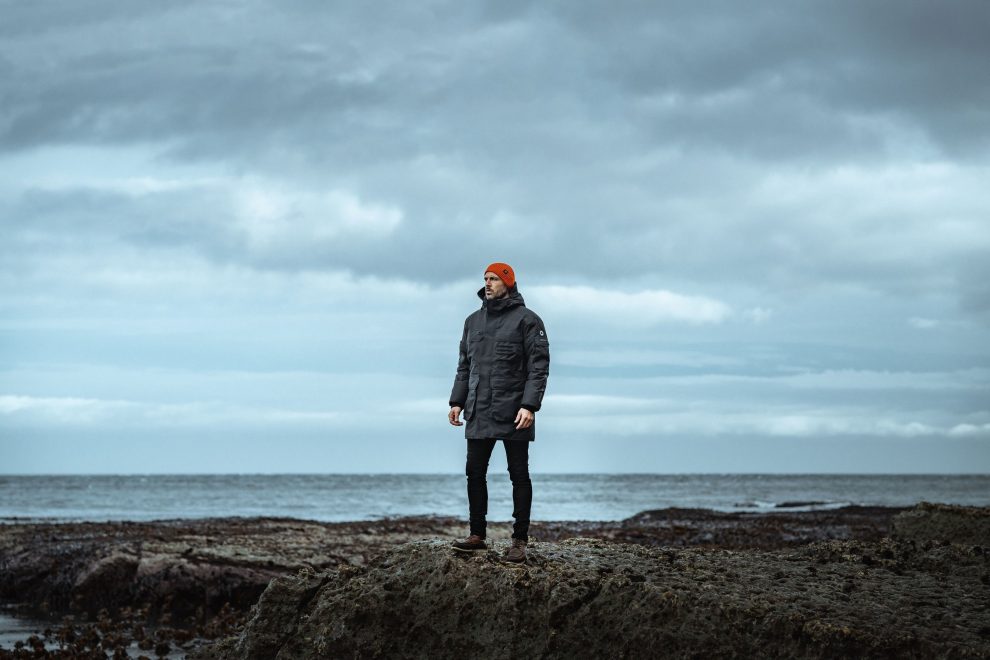
One such brand is Shackleton, a London-based outerwear company. In collaboration with Blue Marine Foundation, the brand has developed the Antarctic Protector Parka made from 100% recycled fabrics. The shell of the coat is made from post-consumer, recycled plastic water bottles. According to Plastic Oceans, more than eight million tons of plastic is dumped into the world’s oceans every year, 50% of which is for single-use purposes.
“The mission is to help protect over four million square kilometers of ocean,” Rory Moore, Blue’s head of international projects, said. “Without this protection, this pristine habitat and the thousands of species that rely on it are at grave risk.”
The parka, which is waterproof and insulated with goose down, can protect the wearer in temperatures as low as -13º Fahrenheit. It was designed for Blue field operatives working in Antarctica’s coastal zones.
“These notorious conditions set the standard for which all our apparel is developed to perform,” said Martin Brooks, co-founder of Shackleton. “We design and engineer expedition-grade apparel for people living and working in the most extreme environments. For Antarctica’s coast, that means seam-sealed waterproofing of minimum 20,000 H/H and insulation to minus 25 [degrees Celsius]. We believe the Protector is the first jacket to hit this performance standard using fully recycled fabrics.”
In an effort to emphasize its commitment to environmental preservation, Shackleton is also donating £100 (about $135 USD) to Blue for every Protector Parka sold.
With a similar ethos in mind, Aysha New York has developed a custom, made-to-order method for its Mohair Winter Coat. CEO and Creative Director Aysha Saeed has developed a virtual process to ensure each coat is tailored to its wearer, minimizing waste.
The process begins with taking measurements via Zoom. Then, a prototype is made, and the customer has a Zoom fitting to ensure that the prototype is correct. Only then is the final coat manufactured. Aysha New York also manufactures exclusively in New York’s Garment District. The process typically takes between two and six weeks.
“As a boutique brand, Aysha New York is dedicated to reducing its carbon footprint by manufacturing domestically, supporting local vendors and making a social impact to support women in need,” the company said in a statement. “Sustainability and ethical manufacturing are two pillars of the Aysha New York brand that have always guided [our] business practices.”
Whether its innovating the textiles themselves with recycled materials, cutting pollution and waste in the process or reducing the amount of plastic in shipping/delivery, fashion brands across the industry are making technological moves to keep up with consumer demand.


