




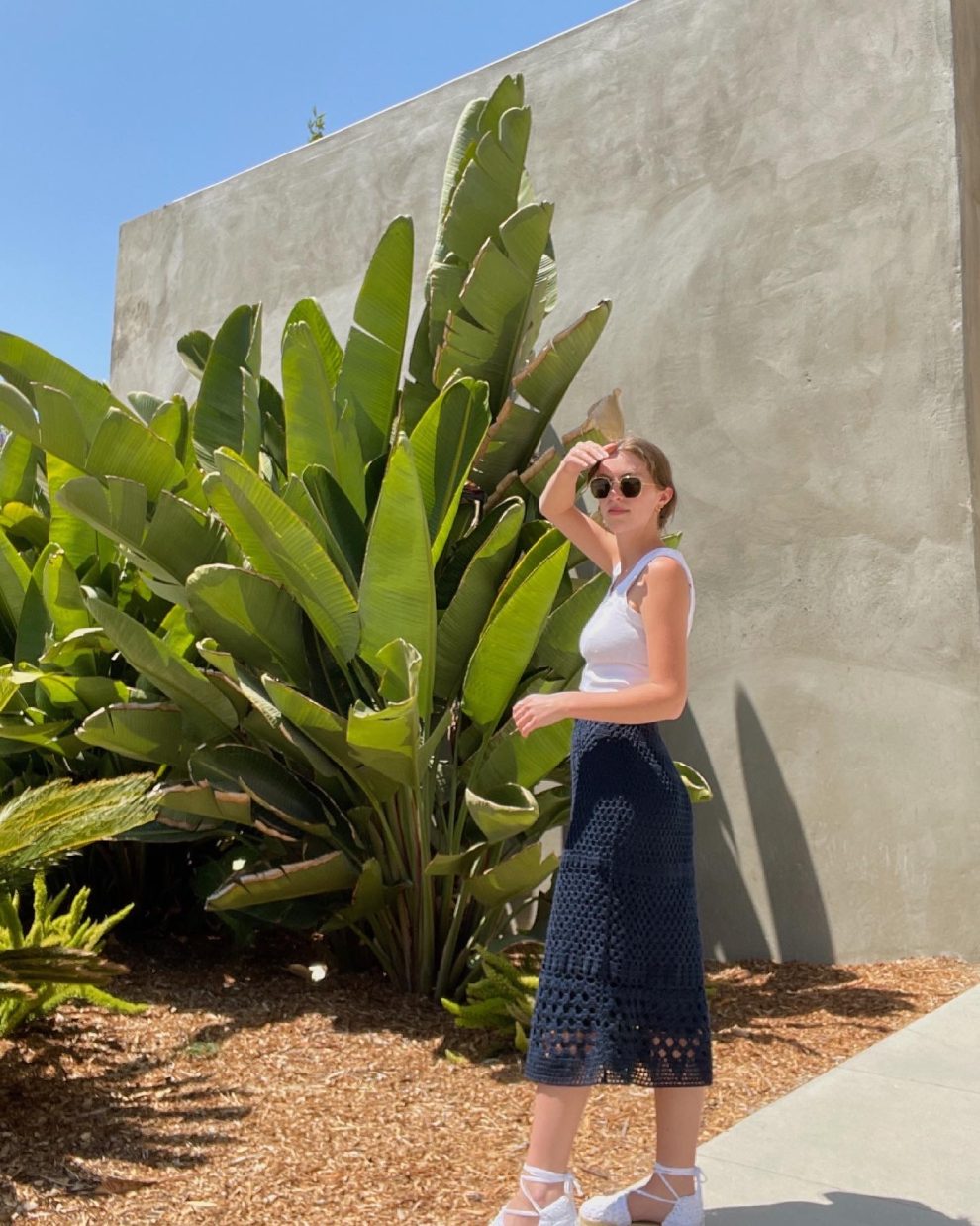
My TikTok algorithm must know how much I love fashion — and how invested I am in chasing a good deal — because every time I open the app, I am inundated with videos on the very subject. The range of fashion and style videos on TikTok run the gamut in form, with content creators sharing links to a sale they just shopped, a local boutique that has yet to be discovered by the mainstream and modeling the splendors of a recent online shopping “haul.”
A large majority of these videos encourage the viewer to follow micro-trends set out by fast fashion companies — and what this usually means is a lot of spending, a lot of clothes sitting unused once that trend is replaced by the next, rinse and repeat. Fashion has been having a moment of overconsumption, and it’s hard to know where and how to start after one takes a hard look at their own personal consumption and decides that they want to make a change.
Sustainable life and style blogger and recent author Megan McSherry’s TikTok channel would be an excellent place to start. On her account, @Acteevism, McSherry shares her personal experiences with transitioning to a more sustainable wardrobe and lifestyle. In a sea of videos about finding the next best thing, discovering McSherry’s account — filled with practical, tangible, everyday sustainability strategies for people to keep up these habits long term — was a welcome change of pace.
“It all started in high school,”said McSherry.“I started a fashion blog when I was a freshman because I wanted free clothes. I really liked fashion, and I heard that fashion bloggers got free clothes.”
In college, McSherry experienced a turning point in her love for fashion. “In my first week of college, the first essay I was assigned was on sustainability in the industry that you want to work in,” McSherry said. “So of course, I chose fashion, because I loved being a blogger and writing about fashion. I learned about all of the ethical and environmental issues associated with the industry. I was like, ‘this doesn’t sit right with me personally as a consumer, and as someone who has a small platform on the internet.’”
This essay assignment was the driving force in the evolution of McSherry’s fashion blog to becoming the sustainable and ethical life and style platform that it is today, as well as the catalyst for “AcTEEvism,” her personal philosophy of activism that encourages social and environmental change through acts of conscious consumerism, which McSherry says started with her interest in charitable T-shirts.
“If you bought a T-shirt that had a cool saying on it, $10 or five dollars would be donated to a specific organization, and I thought that was the coolest thing,” McSherry said. “As time went on, it became this example for me of what conscious consumerism can look like and how it begins. Not looking at fashion and clothes as just something you wear, but [thinking] about the impact that fashion has and the different ways it can engage people in activism or supporting charitable organizations.”
“I don’t think the way we’re going to solve the world’s issues is through selling T-shirts with five dollar donations,” McSherry continues, “but I think it is a really interesting way to think about how to engage people, especially younger people, to think about thew world’s issues instead of just mindlessly consuming things or feeling like they’re not able to engage in the world’s issues.”
McSherry understands all that goes into making the shift towards thinking more sustainably, and her motto is “progress, not perfection.” On her TikTok channel — which has a following of over 86,000 users — you can find videos of McSherry debunking the term “greenwashing,” insights on single-use items she avoids buy- ing alongside her favorite brands for fashion and sustainability items, her finds while thrift shopping and an honest look at her continued journey as a conscious consumer. Watching McSherry’s videos make me feel like I’m sharing ideas about fashion, style and sustainability with a trusted friend.
“What I think really helps the sustainability movement is how unfiltered TikTok can be. I can say that I’m wearing a dress and it’s from Forever 21, but I’m a sustainable fashion blogger and I got it secondhand and this is why that’s sustainable,” McSherry said. “It’s hard to get that across on Instagram, where it’s all about the aesthetics and how a picture looks in your feed. Whereas, on TikTok, people love [more raw posts].”
A perspective that has really stuck with me from McSherry’s videos is that the most sustainable wardrobe is that one that you already have in your closet — rather than swapping out your old wardrobe with new pieces that are made by sustainable designers all at once, styling your longstanding staples in new ways can reinvent pieces that might feel stale and save you unnecessary shopping trips.
“When I started my blog, I was all about ‘fashion on a budget,’ which meant endless fast fashion items that were ultra-trendy,” McSherry said, touching on how she feels her personal style has changed through conscious consumerism. “I always felt like fashion equalled style, and whatever was cool or in fashion was how you had to dress to be stylish … Over time, especially as I’ve started thrifting more, buying secondhand items and vintage items, I don’t care what the trends are. I don’t feel like I have to dress like everyone else to like my style.”
When approaching fashion sustainability, McSherry says that something often over-looked is how shoppers can care for their clothes to extend their life. “If you learn to sew on a button, you can save so many items in your closet and keep them around longer, versus [not wearing an item] when the button gets loose,” she said. “There’s so much life we can continue to breathe back into the items that we already have that takes just a little bit of effort.”
These tips and much more can also be found in McSherry’s recently published e-book, “Make the Most of What’s in Your Closet.” The book is an interactive roadmap for sustainability beginners that is based on her own slow fashion journey and inspired by questions from her followers, who she says want to join the sustainability movement but don’t feel that they have the time, money or resources to do so. Since the book’s publication this year, McSherry says that those messages from followers now include the new ways that they see their closets and the fun ways they now style their clothes.
“It’s just cool to see that click happen with people,” McSherry said. “You don’t have to entirely change your approach to fashion, your style or where you shop in order for it to be sustainable. You can change your mindset, and that makes a huge difference.”
When asked what advice she would give to someone who is just starting out on their sustainability journey, McSherry emphasizes the importance of taking things slow.
“We live in a consumer society… There’s so much consumption going on, and it can be very overwhelming if you say you’re going to change completely the way [you] look at buying things,” said McSherry. “I started my sustain- able fashion journey when I was a freshman in college in 2015, and I’m still on my journey. I will never say that I’m done [because] you’ll learn things along the way that will change the way you look at things, and that’s part of it. Don’t aim for perfection, just do your best and take it one step at a time.”


