




As companies around the world begin to create structures for post-pandemic work — whether it’s remote, physical or a hybrid of both — it is important to examine certain patterns that have emerged over the last year. These patterns, which predominantly involve how employees are making use of their workspaces, help landlords develop a clear understanding of how occupants interact with their buildings on a daily basis.
Pre-pandemic, most real estate owners and asset managers could bank on at least 70% of their user base being in the office at any one time. Occupancy was largely predictable and reliable, meaning that putting on a community event was straightforward; planning improvement works was straightforward; managing car park usage was straightforward. But whereas pre-pandemic certainty came from the stability of the old 9-to-5 working week, now certainty comes from having the tools in place to both manage and measure the fluidity of the post-pandemic week.
Across our own global workspace operating platform, it’s been fascinating to see a number of patterns emerge when it comes to post- pandemic workspace usage. Over the summer, our team analyzed usage of the platform by over 1,700 people, from Q1 2020 to Q2 2021, revealing fundamental changes in the way that people are now interacting with workspace, compared with pre-pandemic usage.
One key finding was how the purpose for workspace usage appears to have changed. With many companies implementing hybrid working and people spending less time in the office, the overall number of users booking meeting spaces through our platform decreased by 30% from Q1 2020 to Q2 2021. However, whilst people may be coming into the office less, they appear to be much more focused on collaboration and co-creation when they do. Meeting space bookings for each person coming into the office over that same period rose by 75%. What we’re seeing is that there are some things that home working cannot replace. People put huge value on the office as a place for collaborative group work and are booking both the time and the facilities to help them accomplish that whenever they come in.
What we’ve also seen is that the shape of the week appears to be changing. For those who implemented hybrid work models over the summer, the patterns in terms of when workers come into the office give an indication as to what the new working week could look like going forward.
Pre-pandemic, Mondays were typically a day for in-person team meetings and team planning. However, what we’ve seen is that in-person team meetings on Mondays have now dropped by almost 15% from Q1 2020 to Q2 2021. Post- pandemic, there seems to be an ever-increasing lean towards Mondays as a day for remote work, perhaps allowing workers the time to clear their in-trays and prepare for the week ahead.
Conversely, mid-week group meetings appear to be on the rise. Space bookings on Tuesdays and Thursdays have both increased substantially, with in-person, collaborative group work now seen as the centerpiece of the working week. Generally speaking, people seem to want that physical, human-based interaction as their focal point, with only the office able to facilitate that.
These are broad trends, and clearly every company and every office operates differently, but the message is clear: landlords must analyze changing workspace usage across the working week in order to suitably cater to demand for facilities like meeting spaces and break-out zones. With people now coming into the office for more focused, group work, operators must ensure that they facilitate that goal in the most seamless and efficient way possible, if they are going to keep their occupiers happy.
Predictability of workspace usage is still possible, but only with the tools in place to record changing occupier behaviors. Real certainty, however, comes from technology and systems that make sense of the evolving workplace. Those who hope things simply return to pre-pandemic days will struggle; those who are willing to monitor, analyze and adapt will provide the post-pandemic workspaces today’s occupiers need.
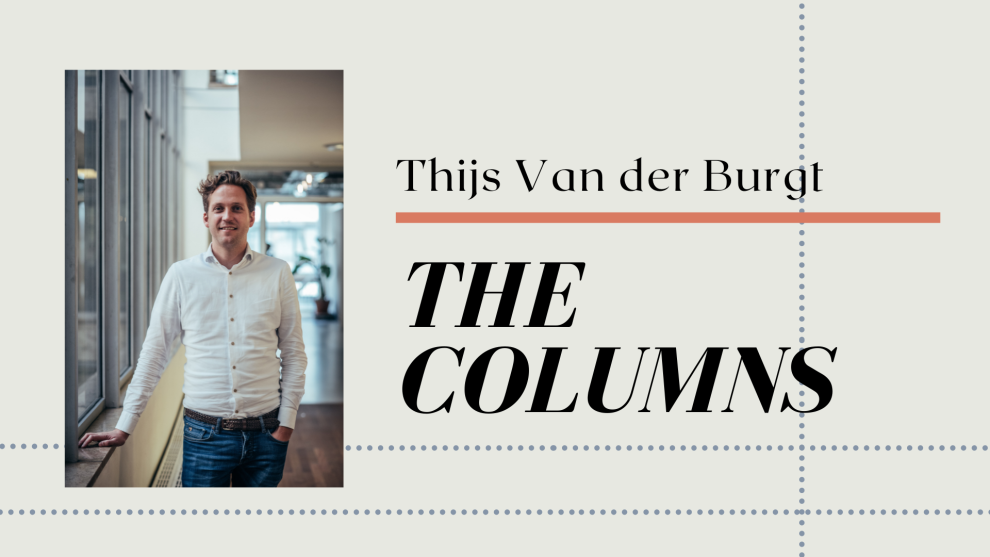
Thijs Van der Burgt
Office App
thijs@getofficeapp.com


