




By Laurie Melchionne
Today, the word “imperialism” conjures images of Europe’s aristocratic past that, frankly, is unrelatable for 21st-century fashionistas. Desmalter, the Paris-based accessories brand with roots in 18th-century royalty, has turned this perspective on its head.
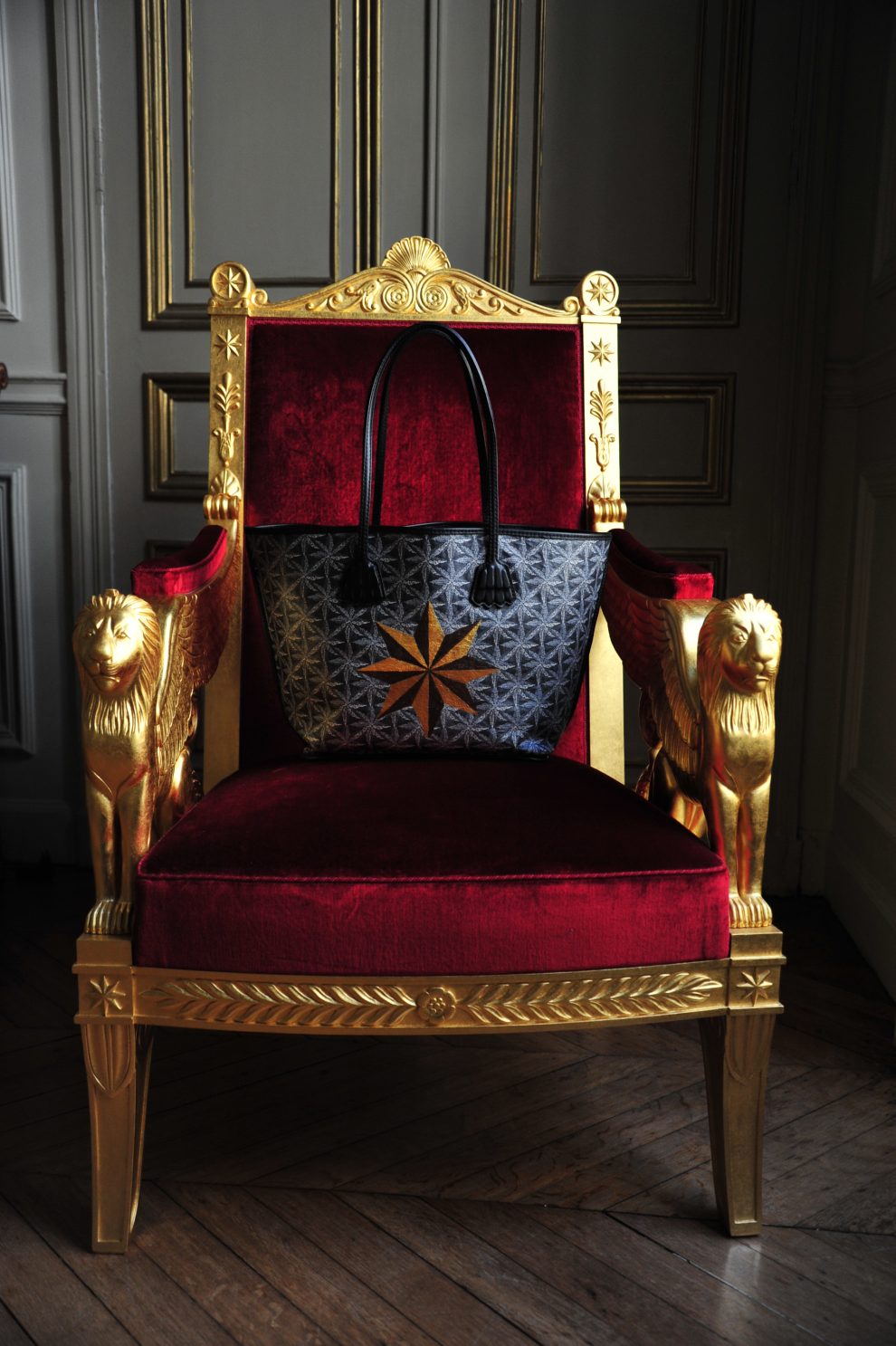
Just in time for Ridley Scott’s upcoming epic, “Napoleon,” Desmalter’s bags honor France’s Napoleonic legacy with the eight-pointed Imperial Star, a logo featured across items such as the Sphinx Handbag, Griffon Tote, Griffon Pouch and Griffon Leather Tote. Empire Green colors and the signature royal lion paw that accents each bag’s handle are other signature elements that harken to the brand’s aristocratic heritage.
In 2020, Desmalter was revitalized by Fedor Georges Savchenko. Savchenko turned the brand into a competitive haute couture label with a presence at every major fashion week around the world. In doing so, Savchenko elevated Desmalter’s legacy of French furniture-making and ensured that the products of its early days lived on in his bags and accessories inspired by the furnishings it once produced.
Desmalter got its start in 1775 when Georges Jacob Desmalter began to make cabinets and furniture that would eventually be supplied to five French kings. The grandeur of pieces like the Imperial Throne Chair (from the real throne chair in Tuileries Palace, recreated by Savchenko in 2020) caught the eye of Napoleon Bonaparte himself–both for the Sphinx armrests that honor Napoleon’s Egypt campaign and for the easily assembled pieces that the French military commander would require while marching across the Continent.
With gilded wood engravings on honey-speckled maple, mahogany and amaranth, sculpted winged sphinx armrests, plated gold leaf and silk velvet covers, the chairs have graced French royal drawing rooms for decades and can be made to order today.
It is from these chairs that the Desmalter bag was born. Printed with fabrics made from the traditional Jacquard method, Desmlater integrates old-world French craftsmanship to produce an authentic, slow-made bag that Napoleon probably would have seen had he ordered handbags in addition to portable imperial armchairs.
“There are jewelry-like elements in each bag,” Savchenko explained. “This elevates each item into the kind of keepsake that Desmalter products originally were back in the 18th-century; quality items sourced with unique materials that are the best-in-market in terms of both historical technique and sustainable production practices.”
Grounded in a centuries-old appreciation for style and efficiency in travel, Desmalter’s bags and accessories continue to utilize jacquard fabric and printed linen for durable, waterproof products. The Imperial Star and lion’s paw handles, signature elements wearers will find on each item, were seen on furniture present for Napoleon’s coronation ceremony as emperor. By printing these images on each bag, Desmalter has immortalized symbols of Napoleonic history that his contemporaries would have witnessed…and brought it to the 21st-century handbag-lover.
“We are presenting new elements on the bags at Fashion Week in October, and we will have a presence in LA, Monaco, Taiwan and so many other places around the world where we are establishing exciting brand partnerships,” added Savchenko. “We have clients all over the art, and even a presence in the art world when we attend events like Art Basel in Miami. We offer something for everyone.”
Sourcing comes from the finest materials that blend elegance with durability. Calfskin, Jacquard fabric, double-sided printed linen and solid leather are some of the varieties that customers can choose from in each bag. These materials make each item different from the last, especially with Desmalter’s customization options. This service allows wearers to personalize a tote, crossbody or accessory with initials, dates, imperial logos and more. Desmalter allows its wearer to put their own stamp on an item steeped in royal heritage, turning Napoleon-era imperialism into a style statement for the masses.


