




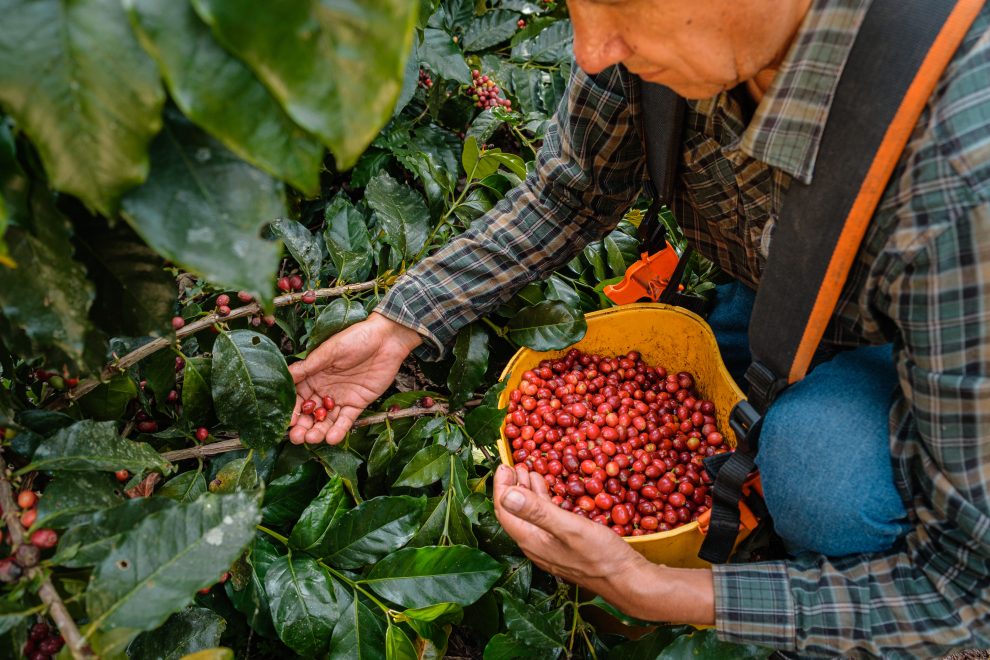
New Executive Order Modifies the Scope of the Reciprocal Tariff With Respect To Certain Agricultural Products
The president declared that under prior orders (Executive Order 14257 and Executive Order 14346), the U.S. had imposed reciprocal tariffs on certain goods in response to large and persistent trade deficits. On Nov. 14, a new executive order states that, after reviewing domestic production capacity, demand and international negotiations, the U.S. will exclude certain agricultural products not sufficiently produced in the United States from the reciprocal tariffs, effective for entries on or after 12:01 a.m. EST on Nov. 13, 2025.
- Executive order: Modifying the Scope of the Reciprocal Tariff with Respect to Certain Agricultural Products
- Fact Sheet: Following Trade Deal Announcements, President Donald J. Trump Modifies the Scope of the Reciprocal Tariffs with Respect to Certain Agricultural Products
- Updated annex I, II and III lists
New Trade Framework Announced for US, Switzerland and Liechtenstein
On Nov. 14, 2025, the United States announced a framework trade agreement with Switzerland and Liechtenstein, called the “Agreement on Fair, Balanced and Reciprocal Trade,” intended to give U.S. exporters expanded access to Swiss and Liechtenstein markets while securing large Swiss and Liechtenstein investments.
The fact sheet states that Switzerland and Liechtenstein have been given the same reciprocal tariff treatment as the European Union, in which the trading partners will pay a cumulative reciprocal tariff rate of no higher than 15%. In practice, the U.S. applies the higher of either the most favored nation (MFN) tariff rate or a tariff rate of 15%, comprised of the MFN tariff and a reciprocal tariff, on originating goods of these countries.
- Joint Statement on a Framework for a United States – Switzerland – Liechtenstein Agreement on Fair, Balanced and Reciprocal Trade
- Fact Sheet: The United States, Switzerland and Liechtenstein Reach a Historic Trade Deal
New Trade Frameworks Announced with Argentina, Ecuador, El Salvador and Guatemala
On Nov. 13, 2025, the White House announced framework trade agreements with Argentina, Ecuador, El Salvador and Guatemala. These arrangements are preliminary and are slated for formal signature in the coming weeks.
Under the frameworks, the U.S. will remove or modify tariffs on certain goods originating from these partner countries, specifically those items that “cannot be grown, mined or naturally produced in the U.S. in sufficient quantities.” For example, one fact sheet notes that select agricultural products such as coffee, bananas, cocoa, tropical fruits, beef and other items have been added to an annex that exempts them from reciprocal tariffs. In practice, the reductions will apply to specified products, not broad, across-the-board tariff relief. Some standard tariffs will continue for other items.
You can also view each joint statement at the links below:


