




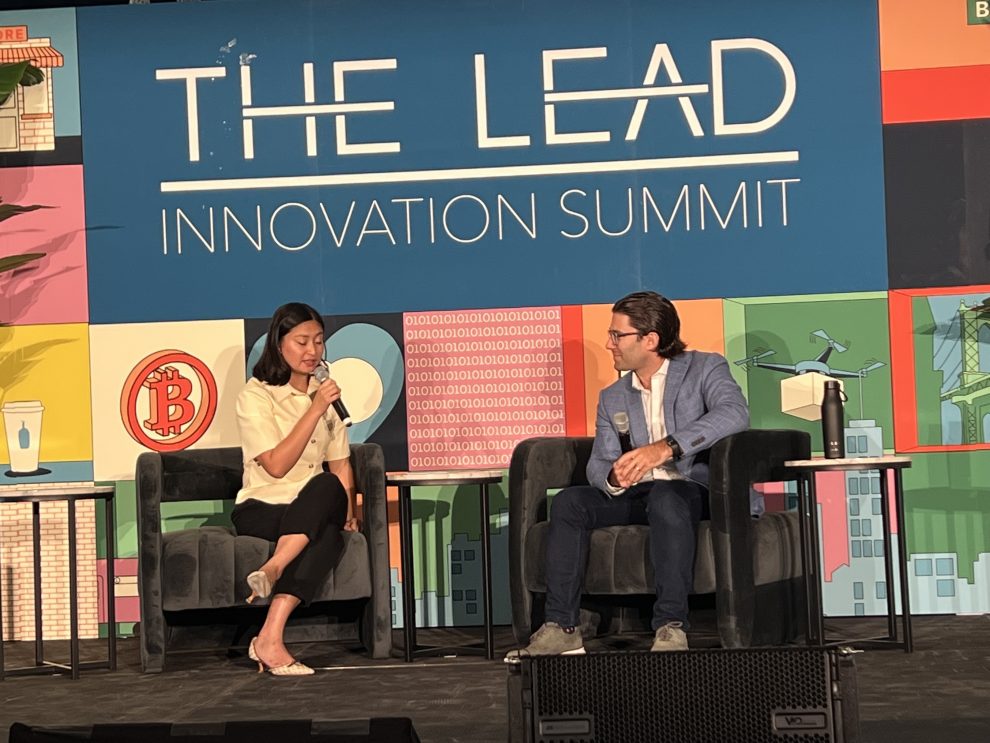
How do brands and retailers reach the new consumer post-pandemic? As it turns out, by combining new technologies and some tried-and-true communications methods, said speakers at The Lead Innovation Summit, held in Brooklyn, New York in July. More than 1,900 registrants (65% of whom were representatives of brands or retailers) attended, said Noah Gellman, CEO of The Lead.
Post-pandemic, shoppers went on a buying binge, with the result that retailers pulled back on promotions and prices went up. The resulting inflation is basic economics, but a deeper analysis is needed, especially regarding replenishment. This can mean that a temporary slowdown in sales simply could be because a consumer doesn’t need a product right now — but could in six months.
“Are consumers spending or not spending because they can or can’t, or because they bought a lot of candles and don’t need more,” said Simeon Siegel, managing director and senior analyst at BMO Capital Markets. The result, he said, could be deflation in two years. “We need a recalibration. We’re not in a recession now, so focus on your brand health.”
And brands are expanding, finding new partners to do so and new ways of communicating with a changing group of consumers, especially on the higher end of the spectrum.
“The consumer has changed dramatically over the last few years,” said Katie Goldblatt, executive director of Rapport London, a maker of luxury watch accessories and jewelry boxes. Generation Z, which she dubbed “High earner, not wealthy yet” (HENWY), likes traveling and experiences, which will be very important going forward.
Yet some are pursuing more traditional methods of communication.
“There are nontraditional ways of connecting with consumers that we’d forgotten about,” said Robert Rizzolo, chief merchandising officer of Marc Jacobs. The line has begun advertising in Vogue again.
Traditional retail remains strong, noted Ken Pilot of Ken Pilot Ventures (and a former president of Gap Brand and American Eagle) in a session entitled “Retail Reborn.”
Matthew Mueller, co-founder of Knot Standard, a customer menswear maker, discussed his company’s journey from its founding in 2012 as a tech-oriented provider of bespoke clothing using AI-based in-store fitting services to its partnership with Nordstrom. Until the pandemic, Knot Standard could open a standalone store in 90 days — now it can take six to nine months, given the vagaries of material deliveries, personnel availability and fluctuating costs.
“Nordstrom came to us,” he related. “They wanted our technology, and they’d fired their menswear department. We said we’d be more than happy to give you our technology as long as it’s selling our product.”
British apparel chain Reiss is continuing to expand in the U.S., but “the biggest challenge is scaling British retailers to the American market,” Emma Taylor, vice president of North America stores. Plans right now call for in-store boutiques of 500 square feet to 1,000 square feet, largely because they can be constructed in two to four weeks.
Even so, the company is opening its own boutiques, with the blessing of its department store partners. This is a tremendous departure from previous years, she continued.
“When you used to sign a mall deal, many of the largest retailers had exclusivity rights. With Bloomingdale’s, we found the opposite — they encourage you to have stores nearby,” she said. “Since opening the standalone in South Coast Plaza [in Costa Mesa, California], we’ve seen triple the sales at Bloomingdale’s.”
Landlords, in fact, are helping new brands expand. Taubman Vice President of New Business Development Amy Higgins discussed how landlords themselves can bring about the retailers of tomorrow.
“We realized the pool of national retailers is really shrinking,” she said. “We developed a brand, ‘Emerge,’ to help new brands open stores.”
The program provides support throughout all stages of the pop-up process, including store planning, construction and design, operations and marketing. The pandemic helped the landlord, providing what Higgins called “phenomenal” vacancies that they could offer to new retailers. Given Taubman’s portfolio, which includes some of the best-performing projects in the country including Beverly Center in Los Angeles and The Mall at Short Hills in New Jersey, Emerge with Taubman has attracted some serious brands, including Gucci and Michael Aram, to test product and presentations.
“We have top-of-the-line shopping centers. We have on-site services,” Higgins said. “Of those brands, 10 have gone permanent and they’re continuing to grow.”


