




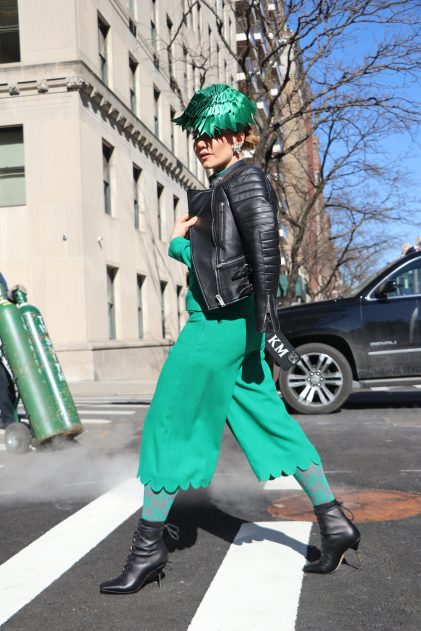

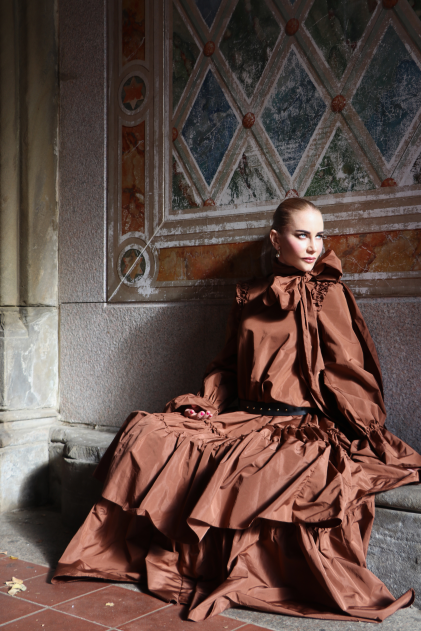
When we look inside our closet, more often than not, we have all these clothes but find ourselves wearing the same pieces. And yet, with the latest fashion trend or style emerging, we find ourselves buying more of what celebrities are wearing and putting our already forgotten clothes even further on the back burner. They sit there for the “what if‘’ occasions, nostalgia, or the simple feeling of finding it hectic to get rid of them. Therefore, it is easier to keep them stored away. The cycle of buying more clothes while neglecting most of the ones we already have persists. But what if we can use what we already have in our closets and make that fit with what we desire now? The old becomes new and while doing so, we are practicing sustainability. Now that’s a la mode and what Converted Closet, created by Kate McGuire, is all about—using what we already have in our closet and repurposing it into a new look which in turn reduces our carbon footprint.
To provide more of a visual, we as people for the most part wear just 20% of our clothes with the remaining 80% going unscathed. McGuire prompts people to really look into their closet to verify such statistics.
“With your hand on your heart. What percentage of your closet that you’ve got right now, do you wear on a day to day basis?” asked McGuire.
Due to the prevailing world of fast fashion, people are able to obtain what they want with ease, owning a new item of clothing. If the right occasion presents itself, many think to themselves that it’s time to add a fresh addition to their closet. What we don’t see are the hugely squashed margins all the way down the supply chain in order to bring us the clothes. The Business of Fashion did a report called The Future of Resale Potential, where it looked at the future of resale potential and how much resale is actually out there to be able to sustain the resale industry.
McGuire states, “The fashion consuming population, they’re wearing 20% [of clothing] and I’m sure it’s bigger than 2.1 trillion. So you think about that and then you think about the 150 billion new clothes that the fashion industry is churning out every year.”
She continued, “We’re not thinking about what’s behind the rails. We’re just looking for the next hit, which I don’t believe there is a blame for. I believe it is about educating and raising awareness of what’s going on so that we can let people have a choice. We all live here. So we should have the choice as to how we treat the planet and it’s that simple, but if we don’t know what’s going on and we are not aware, how can we make a choice?”
McGuire has made it her mission to educate on the fashion industry and how it affects the world through entertainment. She believes people don’t want to be told information, as there are enough people out there bearing bad news.
“I’m gonna tell you this information, but at the same time, I’m gonna tell you something that’s gonna change your life and make your fashion consumption even more exciting than it was in the first place,” she said.
She also believes that you can get immense value from your closet as it is and with all these resale platforms popping up, people can wear a lot of the clothes they didn’t think they could, create their own design, a version of anything out there for a snip of the price by investing in a local seamstress and understanding what it takes to make it suitable just for them.
McGuire added, “You will never look back because everybody I know who has started doing this, who’s started to realize that this is an option, has completely changed their lives. So therefore, it’s like, okay, lets raise awareness of the issue and then raise awareness of the power of converting and altering your clothes.”
If green is sustainable, I was red
The journey of fashion and sustainability for McGuire wasn’t always clear cut. Having lived in Winchester, England, McGuire grew up where shopping locations were limited. There were about three cool–or – coolish shops, high street shops. Even though she couldn’t really get what she wanted, McGuire took it upon herself to convert the clothes she already had. Having struggled with her weight when she was younger, she didn’t like the way she looked in clothes and wanted to find ways to admire her image when it came to wearing the clothes.
“If your skin didn’t fit you, you’d feel really off,” explained McGuire, who considers clothes to be a secondary layer of skin.
There had to be a way for clothing to fit just right for an individual which led to her discovering the art of optical illusion in fashion.
McGuire mentioned, “Something that doesn’t really work on me is this big trend for big oversized puffy sleeves. It looks fantastic on everybody with big hair and a certain frame, but I have a small frame and I wear my hair back and it looks bloody ridiculous. I look like I have a pinhead, but I love that fashion.”
She continued, “With that said, I bought many pieces of clothing with big sleeves and all I’ve done is just move the shoulder in and just by making that one change it looks amazing. It’s important to let people know that literally one or two tweaks makes a garment look completely different on you.”
The conversion of clothes continued throughout the years, at first starting out just for fun. One day, McGuire’s hairdresser’s receptionist told her to post her converted clothes on Instagram. When she created her account and started doing so, what she thought would be an account for simple styling actually became an account about converting. Through McGuire’s consistency with her Instagram posts, people told her that what she was doing was sustainable and at that moment in time, she had no idea what that meant. At first, she was on the opposite spectrum of sustainability.
McGuire said, It doesn’t matter where you join the party from, you know, what point you get in the river, who cares, where you get in. You’ve just gotta get in.”
She became interested in educating herself on sustainability and going to the Copenhagen Fashion Summit. The more McGuire learned, the more interested she became. She then made some videos for sustainable companies, like Fashion Revolution, because they caught her eye. When attending the summit, which is basically the hub for all the major brands to gather once a year to commit to changes when they produce clothes, McGuire realized there weren’t that many solutions for sustainability in fashion. The issue was being discussed; however, nobody offered a resolution.
“This is a massive problem. I want a solution. I was finding a solution before I even knew that one was needed,” said McGuire. “I was doing it for fun. So if I’m doing something for fun and it happens to be a major solution to a major global problem, then what can I do?”
McGuire had to introspect in order for her solution to affect the masses. When reflecting, she thought that a weird paradigm existed in today’s fashion society.
“Fashion is about giving people a look that they can mimic so that they become part of a tribe so that they feel like they belong,” she stated. “There’s this idea of belonging and at the same time, there is this yearning for people who want to be unique.”
McGuire thought to herself, How do you straddle designer pieces and belong to one kind of look and then be unique with it? She continued her thought process by thinking of which elements pertain to the look that everybody currently wants. Essentially, by knowing this information, one can take the bits and pieces that they love with the help of a dressmaker and create their own version of the look they desire. Converted Closet can convert their clothes with how-to’s by illustration and videos, giving people the tools they need to make a change while obtaining their desired look.
Converted Closet has big plans for the future such as an entry-level book for the novice converter. McGuire promises the book to be full of illustrations , allowing the reader to see the visual and how it became the final product through conversion. She also said it will be a fun read to gain one’s attention, although, she would love for readers to just do everything themselves.
Overall, McGuire would like to have a large scale Instagram presence, at least three books published and create her own TV show. Want to keep up with McGuire and Converted Closet? Follow her on Instagram over at @convertedcloset.


