




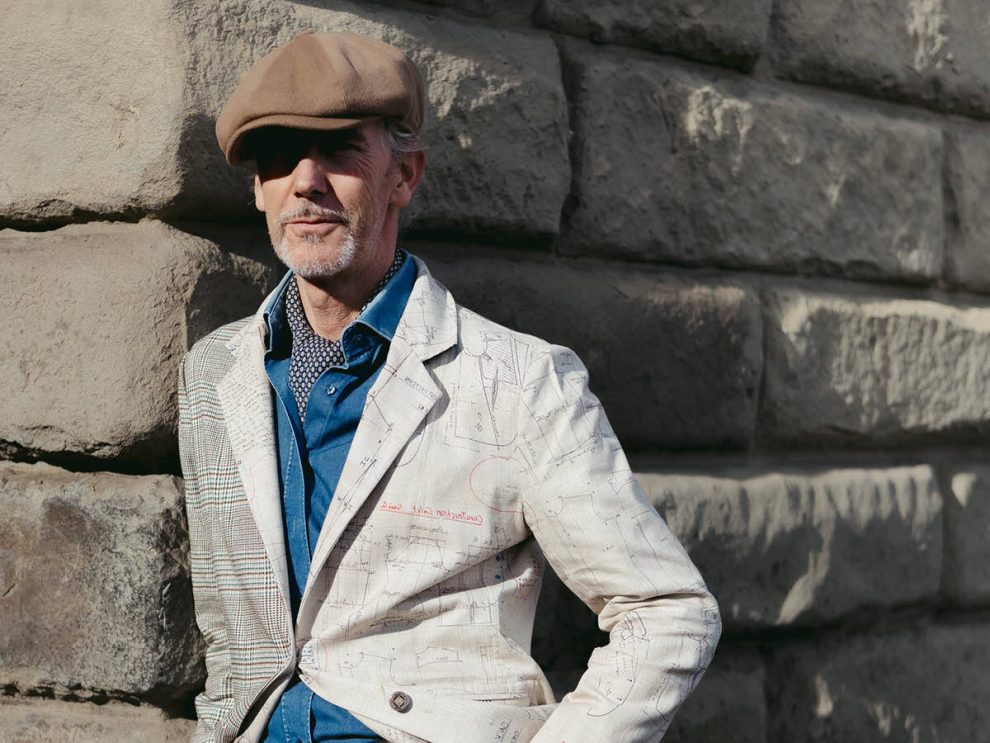
In September 2026, New York Fashion Week will welcome a new voice to its global stage: Taipei-based sustainable fashion label Story Wear. For the first time, the Taiwanese brand will present its collection in New York, marking a significant milestone not only for the company itself but also for Taiwan’s growing presence in the international fashion conversation.
At a moment when sustainability has become both an industry buzzword and a commercial imperative, Story Wear offers something increasingly rare: authenticity. The brand’s commitment to zero-waste production is not a seasonal marketing strategy or a capsule initiative designed to satisfy consumer expectations. It is the foundation upon which the entire company was built.
Founded in Taipei, Story Wear has spent years quietly developing a circular fashion ecosystem rooted in local craftsmanship, social responsibility and Taiwanese cultural storytelling. Every garment produced by the brand is created entirely from upcycled denim, discarded textiles and deadstock fabrics, eliminating the need for virgin materials while simultaneously reducing textile waste. In 2025 alone, Story Wear transformed more than 10,000 pairs of discarded jeans and approximately five tons of deadstock fabric into around 3,000 new garments and accessories.
The scale is impressive, but what distinguishes Story Wear is the deeply human process behind the numbers.
Consumers across Taiwan donate unwanted denim directly to Story Wear’s stores and offices, while local textile mills and garment factories supply surplus fabric that would otherwise end up in landfills. Once collected, every pair of jeans undergoes an intensive preparation process. Garments are washed and sorted by color, weight, size and thickness before being carefully deconstructed into usable panels. The material is then reconstructed through Story Wear’s signature patchwork technique, transforming irregular remnants into garments that feel both contemporary and artisanal.
No two pieces are ever entirely identical. Variations in the original fabrics create subtle differences in texture, wash and composition, giving each garment its own individuality while maintaining consistency through carefully structured design templates. The result is clothing that carries visible traces of its previous life—a tangible reminder of fashion’s material history.
In an era dominated by mass production and algorithm-driven trend cycles, Story Wear’s process intentionally slows fashion down.
The brand’s upcoming New York Fashion Week debut arrives after a period of growing international recognition. Over the past year, Story Wear has expanded its global visibility through presentations at Tokyo Fashion Week and Pitti Uomo, where its collections introduced international audiences to a distinctly Taiwanese interpretation of sustainable design. The brand’s Spring/Summer 2026 collection, “TWMultiverse,” presented at Rakuten Fashion Week Tokyo, explored themes of duality—nature and city, past and future, reality and dream—through garments crafted entirely from recycled denim and deadstock textiles.
Yet Story Wear’s vision extends far beyond aesthetics.
The company operates as a social enterprise with a production model centered on community empowerment. Since its founding, Story Wear has partnered with women reentering the workforce, mothers of children with cerebral palsy, ex-offenders, and local seamstresses and tailors, creating ethical employment opportunities within Taiwan’s garment industry.
One of the brand’s most impactful initiatives is a purpose-built workshop designed specifically for mothers caring for children with cerebral palsy. The space allows women to work in a safe and flexible environment while developing specialized sewing and production skills that can provide long-term economic independence. In many ways, Story Wear’s social infrastructure is as important as the garments themselves.
This emphasis on people rather than scale positions the brand in sharp contrast to much of the contemporary fashion system. While many sustainability-focused labels concentrate primarily on material innovation or carbon reduction metrics, Story Wear approaches sustainability holistically, combining environmental responsibility with labor ethics, local manufacturing and cultural preservation.
The company has also become increasingly influential through its educational and collaborative initiatives. Story Wear regularly partners with major corporations and organizations to transform industrial waste into new products. Previous collaborations have included repurposing retired Ikea uniforms into retail items, reconstructing Levi’s denim into backpacks and experimenting with yarns made from recycled plastic bottles in partnership with 7-Eleven.
These projects reflect the brand’s belief that sustainability must operate across industries rather than within isolated fashion systems.
That philosophy culminated in the 2024 opening of House of Story Wear, Taiwan’s first multibrand concept space dedicated entirely to sustainable fashion, lifestyle, food and design. Located in Taipei’s historic Dadaocheng district, the store occupies a restored heritage building that functions simultaneously as a flagship boutique, exhibition venue and community hub. More than 40 brands are represented within the space, with approximately 70% originating from Taiwan.
The location itself is significant. Dadaocheng remains one of Taipei’s most historically layered neighborhoods—a district where generations of trade, migration, religion and craftsmanship have intersected for centuries. Story Wear’s presence there reflects the company’s broader mission: connecting sustainability with cultural memory.
This relationship between fashion and Taiwanese identity has become increasingly central to the brand’s creative direction. Story Wear’s recent “Story of Taiwan” series integrates Indigenous art, temple iconography, traditional market culture and local narratives into contemporary upcycled garments. Rather than treating sustainability as purely technical or minimalist, the collections embrace emotional storytelling and historical specificity.
That vision reached a new level during the brand’s November 2025 Taipei runway presentation, staged directly on Dihua Street in a traditional market setting. The show transformed an everyday urban environment into a living celebration of Taiwanese heritage, closing off sections of the historic street to create an immersive runway experience that blurred the boundaries between fashion show, cultural performance and public gathering.
The presentation served as both homage and statement—a reminder that sustainability is inseparable from place, community and memory.
Now, Story Wear brings that perspective to New York at a particularly important moment for the global fashion industry. Fashion Week conversations are increasingly dominated by questions surrounding overproduction, waste, labor exploitation and the environmental cost of consumption. Despite this widespread sustainability rhetoric, truly circular brands remain relatively rare at the luxury and contemporary level.
Story Wear enters this landscape with a fundamentally different proposition: fashion not as extraction but as regeneration.
Importantly, the label also challenges long-standing assumptions about Taiwan’s role within fashion. For decades, Taiwan has been internationally recognized as a manufacturing powerhouse—producing textiles and technical fabrics for global luxury and sportswear brands—while receiving comparatively little recognition for its own creative identity. Story Wear reframes Taiwan not simply as a site of production but as a source of design innovation, cultural storytelling and sustainable leadership.
Its New York debut, therefore, represents more than another emerging designer showcase. It marks the arrival of a new model for fashion itself: one rooted in circularity, local collaboration and cultural specificity rather than endless expansion.
As luxury consumers increasingly seek meaning alongside craftsmanship, Story Wear’s approach feels remarkably timely. The garments do not simply communicate sustainability through statistics or certifications; they embody lived histories. Every patchwork seam, every reconstructed denim panel and every visible trace of prior use contribute to a larger narrative about memory, labor and transformation.
In many ways, Story Wear’s greatest achievement lies in its ability to make sustainability feel emotional rather than instructional.
At New York Fashion Week this September, the brand will introduce international audiences to its distinctive visual language of reconstructed denim and handcrafted patchwork. But more significantly, Story Wear will offer a vision of fashion in which waste becomes a resource, craftsmanship becomes a community and clothing becomes a vehicle for cultural preservation.
For an industry searching for new directions, that story may prove far more powerful than trend alone.


