




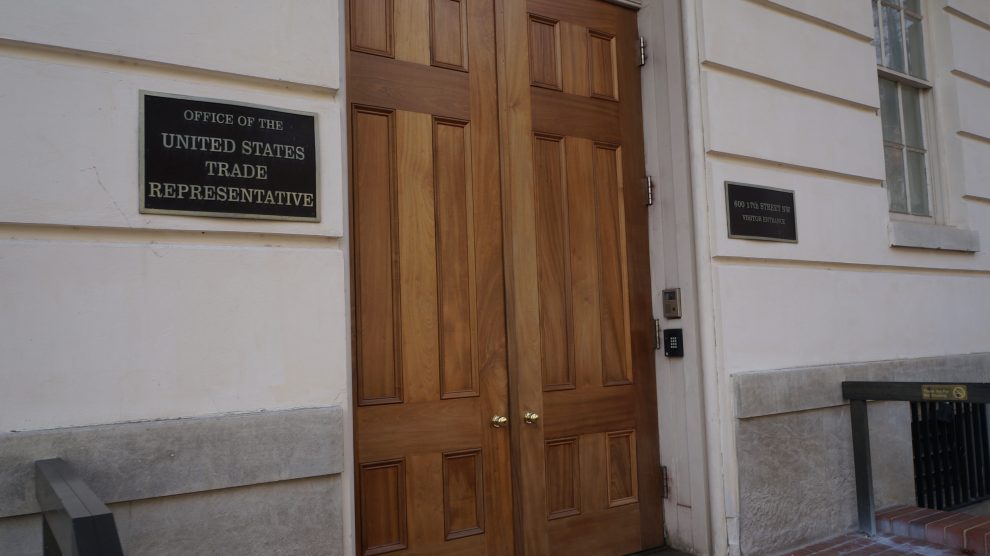
On June 2, 2026, the Office of the U.S. Trade Representative (USTR) announced findings in 60 separate Section 301 investigations examining whether foreign governments have failed to prohibit and effectively enforce bans on the importation of goods produced with forced labor. USTR concluded that many of the practices under investigation burden or restrict U.S. commerce and proposed responsive trade actions under Section 301.
The investigations stem from a broad initiative launched in March 2026 and represent one of the largest coordinated Section 301 enforcement efforts in recent years. Public comments are being solicited before USTR determines final actions. Written comments are due by July 6, 2026. USTR will hold hearings about the proposed actions in these investigations on July 7, 2026. This timeline could allow USTR to implement the proposed Section 301 tariffs before the current Section 122 tariffs expire on July 24, 2026.
Under the proposal, a 10% tariff would apply to imports from the following countries and jurisdictions:
- Canada, Ecuador, the European Union, Indonesia, Mexico and Pakistan: USTR states they maintain forced-labor import prohibition regimes.
- Argentina, Bangladesh, Cambodia, Ecuador, El Salvador, Guatemala, Indonesia, Malaysia and Taiwan: These regions have commitments related to import prohibitions on forced labor under their respective reciprocal trade agreements.
- The United Kingdom: USTR states it has implemented a partial regime restricting the importation of certain goods made with forced labor.
USTR is also proposing a 12.5% tariff on imports from additional 54 countries that it alleges have failed to implement and effectively enforce forced labor import prohibitions: Algeria, Angola, Australia, Bahamas, Bahrain, Brazil, Chile, China, Colombia, Costa Rica, Dominican Republic, Egypt, Guyana, Honduras, Hong Kong, India, Iraq, Israel, Japan, Jordan, Kazakhstan, Kuwait, Libya, Morocco, New Zealand, Nicaragua, Nigeria, Norway, Oman, Peru, Philippines, Qatar, Russia, Saudi Arabia, Singapore, South Africa, South Korea, Sri Lanka, Switzerland, Thailand, Trinidad and Tobago, Turkey, United Arab Emirates, Uruguay, Venezuela and Vietnam.
The combined affected countries and economies account for approximately 99.40% of all U.S. import sourcing by value. These proposed tariffs would be imposed in addition to existing most-favored-nation (MFN) duty rates, current Section 301 tariffs on China, and any other applicable or proposed tariffs, including duties arising from separate Section 301 investigations.
Certain proposed exclusions may be viewed in Annex A of the proposal. In addition to those products, the proposed action does not cover informational materials, donations, accompanied baggage; all articles and parts of articles that are subject to Section 232 tariffs; U.S.-Mexico-Canada Agreement (USMCA)-compliant goods of Canada or Mexico; and textiles and apparel articles that enter duty-free as a good of Costa Rica, the Dominican Republic, El Salvador, Guatemala, Honduras or Nicaragua under the Central America-Dominican Republic-United States Free Trade Agreement (CAFTADR). Changes may be made between this proposed action and the final action.
Brazil Found To Have Unreasonable Trade Practices
On June 1, 2026, USTR determined that several Brazilian trade-related practices are unreasonable and burden or restrict U.S. commerce under Section 301. The findings cover concerns involving:
- Digital trade restrictions and electronic payment services
- Preferential tariff treatment favoring Mexico and India
- Weak anticorruption enforcement
- Inadequate intellectual property protections
- Restricted access for U.S. ethanol exports
- Illegal deforestation and insufficient enforcement efforts
USTR also cited Brazil’s censorship-related court orders affecting U.S. social media companies, anticounterfeiting deficiencies, patent approval delays and discriminatory ethanol tariffs as actionable concerns. USTR has proposed responsive actions and opened a public comment process while negotiations with Brazil continue ahead of the July 15, 2026, statutory deadline.
Key Deadlines:
- June 22, 2026: Requests to appear at public hearing due
- July 1, 2026: Written comments due
- July 6, 2026: Public hearing
Vietnam Section 301 Investigation Launched, Focused on Intellectual Property Enforcement
On May 29, 2026, USTR initiated a Section 301 investigation into Vietnam’s acts, policies and practices related to intellectual property (IP) protection and enforcement. The investigation will examine whether Vietnam’s alleged failure to protect IP rights adequately is unreasonable or discriminatory and burdens or restricts U.S. commerce.
USTR will review Vietnam’s IP enforcement framework and its impact on U.S. companies. Upon completion of the investigation, USTR will consult with the president regarding potential responsive actions, which could include tariffs or other trade remedies.
USTR Requests Public Input on New US-China Trade Mechanism
On June 2, 2026, USTR announced a public comment process regarding the proposed U.S.-China Board of Trade, a new mechanism intended to promote more balanced and reciprocal trade between the two countries. The initiative stems from discussions between U.S. and Chinese leaders and could result in targeted tariff reductions on certain nonsensitive products while maintaining tariffs on goods deemed important to U.S. economic and national security interests.
USTR is seeking input on:
- Chinese products that may qualify for future tariff modifications
- Product sectors that could support balanced bilateral trade
- Criteria for determining eligibility
- The operation and frequency of future Board of Trade meetings
- Methods for reviewing and updating eligible products over time
Comments are due by July 10, 2026. USTR has emphasized that any tariff reductions would be limited and that tariffs on many products will remain in place as long as concerns regarding China’s nonmarket policies and lack of reciprocal treatment persist.
Other Pending Section 301 Investigation
USTR continues to pursue several additional Section 301 investigations that could lead to future trade actions. One is the Section 301 investigation over excess manufacturing capacity, initiated on March 11, 2026. Results of the investigation are still pending for 16 countries/regions: China, the European Union, Singapore, Switzerland, Norway, Indonesia, Malaysia, Cambodia, Thailand, Korea, Vietnam, Taiwan, Bangladesh, Mexico, Japan and India.
Importers should closely monitor these investigations, as they may result in new tariffs, trade restrictions or other enforcement measures affecting global sourcing and supply chain strategies.


