




These days, there’s a lot of talk about (read: arguments about) climate change. While the politics might be contentious, the science is not. Given that Earth Day is this month (the 50th annual Earth Day, believe it or not), it seems appropriate to really take a look at what’s going on with our planet.
Specifically, let’s talk about trash.
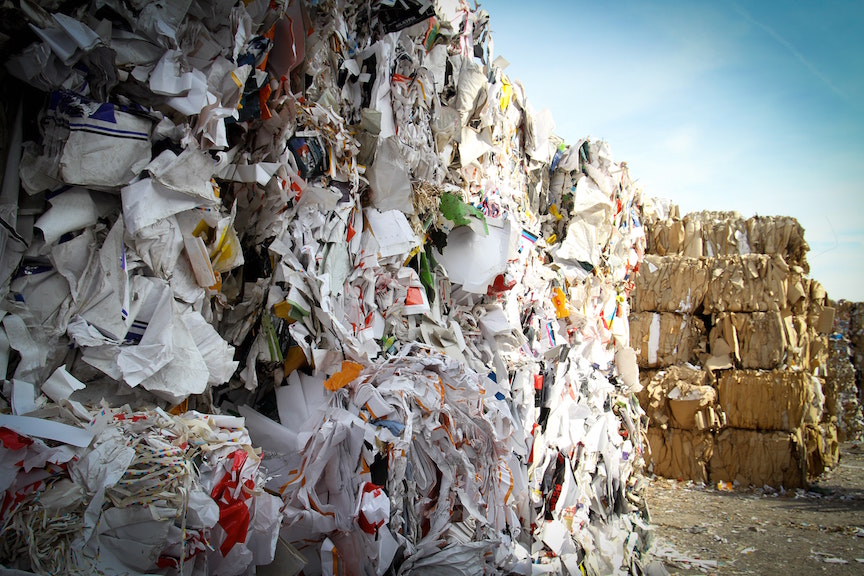
According to the Environmental Protection Agency (EPA), Americans generate four and a half pounds of municipal solid waste (MSW, aka garbage) per person, per day. Contrary to what we might think or hope, we’re actually generating more trash per year now than ever before. In 1990, we created 208.3 million tons of the stuff. By 2015, we were up to 262 million tons, and in 2017, we hit nearly 268 million tons.
While recycling seemed like it might help resolve some of that pressure, the last few years have seen a collapse in the recycling market. Local governments are unable to make the numbers work, and China has almost entirely closed their doors to our recycling market after a decade of taking everything we could send. So while the percentage of MSW being sent to landfills has dropped to about 52% — down from 94% 60 years ago — that number is likely to change dramatically soon.
So what is a realistic path forward if we’re going to have more stuff and fewer options for where to put it than we had even five years ago?
Landfills Are Not the Answer
What’s the big deal with landfills, anyway? Practically speaking, it’s impossible to go zero-waste as a country, so we need somewhere for non-recyclable MSW to go. Landfill use isn’t really the problem; landfill overuse is the problem.
In addition to serious amounts of landfill-generated greenhouse gases, like methane, there are plenty of other issues to worry about. For example, research shows that many landfills are nearing capacity. In fact, by 2021, it is estimated that only 15 years’ worth of landfill space will remain.
History shows that poorer communities may be targeted for new landfill sites. This is an entirely different, but related, problem of economic injustice. Air pollution from landfills negatively affects nearby residents’ health. Additionally, birds feeding at landfills are — at best — a nuisance to communities and a threat to public health, at worst.
Remember that tons (in the literal sense) of recyclable MSW are heading to landfills instead, filling them at an unsustainable and unnecessary pace. Of particular interest to me and my organization, Soles4Souls, is the clothing and shoes we pitch every year.
Admittedly, this is a tougher concern to quantify, but wouldn’t you agree that it’s just plain wasteful to let potentially useful goods rot in a dump? But that’s exactly what’s happening, thanks in part to fast fashion.
Slowing the Pace of Fast Fashion
I realize I’m writing to leaders of clothing and shoe brands. I recognize that so many of you invest incredible energy and money to minimize the negative outcomes of fast fashion, especially in your supply chains and production processes, which is good for people and for the planet. You’re juggling demands for new products, lower prices and higher profits, all while trying hard to be good human beings and responsible community leaders. But the pressure is building from our customers, partners, employees and investors. Nearly every stakeholder is asking these kinds of questions.
Of course, it’s not just brands and companies who are responsible for the problems created by fast fashion and increasing consumption. We consumers are always looking for the best deal, the lowest price and something novel. We’re implicated and responsible because we buy the stuff. Each of us has to ask ourselves about the impacts of our purchases. When we wear that pair of running shorts or those new shoes, we’re connected by a thread to someone on a factory line halfway around the world.
Short-use textiles aren’t going away any time soon. So we have to shift our perspective and make the most of the situation. How? By diverting the clothing and shoes currently landing in landfills and putting them to good use instead.
Educating consumers about recyclable/reusable textiles is only part of the equation. The other part of the solution will have to come from brands and manufacturers. For example, rather than sending your clothing and shoe overruns, samples and seconds to the landfill, you could repurpose them. Because recycling is hard, especially for footwear, putting them to another use is good for the environment and benefits others. You could donate them to organizations (like ours) that turn unproductive goods into opportunities for people in need.
Our Choices Matter
Repurposing goods isn’t always the simplest or least expensive option, though when you factor in tax breaks, transportation and disposal costs, it might be. But there’s even more in it for you: brand loyalty. These days, consumers want it all: the best deal and products they can purchase with a clear conscience. A 2018 study by Futerra found that consumers want brands to help them be more environmentally friendly and ethical. Your bottom line can benefit, then, by engaging in recycling/repurposing efforts, talking about what you’re up to, inviting your customers to join you and making it easy for them to do so.
Yes, it can take more coordination and effort to keep stuff out of the landfill that doesn’t belong there. But our planet is worth it — and so are the people who benefit as a result.
Buddy Teaster
Soles4souls
soles4souls.org


