




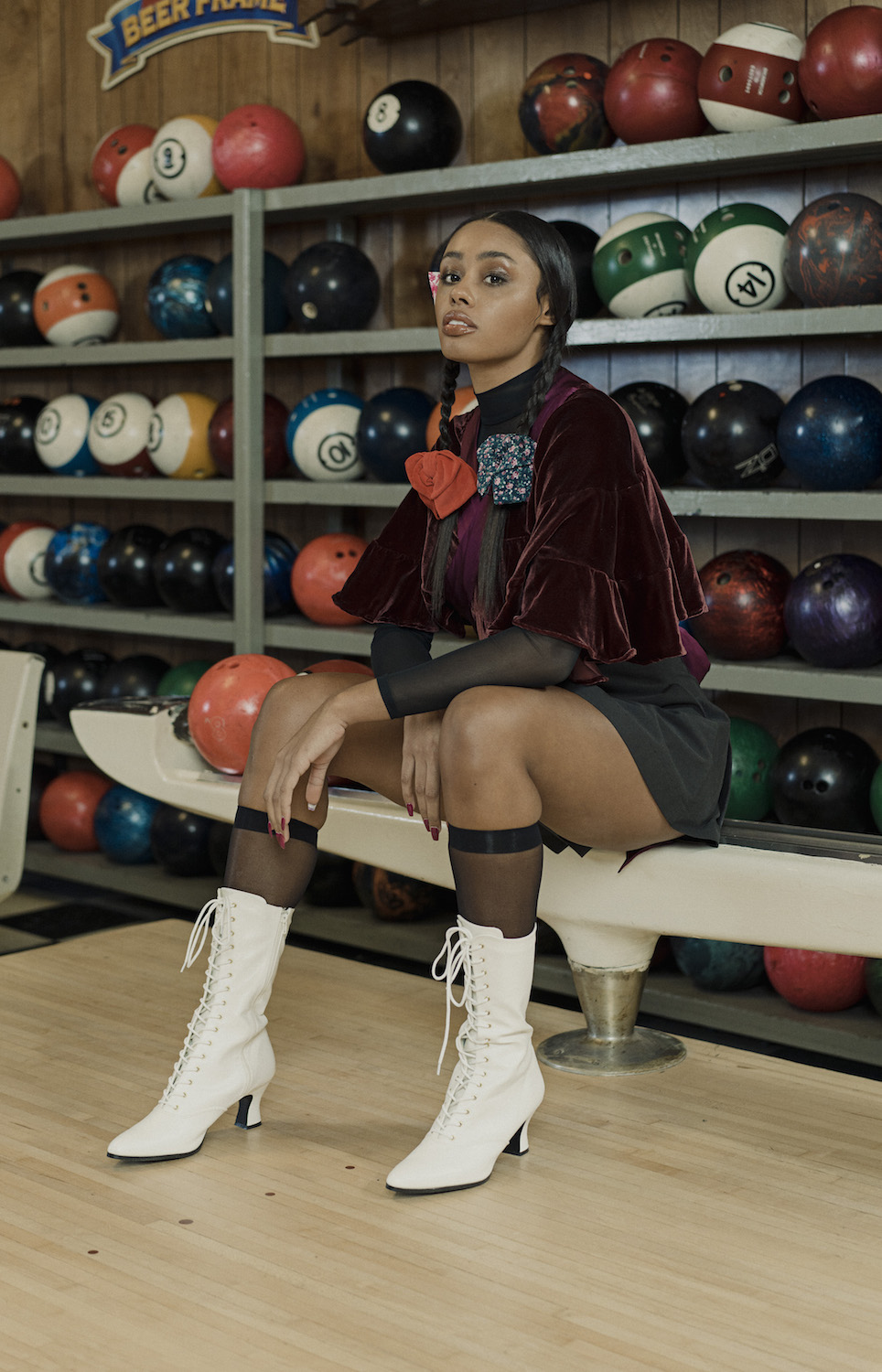
Designer Victoria Cates looks at the long arc of fashion history
As a self-described optimist, Victoria Cates, CEO and designer of Potion23, looks at contemporary fashion standards generously.
“I think the great thing about living now and loving history is that you can have whatever lifestyle you want. If you love antiques, if you love dressing every day like you’re from the 1940s, you can do it! And no one’s going to stop you! But it wasn’t always like that,” she said. “Being able to take those things and being able to live them in your own personal way I think is so cool about being alive now.”
It might seem unusual for a designer who launched less than a year ago to take such an upbeat stance in what have recently become troubling times, but Cates isn’t wearing rose-colored glasses (at least, not in the figurative sense). Instead, she has been able to combine many of her personal passions with her appreciation for everyday beauty into her personal brand.
“I’ve always loved clothes, I’ve always loved dressing up, and I particularly love vintage,” she said. “There were times when I thought I was going to be an illustrator, and then I thought I was going to be a painter, and then I decided finally to go back to school and pursue fashion because that was what I felt I could really go somewhere with.”
Cates’ mission to make a living via art continued at the Beverly Hills Design Institute in Los Angeles, a then-experimental school that emphasized hands-on learning and haute couture techniques. It was there that she perfected her sewing abilities and began to incorporate her love of history and art into clothing.
Growing up in a 1875 carriage house in New York inspired Cates to love the care and intricacy of vintage, including the “cliche romanticism of the past” that she sometimes encounters. But while she has a life-long appreciation for the old, she has learned to grow into a love for the colorful.
“As a young person (you know, high school, early 20s), I was very much in the goth scene. So I wore a lot of black and dark colors and things like that,” she said. “So I think, in a way, I almost rubber banded to the opposite side of of the spectrum from that now that I’m in my 30s.”
Since she has lived in several cities, including New York City; Saint Louis, Missouri (where she is currently based) and Salem, Massachusetts, Cates noticed how many people avoid color in their closets (we’re looking at you, New York).
“I worry that so many people feel comfortable in darker colors because they don’t want to stand out,” she said. “With Potion23, I wanted to inspire people to invite color back into their wardrobes and to their world and to their psyche, because, to me, fashion is about fun.”
Potion23 calls on the natural liveliness of color to accomplish that mission, especially through pastels and bright patterns.
“I have found myself so enveloped in the need to be around color,” Cates continued. “I love pastels in particular — that sort of fanciful, whimsical palette was just so different from how I was living aesthetically for so long.”
Cates’ color revelation was more than just a design breakthrough; it became a kind of life philosophy that encompasses her love for nature and personality in style.
“I realized, ‘I’m an artist; how can I discriminate against color? I love color!’” she said. “It’s what makes everything so rich and interesting!”
Luckily, her passion for vintage aligns with that newfound love.
“I harken back to particularly the 1930s and ‘40s,” she said. “There are a lot of muted tones but really almost on the verge of kitsch, bold, fun prints.”
Potion23’s name also harkens back to an older time: Cates’ childhood. While “potion” represents the mixture of her personality and experiences within her designs, “23” comes from her childhood nickname Deux Trois (French for “two three” — but she isn’t quite sure how her mother came up with it).
The intricacy and detail of the designs themselves is vintage-inspired as well, so at this early stage of the brand, it makes the most sense for Cates and one other seamstress to hand make every garment on a made-to-order model.
“The clothes are pretty complicated — they take a lot of care and time in doing them,” she explained.
Before the COVID-19 outbreak shut everything down in the U.S., Cates enjoyed staging pop-ups around the country to meet customers. Instead, she’s using the inventory she designed for those canceled or postponed events to raise money for the Center for Disaster Philanthropy (CDP), which is currently raising funds to offset the negative effects of the pandemic.
“As a small business, doing the little you can — even just posting things on my Instagram that make people happy … is being there for [customers] and just being an outlet for something that will inspire them and keep them going, even if it’s just for a moment,” Cates said. “I decided to offer an Insta-sale of the items that I’ve made, and I’m giving 15% of the proceeds to the CDP.”
Things seem bleak now, Cates admitted, but it is sometimes disasters like these that trigger widespread, positive change, she said optimistically. In both life and fashion, she looks for the things that will cheer people up.
“I’m attracted to things that bring me out of the black, white and gray reality that we find ourselves in so much of the time,” she said.


