




A Q&A with Gigi Moda designer Francine Wathelet
Sustainability might be one of the biggest trends in fashion, but it doesn’t always reach to every corner of the industry. As Belgian designer Francine Wathelet discovered, there aren’t many sustainable options for middle-aged and older women, especially those with children or grandchildren.
Wathelet is a woman of many ventures; before founding Gigi Moda in San Diego, California, she founded and ran a hostess booking company, a cleaning services company and an organic salad bar. Though she has limited experience in fashion, Gigi Moda has gained a foothold in the U.S. market, especially in Texas and Florida. With a team of 30, Wathelet designs what she believes women actually want to wear while keeping sustainability a priority.
Due to a French-English language barrier, Wathelet answered questions through her public relations representative Annabelle Azadé. As Azadé spoke, she noted that she was wearing Gigi Moda and that she shares a personal connection with Wathelet.
“To me, I look up to her,” Azadé said. “I’m 32, and I’m French; I’m an immigrant — I’m just thinking, if one day I can have this success, not knowing anything about fashion, immigrating across the world, not really knowing the cultural codes or anything — and make it happen like that, that’s amazing.”
What inspires you to design?
[Wathelet] starting seeing that middle-aged women want to be in the trends and want to look young. So the process is that for most of the pieces, it’s a one-size-fits-all on purpose because she wants mothers and daughters to wear the same pieces. She has a lot of people working for her and checking on the new trends. She’s French, and she’s got that nature-ocean vibe, so she’s always getting inspired by nature, mostly about the ocean, and you can see it in the designs — its very beachwear but with a French flair. Chic beachwear. She uses a lot of ruffles, a lot of silk, a lot of lace in shirts.
What are the most popular products?
The satin dresses — they’re like maxi dresses with an open back or a v-shape neck — they’re super popular only because they’re very flattering for all types of bodies. Some of the designs are very good for people in their 20s or 30s. But if you check the trousers, those are very good for middle-aged women. The jumpsuits are very popular because they are flattering for all cuts.
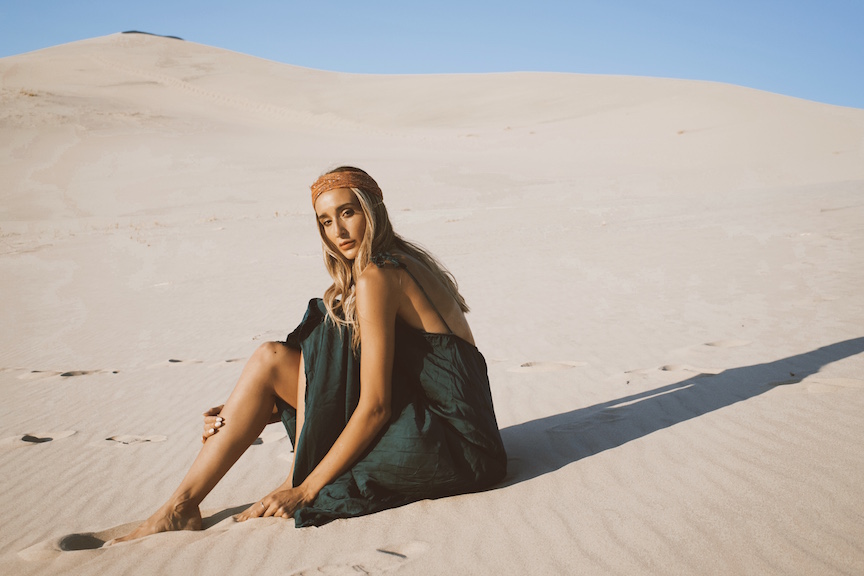
A lot of fashion photographers are taking the dress because it’s satin, but it looks like silk. It’s very, very high-quality fabric, so for pictures, it does a really good job, and for the skin, it’s a very smooth, like silky touch, so it’s very nice to wear in the summer when it’s hot.
What distinguishes Gigi Moda from other brands?
Middle-aged women do not usually have a choice of having a sustainable brand. Sustainability is usually for hipsters or urbanites or people who live in the city, but there’s not really a brand that’s for women who maybe have less access to information to what’s on social media. Gigi Moda can fill in that gap.
The cuts are flattering for women who already have children — it’s not like sexy, stretchy, you know, like, “Oh shit, I’m not size four, I won’t fit in it.” She does large sizes. It’s sized large on purpose so women who are middle-aged feel comfortable.
How does sustainability play into the brand?
Everything is made in Italy. She has a line of accessories that is made in Italy as well, like leather bags, and as I said, silk and fabrics like this are all sourced in Italy responsibly. With the COVID-19 thing, it’s kind of changed, but she usually goes three times a year to Italy to check on the workers, to check the manufacturers, to make sure she’s happy with the people who are there.
How did you build your following?
She’s very involved in sustainability, and therefore, she does not have like four seasons or two seasons. She designs as many designs as she wants, and she puts them online whenever she wants. Usually she puts five to six new designs each month on her website.
She really is building a faithful clientele because it’s not like, “Oh, you don’t like the collection, you’ll be back in six months and see if you like it.” It’s more like, “Oh my God, we can’t wait to see what’s the next designs,” and I think that’s what keeps her clientele hooked.
What do you do to reach a demographic that is less likely to use social media?
The way she is engaging with that community is by filling orders at retail stores that are close to people. The main markets for her are Florida and Texas, and in Florida and in Texas they will go to the market, they will go to stores. Physical presence for her is super important because this population is less connected [to social media]. People like to meet, to see it, to touch the fabric.
Annabelle, you’ve called Francine a “true artist.” What makes you describe her that way?
People try so hard to be hipsters … Francine, she did something totally different. She said, “What would I wear as a mother of two or a grandmother-to-be? As a mature woman, what would I wear?” With her it was more like, let’s be real, women want to dress simple. I’m going to dress a woman who could be me — someone who has a second house by the beach, who wants to dress fancy but at the same time dress comfortable and sustainable.


