
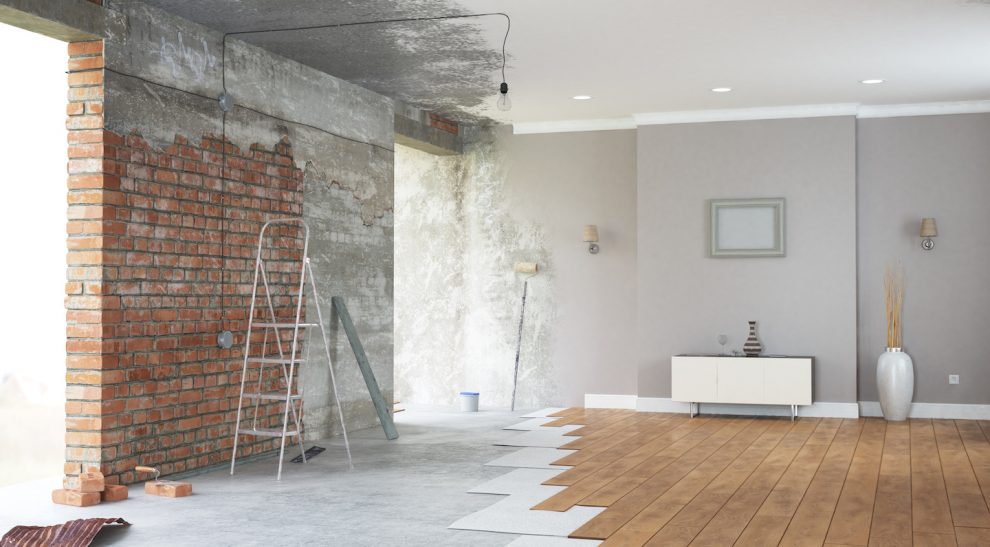
As the shock and haze from the onset of the pandemic is starting to lift a bit in New York, people are starting to think once again about renovations. It is interesting to see how attitudes have changed from before the pandemic to now. Budgets and belt-tightening are much more apparent. It is almost a “bunker mentality” of wanting one’s home to be a castle and “live-work safe space.” They also have tightened their belts more as a result of the economy.
Here are a few preliminary pointers I like to share with my potential clients.
- Never take neighboring property owners for granted. Adjoining buildings can be inconvenienced and claim damages from renovations, as can neighboring unit owners. Damages can vary from property damage, such as leaks and cracks, to nuisance claims because the work took too long. Rather than keeping neighbors in the dark, it can be helpful to be forthcoming about plans. The extent of such dialogue should be discussed with legal counsel.
- Have written agreements between building owners and tenants, if any, and between coops and shareholders. Obtaining insurance certificates naming the unit owner and the building as additional insureds is essential. Some condo unit owners allow tenants to renovate without written agreements and evidence of insurance. Most co-ops these days require shareholders to sign Alteration Agreements before any renovation work is done. There will be per diem charges for each day the work goes past the specified completion date. Alteration agreements are longer and require indemnification by contractors. They should be reviewed by legal counsel before signing.
- Timing is everything. Some co-ops only allow renovations to be done within a specified period of time and assess liquidated damages for each day the work goes beyond the date specified. These timing requirements must also be spelled out and passed on in the contract with the contractor.
- Get it in writing. There can be major disagreements over what the building has allowed to be done and what the shareholder or tenant is actually having done. The work cannot exceed or be different than what was approved. In a worst-case scenario, the building can compel the renovating party to restore the area back to the original condition. Never accept a verbal promise that work is approved. Plans must be approved in writing.
- If the renovation involves the combination of two or more co-op or condominium apartments, it is best, if possible, for the seller to legally combine them before they are sold. The seller will pay a lower tax rate upon closing.
- Budgets must be clear. If the design professional cannot do cost estimating, the client should be advised and assisted in locating a cost estimator or someone who can provide that information. Whatever the budget is for construction, the client must have extra funds available for unexpected contingencies, because they are inevitable.
- Design professionals and contractors must be clear about when there will be additional charges, in order to avoid disputes. The golden rule is that prices should be given before work is done, along with paperwork describing the work, so that both parties can agree in writing and then go forward.
- Do not forget about subcontractors. They have the right to file mechanic’s liens. Contractors are often paid and do not pay their subs. Sometimes they are the people an owner turns to in order to finish a project when there has been a falling out with the contractor.
- Get the insurance right. If a contractor agrees to obtain general liability insurance naming the client, the building and the managing agent as additional insureds, he must do so before any work has started. There must also be a contractual provision requiring this, in addition to providing the certificate itself. The contractor cannot do demolition and purchase the policy a week later.
- Create a paper trail and save it. This means documenting in writing the mishaps and items that cause delays and problems along the way, as well as who was paid and when. It means having the design professional or construction manager obtain partial waivers of lien with each payment to the contractor or the trades.
C. Jaye Berger
Law Offices C. Jaye Berger
110 E. 59th Street, 22nd Floor
New York, New York 10022
lawofficescjb@aol.com
212-753-2080