
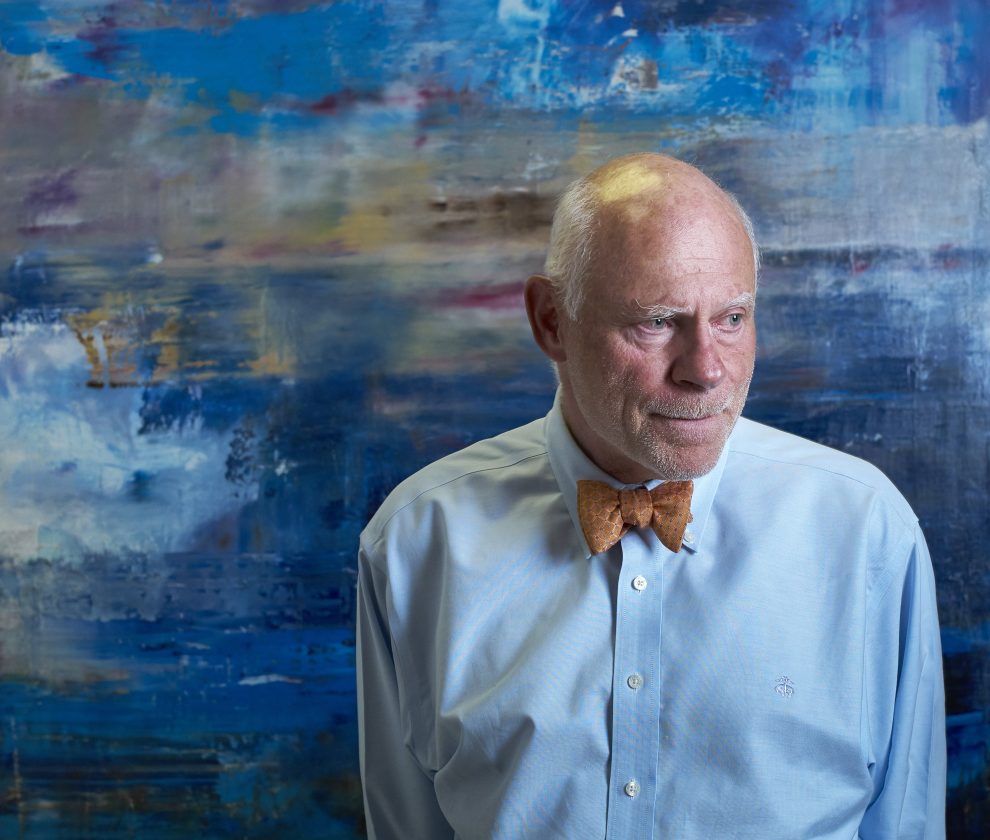
As Time Equities marks its 60th anniversary, Founder and CEO Francis Greenburger reflects on the pivotal moments, partnerships and market cycles that transformed a small office-leasing venture into a global diversified real estate investment company.
In 1966, what has become known as Time Equities Inc. (TEI), consisted of a single entrepreneur, a rented office and a business idea that had little to do with real estate.
Sixty years later, the company has grown into a diversified real estate investment, development, asset management and capital-raising platform with assets and investors spanning the country. Along the way, it has survived market crashes, transformed alongside advances in technology, expanded internationally and continually reinvented itself to meet changing market conditions.
For Founder and CEO Francis Greenburger, the company’s history is less a story about growth than one about adaptation.
“The world is always changing,” Greenburger said. “Success comes from being able to adapt.”
That philosophy has guided TEI through six decades of evolution. The company’s origins were unexpectedly entrepreneurial. As a teenager, Greenburger formed a corporation called TCC Productions to manage a pair of local rock-and-roll bands. At the same time, Greenburger was attending school, working part-time at his father’s literary agency and operating several small side businesses, including a book distribution company. The ventures were short-lived, but the corporate shell remained.
When he leased office space for the business, he rented more than he needed and subleased the excess space to other tenants. The arrangement worked surprisingly well, and soon, landlords began offering additional space. What started as two rooms became an entire floor. One floor became two. Then came multiple buildings. With his hand now in the real estate business, Greenburger renamed TCC Productions to Time Equities because, simply put, real estate creates equity over time.
Greenburger had discovered an underserved tenant population — small businesses seeking affordable office space in walk-up buildings that larger landlords were reluctant to manage.
“I realized I’d found a niche,” he recalled.
Importantly, he was not buying buildings. He was leasing them and creating value through management, leasing and subleasing. The model required creativity more than capital. The transition to owner came gradually in the years following.
An early Greenburger supporter, a friend of his father, invited him to participate in the acquisition of a loft building in Manhattan. Shortly afterward came a small apartment building on Barrow Street in Greenwich Village which would establish another vertical of TEI’s future business model.
Greenburger did not have the capital to purchase the property himself. Instead, he assembled a small group of investors, each contributing a modest amount toward the acquisition. Looking back, it was the start of the company’s syndication business.
The concept of bringing together investors to participate in real estate opportunities would eventually become a cornerstone of TEI’s business. By the late 1970s and early 1980s, the company had entered what would become one of the most significant chapters in its history: cooperative and condominium conversions.
New York City was changing, and TEI became one of the most active participants in the co-op conversion movement. Over time, the company converted approximately 100 buildings and more than 10,000 apartments throughout the city.
The period also reinforced Greenburger’s belief that real estate could create lasting social and economic impact. One project in Clinton Hill, Brooklyn, remains especially meaningful. At the time, the property was suffering from severe deterioration, and many doubted residents could purchase their apartments. TEI pursued a different approach, helping secure financing that allowed moderate-income residents to become homeowners. Some apartments sold for approximately $12,000, requiring only a modest down payment of $750 from purchasers. Decades later, many of those homes are worth over $1 million.
For Greenburger, the project demonstrated how real estate could strengthen both communities and individual families. As the company expanded, another pivotal moment arrived in the form of a partnership that would help shape TEI for decades.
In the mid-1980s, Greenburger was negotiating the acquisition of a property from Bob Kantor. The transaction was no easy feat with negotiations happening around the clock for days as the parties raced to complete the deal. What emerged from the experience was mutual respect. At the recommendation of a mentor, Greenburger had already begun searching for someone to help oversee the company’s growing operations. After the transaction closed, he reached out to Kantor. Rather than recommending another candidate, Kantor suggested himself. The decision proved transformative.
Over the next forty years, Greenburger and Kantor built one of the industry’s most enduring executive partnerships. Both describe an unusual ability to approach problems similarly and arrive at the same solutions independently, and most importantly, do so in an ethical and responsible way.
As the company grew, Greenburger increasingly focused on bringing in talented people and empowering them to lead. He often describes himself as a listener rather than a top-down manager, believing that successful organizations are built by giving capable people ownership of ideas and responsibility for execution. That philosophy helped create the leadership foundation that would carry TEI through both periods of growth and periods of crisis.
Yet the company’s greatest test was still ahead. The real estate collapse of 1989 remains one of the defining moments in TEI’s history. At the time, the company was heavily invested in the co-op and condominium business, and when lending institutions dramatically halted apartment financing, the market effectively froze.
The impact was immediate. Banks had financed projects, apartments were ready for sale and buyers existed, but financing had disappeared. Revenue evaporated while debt obligations remained.
“In 1989 we sold 1,000 apartments. That’s 20 a week, and we didn’t have closings on Fridays, so we were closing five a day, every day, for an entire year. In 1990, we sold three apartments. Our sales went from a thousand to three,” said Bob Kantor.
The crisis threatened the company’s survival and many competitors in similar situations did not survive. Greenburger has described the period as the most difficult challenge the company ever faced, but TEI responded with an approach that remains central to its identity – transparency.
Leadership met directly with lenders, regulators and stakeholders, openly communicating the company’s challenges rather than attempting to conceal them. The company also sought guidance from the New York Attorney General’s office regarding disclosure obligations, ultimately helping shape practices that later became industry standards.
“There was luck,” Greenburger acknowledges. “But mostly we did what we always do. We tried to be honest and straightforward.”
The recovery took years, yet the experience ultimately strengthened TEI’s reputation. Bankers who worked with the company during the downturn remembered its transparency long after the crisis ended, carrying those relationships with them as they moved to new institutions.
The lessons learned during that period infl uenced nearly every chapter that followed. While TEI’s early years were concentrated in New York City, the company increasingly grew into new geographies and property types. What began in Manhattan gradually expanded into a national footprint.
Over the following decades, TEI acquired and developed assets across multiple regions and property sectors, transforming the company from a New York-focused owner into a diversified real estate platform with investments spanning the United States and beyond.
As the business evolved, so did its organizational structure. Leadership positions emerged to oversee increasingly sophisticated platforms. Asset management, development, accounting, acquisitions and operations became dedicated disciplines within the organization, many of them still led today by executives who helped build those platforms from the ground up.
With the desire to continue growing the portfolio came the focus on capital raising. For years, TEI relied largely on a network of long-time investors, many of whom had invested alongside the company for generations. But the aftermath of the 1989 downturn changed lending requirements, and banks increasingly demanded more equity, making access to capital even more important.
The solution became Time Equities Securities. The broker-dealer platform gave TEI the ability to reach a broader investor audience and connect with fi nancial advisors throughout the country. To get the platform up and running, executives obtained licenses, studied regulatory requirements and immersed themselves in an entirely new ecosystem of capital formation. Over time, the platform became a critical growth engine for the company and it still is today.
It also reflected a broader evolution underway at TEI. What had begun as a real estate operator was becoming a fully integrated investment platform capable of sourcing opportunities, managing assets, developing projects and raising capital. The company’s ability to evolve again proved valuable during the 2008 financial crisis. While Greenburger has often compared the emotional impact of 2008 to the trauma of 1989, the company approached the downturn with the benefit of experience. Rather than reacting with panic, the organization focused on preserving fl exibility and managing through uncertainty, and the same culture that had helped TEI survive earlier crises once again proved eff ective.
Fast forward to today, TEI looks very different from the company Greenburger founded six decades ago. Instead of a one-person operation, the organization is led by a deep bench of executives supporting a 45 million-square-foot portfolio with more than 350 properties across 37 states and seven countries.
Many of these leaders got their start in the real estate business through TEI’s internship program and have built their careers in tandem with and alongside TEI’s growth. Today, they manage specialized, in-house businesses in their areas of expertise that would have been unimaginable during the company’s earliest years, including acquisitions, asset management, construction and development, equity capital markets, legal, accounting, operations and more.
For Greenburger, the goal is not simply continuity but preservation of the culture that enabled the company to reach its 60th anniversary. When asked what makes him most proud, he does not immediately point to acquisitions, developments or financial milestones. Instead, he points to ethics, transparency, the investors who have remained with the company for multiple generations and most of all, the people who made the journey possible.
Any building, he often says, is simply a physical asset. What gives it life are the people who manage it, invest in it and care for it.
The next chapter for TEI will likely look very diff erent from the first. The market cycles will continue, technology will evolve and new challenges will emerge. But the principle that has guided the company for six decades remains unchanged.
As Greenburger often says, “Make hay while the sun shines, but carry a large umbrella.”
After 60 years, that mindset of growth, preparation and adaptability continues to shape Time Equities’ future.