
The commercial real estate industry has been impacted worldwide by pandemic-fueled lifestyle changes, supply chain disruptions, economic hardship and the escalation from global warming to global boiling. Despite
this, by 2050, the commercial building floor space in the U.S. is expected to see a 33% increase from 2021, according to the U.S. Energy Information Administration.
Showing no signs of slowing down, the commercial real estate industry needs a major rebrand. Driven to think differently about the highest and best use of property, commercial real estate brokers, developers, building solutions manufacturers, architects and facility managers must reimagine the core of the industry to sync with the rapidly changing world and be prepared to pivot, sometimes unexpectedly. A focus on resilience, reuse and reinvention will define the future of commercial real estate, replacing band-aid solutions with concrete, future-proof practices.
Supply Chain Resiliency
Effective, high-functioning supply chains are vital to any commercial real estate development to ensure a steady and manageable flow of required materials. Recent pandemic-laden years have made it painfully apparent that existing domestic and global supply chains must be more resilient and stable during crises, especially seeing how heavily construction de-accelerated due to pre-existing issues. As an industry laser-focused on outsourcing, commercial real estate must recalibrate its current practices. Zeroing in on geographic diversification and switching mindsets from the lowest first cost to the lowest total cost of ownership model will offer long-term supply chain resiliency.
Offshore, near-shore and onshore — this geographic diversification approach provides a level of insulation against geopolitical, social and economic issues. Creating leverage across multiple regions allows procurement teams to instill flexibility, security and resiliency. While variation in unique cost structure when procuring from different parts of the country or abroad may pose a challenge, the time and effort behind strategically integrating product sources into a blended total product cost pays off in the long run. This guarantees a resilient and steady supply flow to support commercial construction.
Additionally, transparency in financial performance is crucial in any business model to establish continued performance and long- term viability. However, traditional methods of measuring supply chain success by a cost bill of materials (BOM) and landed cost have excluded vital factors such as total cost of quality (TCQ) for poorly made or damaged products, cost lost to expedited freight methods and concessions to customers to counteract delays/penalties. Thus, it fails to capture the true total cost of the supply chain. Considering these factors in developing resilient supply chains will be key going forward.
Adaptive Reuse
Moving from the drawing board to the construction site, adaptive reuse has seen and will continue to see a resurgence. On a purely business-oriented level, starting from scratch can be more expensive than working with what is readily available, especially as lots for development continue to run scarce. New builds will likely take significantly longer to complete as additional planning, construction, materials, labor and permits are required. Adaptive reuse, therefore, offers a highly efficient workaround to extended development processes.
The future of commercial real estate, however, relies on far more than cost and profit-oriented factors. Cultural and societal shifts have just as much of an impact, if not greater. As employees spend less time on site with work-from-home and hybrid schedules, existing corporate spaces remain empty, carrying the potential to be repurposed for other commercial uses. Additionally, existing structures often carry historic local roots with them. Upkeep, however, is costly and the cultural values that define surrounding communities often need to be recovered.
Adaptive reuse allows for the simultaneous reinvention of underused spaces and preservation of local history and culture characteristic of today’s social landscape, which can potentially increase the property value.
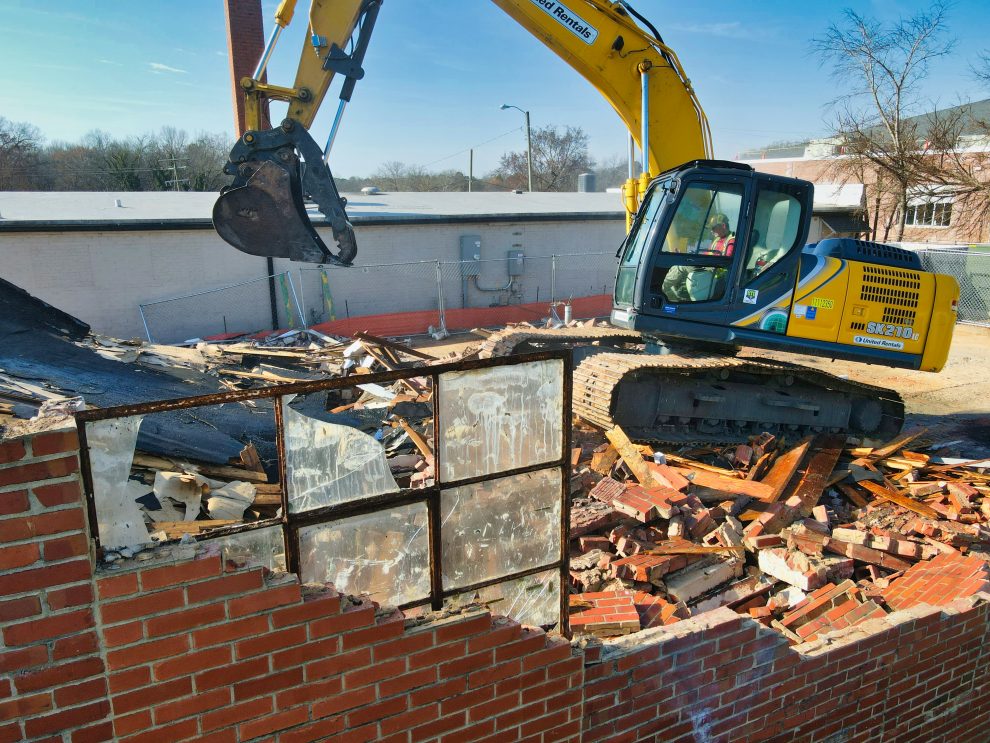
The industry’s environmental impact is another consideration. Currently, demolition in the U.S. alone contributes to more than 90% of construction debris, according to the U.S. Environmental Protection Agency. Repurposing and reusing existing structures significantly reduce harmful construction waste, lowering a development’s large carbon footprint. Adaptive reuse paves the way for a more sustainable, resilient future for commercial real estate.
Offsite Construction
Economic demands, a need for resilient and sustainable alterna- tives and technological improvements in the commercial real estate industry are attracting a new wave of interest in prefabrication and offsite construction. It is faster, more cost-effective, safer and greener than traditional construction practices. While prefabricated construction is not a new concept, it is ready to be reinvented to steer the industry away from less efficient practices. Containing a myriad of benefits, prefabrication and off-site construction accelerate and improve construction processes.
Working onsite while simultaneously constructing needed additional building materials off-site speeds up the construction timeline while reducing overall waste and noise pollution. This practice is highly significant in densely populated cities. As less machinery, materials and energy are needed for offsite construction, the practice establishes a safer, more sustainable work environment. Additionally, offsite construction tends to focus on permanent construction. With more space, less pressure and more materials at hand, building elements can be perfected each time they’re built offsite.
Strategic coordination and consistent communication are required across different trades and stakeholders to ensure a successful prefabrication implementation. Initial conversations, hopefully leading to extended collaboration and the streamlining of future commercial real estate processes, will encourage contractors, developers and product suppliers to work together (while being physically separated via the job site) as partners while also reaching diverse stakeholders, including but not limited to architects, building owners and workplace design teams.
While the future will likely hold some surprises, it is clear that resilience, reuse and reinvention will be top of mind for the commercial real estate industry. Current predictions suggest that enhancing supply chain resiliency, implementing adaptive reuse and embracing offsite construction and prefabrication offer tangible, safe stepping stones toward that uncertain future.
These solutions will encompass all angles of the commercial real estate industry, permeating it from the drawing board to the final built structure. Resilient supply chains will ensure the timely completion of commercial spaces that are more prepared to take on unprecedented global challenges and emerge as unscathed as possible. Adaptive reuse is an invaluable tool in reducing the industry’s harmful impact on the environment, promoting reuse over disruptive demolition and new construction. Finally, the resurgence of offsite construction and prefabrication carries the potential to improve the construction process on a wider scale, focusing on longevity, sustainability and safety.
The solutions, in addition to other developed or upcoming operational practices, are designed to improve the current state of commercial construction and ultimately transform today’s commercial real estate industry to meet an unpredictable future.