
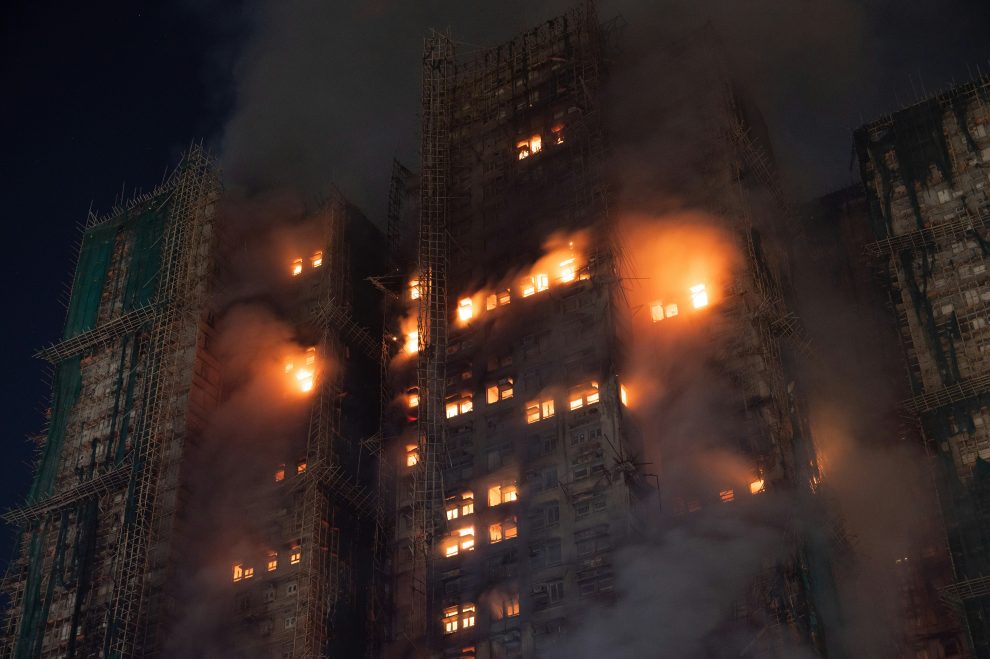
For an industry centered on saving lives, fire protection design has remained surprisingly unchanged. Modern construction sites are filled with advanced technology, automation and sophisticated digital workflows, yet fire protection engineering has continued to rely heavily on manual drafting, dated computer technology and a shrinking talent pool. While the construction industry accelerated into the digital age, fire safety design lagged behind, creating inefficiencies in a critical area of building and real estate development.
The Evolution of Fire Safety
The history of commercial fire safety is a collection of lessons learned from tragedy, shifting from reactive emergency response to being proactive with engineering focused on prevention. In the United States, the late 19th and early 20th centuries served as a catalyst for change, as devastating events exposed the lethal consequences of inadequate exits and a lack of prevention systems.
In just one example, the 1903 Iroquois Theatre Fire in Chicago was the deadliest single-building fi re in U.S. history, causing 602 deaths and 250 non-fatal injuries. A packed auditorium turned into a death trap because of locked exit doors, hidden fire escapes and a complete absence of functional automatic sprinklers.
Out of these disasters, the development of the National Fire Protection Association (NFPA) emerged, along with the formation of the standardization of building codes. The mid- 20th century saw the transition from manual alarms to integrated electrical systems and the widespread adoption of automatic sprinklers, which remain the industry’s gold standard.
By the early 2000s, the field embraced 3D modeling and Computer-Aided Design (CAD), setting the stage for the current era where digital precision and automated oversight are becoming the primary defenders against fire-related loss.
Market Size Has Unmet Needs
The fire safety industry is a multi-billion-dollar global sector that continues to expand alongside rapid urbanization, increased construction activity and the tightening of building safety regulations worldwide. According to Grand View Research, the U.S. fire protection systems market was valued at approximately USD25.94 billion in 2024 and is projected to grow at a compound annual growth rate (CAGR) of 3.6% from 2025 to 2030. In the United States, growth is being driven by a combination of factors, including increased commercial construction, the integration of smart building technologies and the rising complexity of regulatory compliance across jurisdictions.
On a global scale, the sector is estimated to be worth roughly $70 billion to $80 billion, with projections suggesting it could surpass $100 billion by 2030 as developing economies adopt stricter safety codes and invest in modern infrastructure. This expansion highlights the growing complexity and responsibility placed on fire protection engineering as it adapts to increasingly dense, technologically advanced and highly regulated built environments.
Fire Design in the Age of AI
Prior to the emergence of AI-driven platforms like FireDesign.AI, the commercial fi re safety industry was detailed by a large gap between the intricacy of modern architecture and the manual element of life-safety design.
One of the biggest challenges is that there are not enough engineers to meet demand. This battle increases salaries and leaves firms unable to fi nd qualifi ed people, which ultimately created a bottleneck for new construction projects. Next, this engineering requires a complex coordination of necessities. This process can be extremely slow and expensive due to the labor involved in fixing even minor issues. Even minor revisions often trigger hours of redraws, hydraulic recalculations and coordination updates across multiple disciplines, creating avoidable cost and schedule pressure throughout construction.
Modern AI-assisted platforms can ingest architectural PDFs, CAD files and BIM models directly, identifying building geometry, occupancy classifications, ceiling conditions, obstructions and preliminary sprinkler zoning requirements automatically. This reduces the amount of repetitive drafting and interpretation traditionally required during preconstruction and technical development.
Using Small Language Models (SLMs) rather than Large Language Models (LLMs) is essential in fire safety engineering because even a minor lack of precision can become a life-safety failure. LLMs are trained on the entire internet. They operate on guessing the next most likely word.
General-purpose LLMs are probabilistic language models optimized for broad reasoning and conversational fluency across massive public datasets. While effective for general knowledge tasks, they are not inherently designed for deterministic life- safety validation or code-driven technical analysis. In a field like engineering, this can lead to a hallucination: the AI could potentially cite a non-existent fire code that looks correct but is mathematically impossible. In fi re protection, a hallucinated calculation can be a major system that may fail during a fire.
The SLMs prioritize consistency and verification. These smaller models do not take information from everywhere and guess; they are trained to only read from a close vault of factual safety standards. Engineering-focused SLM architectures can be constrained around tightly controlled datasets, rule-based validation layers, deterministic calculation logic and verified NFPA standards, reducing the likelihood of unverifiable or non-compliant outputs.
AI as a Tool for Engineering Efficiency, Not Replacement
Many fear that AI will take over jobs and strip away the human element of engineering. In practice, its most immediate impact is the reduction of repetitive, time-intensive tasks that slow projects down and add little to core engineering judgment. Industry research on early AI adoption shows that professionals can save significant time on routine work such as documentation, coordination, drafting support and basic analysis, often reclaimingclose to an hour per day, with some structured workflows seeing substantially higher gains.
By automating these lower-value tasks, engineers can shift their focus toward higher- order responsibilities, including reviewing outputs, validating compliance and refining system-level decisions rather than producing every component manually. The result is a measurable reduction in project bottlenecks, particularly in stages that are traditionally slowed by manual iteration and coordination between disciplines. Teams are also able to handle a greater volume of work without a proportional increase in staffing, improving throughput while maintaining consistency and quality across deliverables.
Human oversight remains essential. Licensed professionals are responsible for validating calculations, reviewing constructability conditions, adapting layouts to field realities and approving final deliverables. AI accelerates production and coordination, but accountability for life-safety decisions remains with the engineer of record.
Balancing Automation with Accountability
As fire protection design meets AI, the role of the engineer becomes more critical, ensuring that every system is efficient, correct, compliant and safe. The future of the field will be defined by this balance: leveraging technology to remove friction, while keeping human expertise at the center of every life- safety decision.
The next evolution of fire protection will not be defined by replacing engineers, but by augmenting them with platforms capable of processing code requirements, hydraulic constraints and construction data at a scale impossible through manual production alone. As labor shortages continue and project complexity increases, firms adopting AI-assisted coordination and drafting technologies will be positioned to deliver faster turnaround times, more consistent documentation and improved collaboration across the construction lifecycle — while keeping licensed technical judgment at the center of every life-safety decision.