
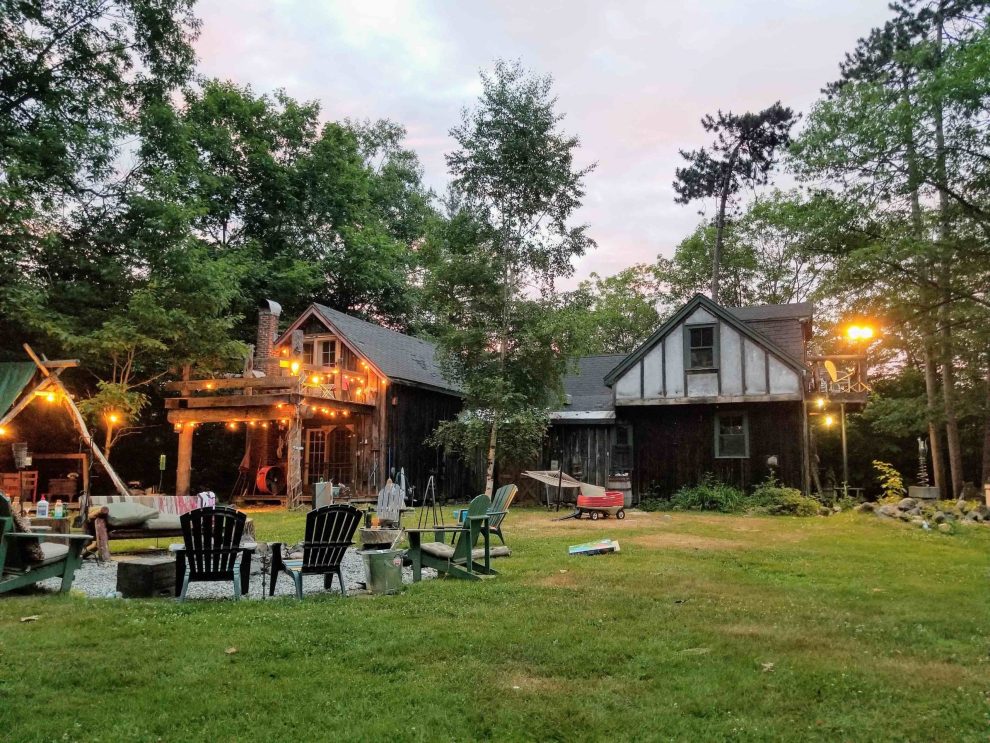
The living landscapes in our own backyards and community green spaces — trees, plants, grass and flowers — have a tangible and proven financial benefit. A beautiful landscape improves curb appeal, which can increase home values by as much as 17%.
But recent data shows living landscapes are an even hotter commodity than we thought. Let’s look at the numbers:
• Ninety percent of respondents in a recent U.S. survey said landscaping has an impact on their decisions to buy or rent a home.
• Three out of four millennials said in that same survey that they would still consider buying an outdated or rundown home if the yard is already landscaped.
• Each front yard tree at a home adds 1% to a homeowner’s sale price, while large specimen trees can add 10% to property values.
The greenery in our yards also makes homes more energy efficient, keeping more money in our bank accounts while helping the environment. For instance:
• One hundred million mature trees around U.S. residences save approximately $2 billion annually in reduced energy costs, according to the Urban Forest Coalition.
• Planting a tree on the west side of a home has been shown to reduce energy bills by 3% in five years and by 12% in 15 years.
• Strategically placed trees save up to 56% on annual air conditioning costs.
• In the wintertime, evergreens that block winter winds can save 3% on heating bills.
Landscapes are so valuable that there’s even a National Tree Benefit Calculator (treebenefits.com/calculator) to estimate the economic and environmental value trees provide on an annual basis.
However, the benefits of our backyards grow beyond saving money. Spending time in the natural spaces of our own yards and community parks is good for mental and physical health. Here are just a few of the reasons spending time outside, even during the winter, is important.
Outdoor time elevates moods. Exposure to natural light — even in the shorter days of winter — raises levels of serotonin, the body’s “happy chemical.” Sunlight is also a good way to get a natural dose of vitamin D, which is good for your bones and immune system. A study from the University of Michigan concluded that spending just 20 minutes in a natural setting reduces the level of cortisol, the stress hormone.
Memory improves. Researchers at the University of Michigan conducted a study in 2008 that revealed walking in a natural setting versus an urban one improved recall ability by nearly 20%.
**Activity boosts immunity. **According to MedlinePlus, the online information service from the U.S. National Library of Medicine, exercise helps decrease your risk for heart disease, maintains bone health and can help flush bacteria out of the lungs and airways.
More calories are burned in the cold. Being outside in the wintertime requires your body to work harder to keep you warm. Consequently, you burn a few more calories. Engage in a friendly snowball fight with your kids or take a walk with your pet to the park to rev up your metabolism and have a little fun along the way.
Working in your yard in the wintertime, such as ice and snow clean-up, is a good way to log some time outside, too. Just remember if you’re using a snow thrower, chainsaw or other outdoor power equipment to do some of the heavy lifting this year, read the owner’s manual first and abide by all safety precautions.
It doesn’t take long to reap nature’s benefits. No matter the season, it’s proven time and again to be a great investment.
For more information about the benefits of outdoor spaces and sustainability, sign up for Mutt Mail, a monthly e-newsletter with backyard tips and all the news from the TurfMutt Foundation.
To learn more about creating the yard of your dreams, visit turfmutt.com.
Kris Kiser
Outdoor Power Equipment Institute
1605 King Street
Alexandria, VA 22314
turfmutt.com
opei.org
(703)549-7600