
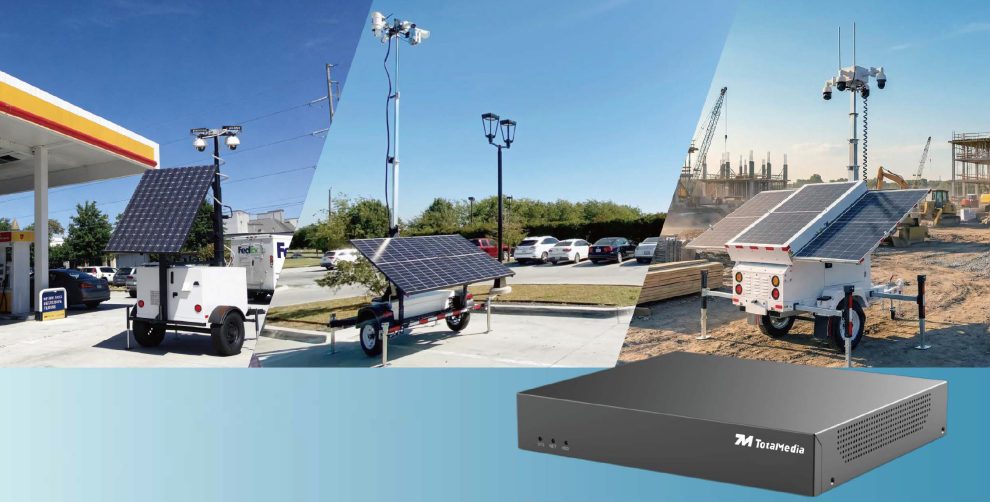
Total Media, in collaboration with infrastructure partner Inventec debuted its AI video compression-driven distributed vision AI safety platform. Designed to dramatically reduce LTE/5G transmission costs and storage requirements, the platform applies AI perceptual and content-aware compression at the edge before enabling centralized reasoning tiers powered by accelerated infrastructure. The system reduces bandwidth requirements by up to 90% before selectively transmitting verified events for deeper centralized analysis when required.
Construction sites, mobile monitoring trailers and other remote deployments often face costly bandwidth constraints, high false alarm rates and limited monitoring teams. TotalMedia’s platform distributes intelligence across the edge and core, allowing events to be processed locally, transmitted efficiently over LTE/5G networks and delivered to operators with verified context in real time.
“Security teams operating remote locations are under pressure to expand coverage without expanding costs,” said William Wong, CEO of TotalMedia. “We designed this platform to fundamentally change that equation. By combining AI compression, distributed intelligence and centralized reasoning, organizations can reduce data costs, cut false alarms and scale monitoring across thousands of sites without increasing staffing requirements.”
The platform architecture connects five core components — Camera, EdgeAI Compression & Processing, Intelligent Recording, Vision Language Model (VLM) Intelligence Layer and Centralized Management — into a unified workflow optimized for bandwidth efficiency, detection accuracy and operational scalability.
What happens if an event occurs? Escalated events are processed through TotalMedia’s VLM Intelligence Layer, where multimodal reasoning frameworks validate context, prioritize risk and determine appropriate response actions. Verified incidents can trigger targeted deterrence actions, such as intelligent lighting activation, audio warnings or operator escalation, ensuring responses are proportionate, timely and informed by contextual understanding.
This integrated approach transforms traditional safety infrastructure into an intelligence-driven security workflow, reducing nuisance alerts while enabling more effective, data-driven response across distributed deployments.