
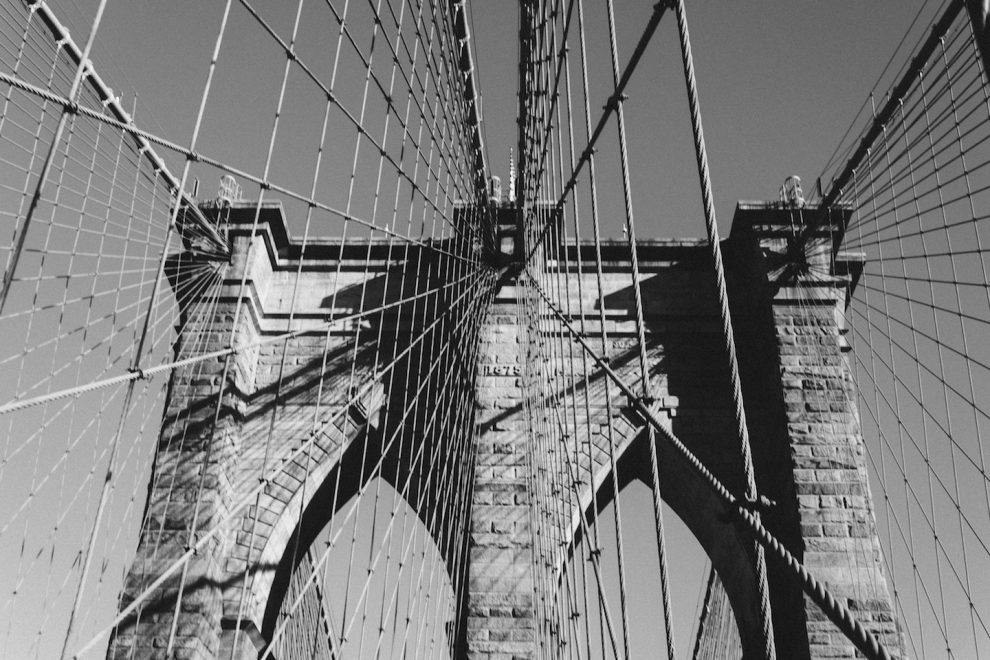
Highways, bridges and roads are the backbone of New York State’s economy, providing a means of transportation for millions of people daily. Safe and reliable mobility is not a luxury — it’s a necessity. Our state’s long-term economic health depends on the investment we make today in our infrastructure.
The construction industry has a vital interest in the design, building, maintenance and operation of this transportation system. The challenges we’re seeing — coupled with unmet needs of pavement maintenance, safety and improvements — are deeply troubling.
Traffic safety and preventive maintenance must again become a top priority across the state. I had the privilege to join my construction industry colleagues in Albany to testify before the Assembly Transportation Committee on budgeting for infrastructure improvements. At the December 6, 2019 hearing, we requested additional funding in the state’s next Department of Transportation Capital Program, which begins April 1, and for its future five-year capital plan following the conclusion of the current one early this year.
Over the term of the current program, road and bridge conditions remain in a state of disrepair, caused by years of underfunding and budgetary missteps. How bad is it? A recent study by Trip, a Washington D.C.-based national transportation research non-profit, found nearly half of major locally- and state-maintained roads are in poor or mediocre condition. Trip also found that 1,757 of New York’s 17,521 bridges — a glaring 10% — are in poor or structurally deficient condition. Yet these bridges carry some 11.6 million vehicles a day.
With the new five-year capital plan scheduled for reauthorization this year, it’s imperative the state legislature assess the challenges with accurate information on road and bridge conditions and adequate appropriations. The plan needs to be funded in the range of $35 billion to $40 billion. The current program, which expires March 31, is $29.2 billion.
State legislators are sponsoring bills to legalize sports gambling and retail marijuana, which are estimated to generate nearly $400 million in tax revenues combined to the state. Let’s earmark some of those monies for infrastructure improvements. Another potential funding source is an increase in the state gas tax. The tax, $0.456 cents per gallon, has not been raised since the early 1990s, yet the arrival of higher-mileage vehicles combined with electric vehicles place enormous strains on the system. A more comprehensive plan of increasing vehicle registration fees and a vehicle mileage tax based on travel usage, combined with an increased gas tax, could be an equitable way to pay for the network of highways, roads and bridges.
As the sunset of the capital plan approaches, we’re grateful to the Assembly, Senate and Governor Andrew Cuomo and his team at the DOT for their leadership. Our state’s transportation program is the driver for thousands of well-paid, living-wage jobs — and it’s those jobs that also help build the foundation to maintain and improve our roads and bridges.
New York’s Hudson Valley is experiencing unprecedented growth. Significant developments, like Legoland New York, Amy’s Kitchen, Resorts World Catskills and Kartrite Resort, are creating thousands of jobs and will generate millions of dollars in tax revenues. They also create demands for better transportation services to accommodate the thousands of vehicle trips added each day onto local roads.
One signature project that should be included in the next capital plan is the expansion of Route 17 in the Hudson Valley. A growing coalition of stakeholders — 17-Forward-86 — is asking the state to allocate $500 million to add a third lane on the heavily traveled corridor. This is essential for maintaining strong economic growth here. The investment in our infrastructure is a necessary driver of economic development in our great state. We have the will to do it, and now we have additional sources of funding to see it through.
John T. Cooney Jr.
Construction Industry Council of Westchester & Hudson Valley
629 Old White Plains Road
Tarrytown, NY 10591
john@cicnys.org
914-631-6070