
Do you or your investments have large rental losses this year that occurred because of the pandemic? This article will discuss how rental activities are presumed to be passive and how taxpayers can beat that presumption to claim those losses by electing to be designated as a real estate professional.
Please note that “real estate professional” is a tax term. Taxpayers do not need to be a licensed real estate broker or an agent to be a real estate professional.
The “real estate professional” election allows taxpayers to deduct real estate losses against ordinary income. There are significant tax benefits to qualifying as a real estate professional. To qualify, taxpayers must meet the following two tests:
1. More than one-half of the personal services performed in trades or businesses by the taxpayer during the tax year are performed in real property trades or businesses in which the taxpayer materially participates, and
2. The taxpayer performs more than 750 hours of service during the tax year in real property trades or businesses in which the taxpayer materially participates.
In the case of a joint return (taxpayer and spouse), one spouse alone must meet both tests.
The Internal Revenue Code broadly defines real property trades or businesses as development, redevelopment, construction, reconstruction, acquisition, conversion, rental, operation, management, leasing or brokerage.
The taxpayer must materially participate in each rental activity for the rental losses to be deductible without being limited by the passive activity loss rules. To materially participate in a real property trade or business, the taxpayer must be involved in the activity on a regular, continuous and substantial basis.
The Internal Revenue Service offers seven tests that may be used to determine whether the taxpayer meets the requirement for material participation. The most common test requires that the individual participate in the activity for more than 500 hours during the tax year. Material participation is a year-by-year determination. Generally, in order for an activity to be considered non-passive, a taxpayer must meet the 500-hour test. This can be grouped with other real estate activities in order to meet the 750-hour requirement for real estate professional designation.
Hours spent as an investor in a real property trade or business, including: studying and reviewing financial statements; preparing financial statements, summaries or operation reports and monitoring finances or operations do not count toward material participation unless the individual is directly involved in the day-to-day management or operations of the activity.
The IRS passive activity loss audit technique guide lists indicators that the taxpayer did not materially participate, such as a W2 wage job requiring 40-plus hours a week for which the taxpayer receives significant compensation.
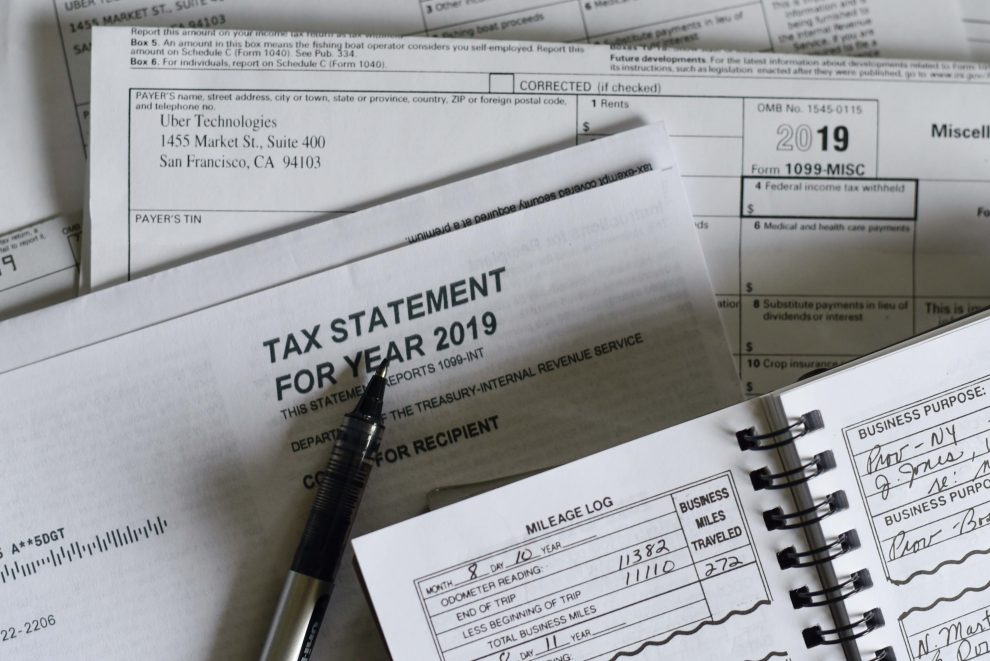
It is the taxpayer’s responsibility to prove the time spent on real estate trade or business by reasonable means. Best practices include documentation using contemporaneous daily time reports, logs or similar documents. The IRS does not require a specific method, but on audit the IRS will request the approximate number of hours spent, based on appointment books, calendars or narrative summaries. We recommend taxpayers pick a method that works best for them to easily and consistently document and track material real estate activities during the tax year.
For audit protection, the log should list the date, hours spent and description of the service being performed. The taxpayer will also need verification of time spent, such as emails, phone calls, invoices, business cards, proposals, contracts or other documentation.
There are many court cases in which taxpayer records were ballpark estimates and defied credibility. A log created after the year using estimates will not suffice for the IRS and the courts.
The IRS statute and regulations provide that the taxpayer must materially participate in each activity separately. The IRS allows a qualifying taxpayer to make an election to treat all of the taxpayer’s interest in rental real estate as a single real estate activity. By grouping the activities into a single activity, the taxpayer can more easily meet the 500-hour test for material participation. This election is binding for the taxable year in which it is made and for all future years the taxpayer is a real estate professional. Taxpayers should discuss this with their tax advisors before making the election, as it could have negative consequences.
To make the election, taxpayers need to attach a statement to their tax return. There are many cases in which taxpayers failed to attach the election statement to the return, and the IRS consequently disallowed the tax deduction.
In conclusion, real estate activities are passive activities, unless an exception such as the real estate tax professional designation is elected to overcome the presumption that all real estate activities are passive. If the taxpayer can establish material participation, the rental activities will be non-passive and can be deducted against income such as W2, interest, dividends, capital gains, retirement distributions and Social Security. For audit protection, it is important that a detailed log and supporting documentation be maintained.
Joseph Mecagni is a tax director in the Real Estate Group of Marcum LLP, one of the largest independent accounting and advisory services firms in the U.S. He is based in Boston and can be reached at joseph. mecagni@marcumllp.com