




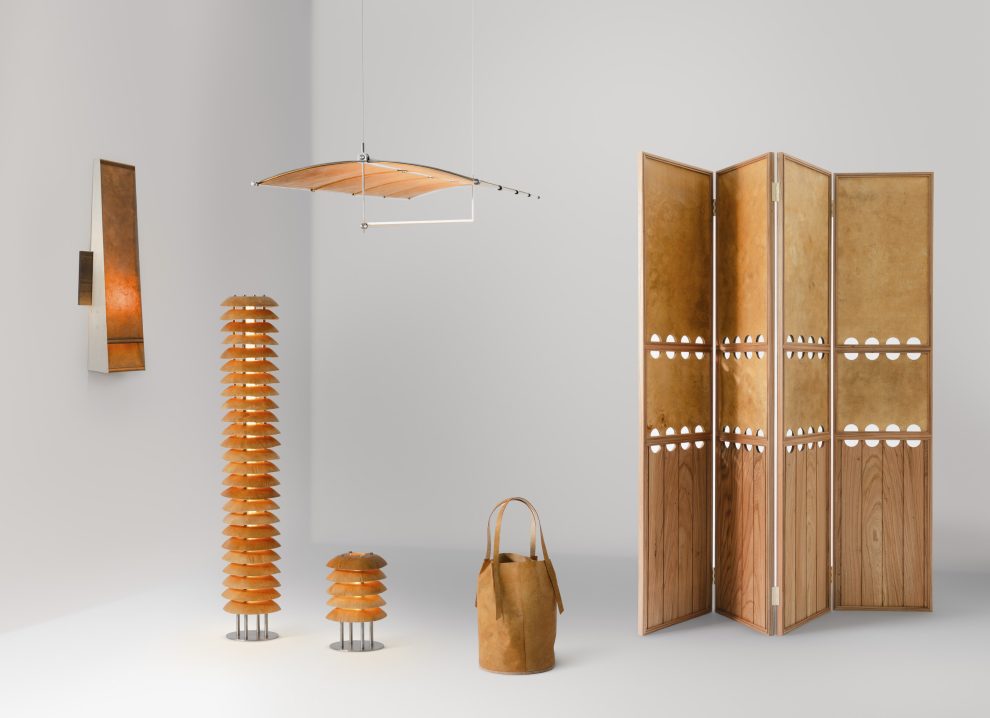
MycoWorks announced the exclusive launch of its pioneering biomaterial’s new collectible design collection, Reishi in the Nordic Light, at this year’s 3 Days of Design in Copenhagen. Developed using its innovative patented Fine Mycelium technology, Reishi is set to redefine material aesthetics and sustainability in collaboration with a curated group of five visionary Danish design studios.
A Celebration of Innovation and Heritage
Rooted in the profound legacy of Danish design, the launch of Reishi in the Nordic Light is a bold testament to a heritage where functionality meets beauty, simplicity is celebrated, and every detail is imbued to honor nature and craftsmanship. Danish design has long been synonymous with a refined aesthetic that transcends fleeting trends, emphasizing a harmonious balance between form and function. This enduring tradition—characterized by minimalist elegance, sustainable practices and a passion for tactile experiences—has served as the cornerstone for this groundbreaking project. Here, the visionary spirit of Denmark converges with cutting edge material technology to reformulate how we experience the interiors of our built environments.
At the heart of this project is the belief that the best design is an ongoing dialogue between the past and the future, one that embraces tradition while fearlessly exploring new possibilities. Reishi in the Nordic Light embodies this approach by melding Danish design principles with the revolutionary capabilities of Reishi, a new material option fully grown from mycelium—the intricate, abundant and renewable roots of reishi mushrooms. Every element of the collection—from the interplay of light and shadow to the delicate textures of the biomaterial—celebrates the Danish commitment to quality, sustainable innovation and the enduring beauty of simplicity. This collection, pairing Danish design heritage with a new generation of material, aims to challenge our perceptions of sustainability and aesthetics. Each piece in the collection is a narrative of transformation and connectivity, bridging centuries-old craftsmanship with a forward-looking approach to responsible, tactile and timeless design.
Soft yet supple and durable, Reishi is the connection between nature and craftsmanship. It is a new category of materials, one that embodies a living essence, and a refined artistry.
Grown from mycelium, the mysterious root-like fungal network typically buried deep underground, Reishi is a cross between leather and fabric. It can be transformed–dyed, embossed, varnished and finished–in a multitude of ways, while retaining the malleability and versatility of other noble fabrics.
Reishi is inspiring a new aesthetic language for both designers and interiors. Available in a range of finishes and tactile sensations—from smooth and supple to full-bodied and rich—it is Rei-tanned and finished in Europe by heritage tannery partners, using MycoWorks’ proprietary technologies.
Reishi—MycoWorks’ flagship material—is grown using an advanced biotechnology process that engineers mycelium at the cellular level, resulting in materials with unmatched strength, durability and tactile appeal. This breakthrough challenges the conventional uses of materials and opens new horizons for high-performance design across industries.
Collaborative Visionaries at the Helm
Both Reishi and Danish design share a common approach of bridging aesthetic durability and material tactility to enhance today’s interiors and reshape our approach to the spaces we inhabit for future generations.
The collection brings together an elite selection of Danish design studios, highly regarded for their craft and innovative approaches. Their work utilizes the sustainable biomaterial Reishi to explore the timeless principles of Danish design—simplicity, functionality and tactile beauty—while harnessing the transformative power of Nordic light. Each piece reflects a thoughtful dialogue between heritage and forward-thinking aesthetics, creating an immersive experience that redefines modern interiors.
- Atelier Axo: Pioneering in cross-disciplinary design, Atelier Axo introduces a reconfigurable wall lamp that joins metal, Reishi, and ingenious assembly methods. The Eaves Lamp design, characterized by precise geometric clarity and the tactile depth of Reishi, experiments with varying textures and light modulation to offer a completely immersive experience.
- Maria Bruun: A distinguished alumna of the Royal Danish Academy of Fine Arts, Bruun presents the Subject Matter Paravent, a versatile and modular screen that diffuses daylight into warm ambient hues. Blending sustainably sourced wood with Reishi sheets, the design reimagines private and public spaces, echoing classic Danish design while innovating for future interiors.
- Frederik Gustav: From the heart of Copenhagen, the studio uses Reishi in its Arbor suspension light. Inspired by traditional kite structures, the piece combines Reishi with delicate steel frames to create a dialogue between organic form and industrial design. The studio’s work emphasizes how material tactility and refined light interplay can transform spatial experiences.
- Cecilie Manz: Celebrated for a distinct and dedicated commitment to creating objects that transcend mere aesthetics, Manz presents Et Ark, a minimalist bag-like basket that seamlessly integrates with solid Oregon pine wood and one single Reishi sheet. Both inside and outside of the lightweight material is exposed with its freckles and natural differences. Edges gently touched by color, her design is a study in material synergy, scale and proportions, where every detail reflects a balance between form, function and the storied legacy of Danish design.
- OEO Studio: With a rich legacy in Scandinavian design and international acclaim, OEO Studio reinterprets Reishi in a piece that unites minimalist sensibility with material expressiveness: the Centurio lamp. Its work underscores a “Compelling Minimalism” that champions both functionality and the inherent beauty of sustainable materials.
Shaping New Design Perspectives
MycoWorks Creative Studio assigned the curation of this new Reishi design collection to Marie-Louise Høstbo who has proposed a vision that seamlessly interweaves Danish design heritage with avant-garde innovation, reimagining our spatial interactions. In each piece of this collection, Reishi serves as a catalyst, reconfiguring everyday objects into enduring design.
Reishi in the Nordic Light is not just a collection displayed during 3 Days of Design—it’s a manifesto for rethinking the spaces we inhabit. The collection emphasizes:
- Material innovation: Reishi exemplifies how biomaterials can transcend traditional design boundaries, offering both structural integrity and a sensory, tactile quality that redefines aesthetics.
- Tactility and light: By harnessing the transformative qualities of the Nordic light, each object is designed to capture and diffuse light, emphasizing texture, subtle detail and emotional resonance.
- Sustainability with style: Integrating sustainable practices without compromising on beauty, these designs highlight a responsible approach to modern interiors that respects both tradition and forward-thinking innovation.
“This project creates a dialogue between heritage and innovation—honoring Danish design traditions while daring to explore the profound possibilities that a new material like Reishi presents,” said Høstbo.
A Glimpse Behind the Collection
“By introducing Reishi, we have redefined how we engage with materials,” said Høstbo, explaining the vision behind the project. “Our goal was to foster a dialogue between the legacy of Danish design and the emerging possibilities of biomaterials—a conversation where functionality meets tactile beauty, visionary innovation and elevated ambitions.”
The Frederik Gustav team detailed the transformative nature of Reishi: “Working with Reishi challenged us to respect the material’s organic properties. Its dual nature—robust yet delicate—guided us in creating a lighting piece that is both structurally sound and visually evocative, perfectly echoing the serene quality of Nordic light.”
Atelier Axo’s design team also reflected on their journey, adding “Engaging with mycelium introduced a dynamic interplay between control and organic evolution. By allowing the material to lead the creative process, we discovered new aesthetics that celebrate imperfection as a source of unique character and innovation.”
“At OEO Studio, we don’t merely design objects—we craft experiences,” said the designers at OEO Studio. “With Reishi, we fuse the timeless minimalism of Scandinavian heritage with groundbreaking material innovation, creating pieces that transform both space and perception.”
These insights encapsulate the core mission of the exhibition—to inspire a future where our surroundings are thoughtfully curated, deeply connected to nature, and imbued with enduring beauty.


