




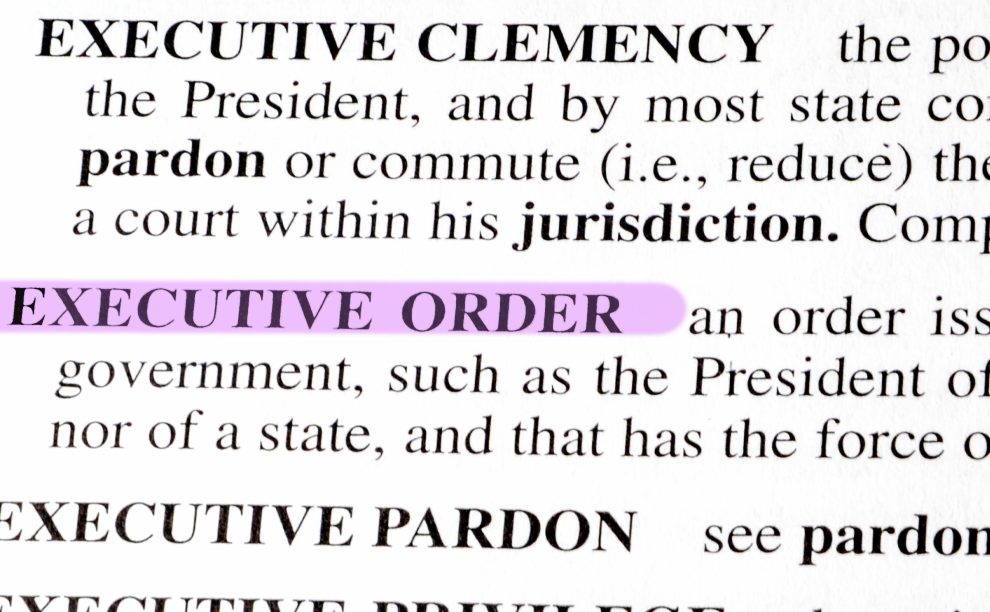
Per the executive order released on July 31, 2025, the following provisions regarding reciprocal tariffs are in effect:
- Goods will continue to be subject to the 10% reciprocal tariff rate until end-of-day on August 6, 2025. This includes all countries except those subject to separate actions (e.g., China, Canada, Mexico and Brazil).
- Goods originating in the countries listed in Annex I will be subject to the specific modified rates outlined therein.
- Goods originating in the countries not listed in Annex I will be subject to a 10% reciprocal tariff rate.
- All goods originating in the European Union will be subject to a reciprocal tariff that is capped at 15%. The reciprocal tariff rate will be dependent upon the most favored nation (MFN) rate.
- Goods that are loaded aboard a mother vessel at the port of export and in-transit on the final mode of transport prior to 12:01 a.m. ET on Aug. 7, 2025, may still enter under the 10% tariff rate, provided relevant documentation supports this timing. The in-transit exclusion is not applicable to air, rail, or truck cargo.
- Further confirmation is needed as to whether exemptions listed in Annex II of the April 2025 order continue to apply.
- Any merchandise found by CBP to have been transshipped to circumvent applicable duties will be assessed at a 40% duty rate, in addition to any penalties imposed under 19 USC Section 1592.
- The secretary of commerce and secretary of homeland security are expected to publish a list of countries and specific facilities identified as participating in duty circumvention schemes.
Separate IEEPA Tariffs on Brazil
The reciprocal tariff rate for Brazil is listed in Annex I as 10%. In addition to this 10% reciprocal tariff rate, President Trump imposed a 40% IEEPA tariff on goods from Brazil due to recent actions by Brazilian government officials that represent an “unusual and extraordinary threat” to U.S. national security, foreign policy and economy. Exclusions may apply.
The new effective tariff rate on Brazilian imports is 50%, which combines the existing 10% reciprocal baseline tariff with an additional 40% IEEPA duty imposed in the recent executive order targeting Brazil. It goes into effect seven days after the order’s issuance on July 30, 2025, meaning the effective date is Aug. 6, 2025.
IEEPA Fentanyl Tariffs on Canada Increased to 35%
On July 31, the White House published an executive order which amends Executive Order 14193 (Feb. 1, 2025), which declared a national emergency over fentanyl and other illicit drugs entering the U.S. via Canada. That earlier order initially imposed additional duties of 25% on Canadian articles and 10% on Canadian energy products.
This executive order increases the additional duties to 35%. Goods that qualify for the United States-Mexico-Canada Agreement (USMCA) with a valid certificate of origin at the time of importation continue to be exempt from the additional duties.
This change is effective with respect to goods entered for consumption, or withdrawn from warehouse for consumption, on or after 12:01 a.m. ET on Aug. 1, 2025.
Section 232: 50% Tariffs on Semi-Finished Copper and Copper Derivatives Imports
On July 30, the White House published a proclamation which determined under Section 232 of the Trade Expansion Act that the United States is considered vulnerable due to its heavy reliance on imported semi-finished copper and copper derivatives, which are critical for defense, clean energy, infrastructure and advanced technologies.
In order to address this, a 50% tariff on will now apply to semi-finished copper products (e.g., pipes, wires, rods, sheets, tubes) and copper derivative items (e.g., fittings, cables, connectors, electrical components). This tariff is effective for goods entered or withdrawn from warehouse after 12:01 a.m. ET on August 1, 2025. Affected (Harmonized Tariff Schedule) HTS codes can be found online.
Raw copper materials, such as ores, concentrates, cathodes, anodes and copper scrap are currently exempt from this tariff, although that is subject to change.
The copper tariffs do not stack with existing Section 232 auto tariffs; so if subject to both, the auto tariffs will apply instead of the copper tariff.
Goods subject to the copper tariff are excluded from paying the reciprocal tariff.
Tariffs on Mexico Deadline Extended
President Trump has announced that Mexico has a 90-day extension to continue negotiations on tariff rates for products not covered under the USMCA. Discussions will remain ongoing during this period.
Pause on 125% Reciprocal Tariff on China End-of-Day Aug. 11 Deadline
As a reminder, current tariff rates on goods from China will remain in effect until EOD Aug. 11, while negotiations between the U.S. and China continue. Recent comments from both countries suggest that an extension of the deadline is being considered to allow more time to develop a comprehensive solution, although there is not yet official confirmation of continuation of the pause.
End of the De Minimis Exemption Effective Aug. 29
A final update issued via executive order confirms the elimination of the de minimis exemption for most commercial shipments, effective Aug. 29, 2025. According to the order, “Imported goods sent through means other than the international postal network that are valued at or under $800 and that would otherwise qualify for the de minimis exemption will be subject to all applicable duties.”
Key Details:
- Non-postal shipments: All commercial shipments valued at $800 or less (excluding those sent via international postal services) will now be subject to full applicable duties, regardless of value.
- Postal shipments: Goods sent via the international postal network will be assessed one of the following:
- Ad valorem duty: This duty is based on the effective IEEPA tariff rate applicable to the country of origin, calculated on the value of each package.
- Specific duty: This is a flat fee ranging from $80 to $200 per item, depending on the IEEPA rate for the country of origin. This option will be available for six months, after which only the ad valorem method will apply.
- Personal imports: Individuals may still bring in up to $200 in purchased merchandise and $100 in gifts duty-free under existing personal exemption allowances.
This information and the overall trade landscape for importers remains incredibly dynamic at this time. Contact Krieger Worldwide’s client services team at cst@nkinc.com if you would like assistance reviewing your classifications, getting supply chain origin documentation or assessing potential impacts to your current shipments.
Available Now: The US Imports Tariff Lookup Tool on K-Trace Technology
Country-specific tariffs returned on Aug. 1. If you’re importing into the U.S., your landed costs may be changing—fast. That’s why Krieger Worldwide is giving you access to a powerful new tool that brings clarity to your sourcing decisions: a quick, side-by-side duty rate checker for you and your team. Just enter an HTS code and origin country to get instant insights.


