
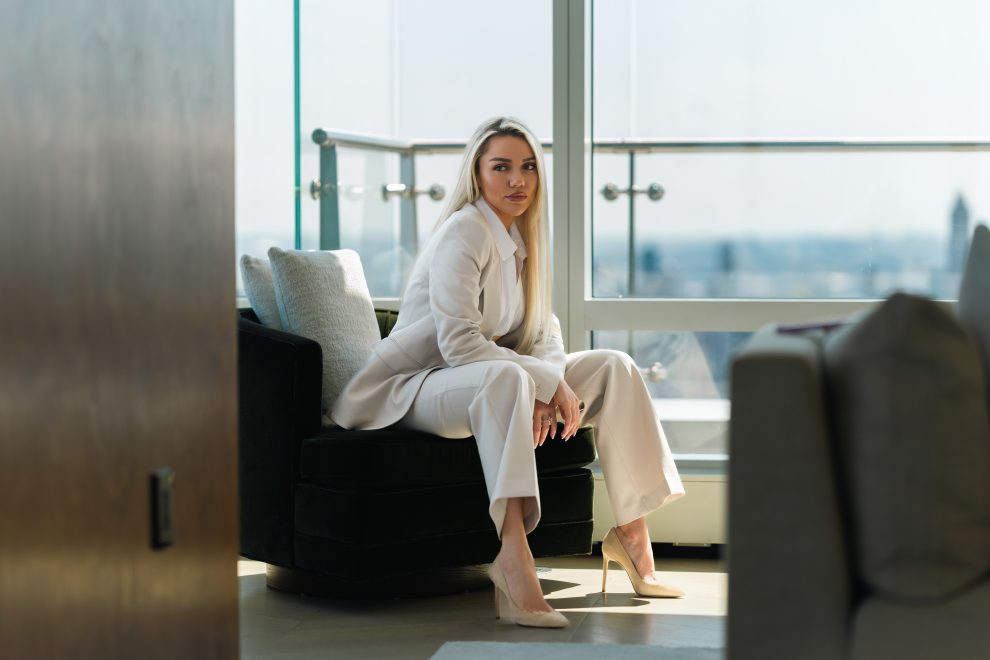
New York City’s luxury housing market continues to evolve as affluent buyers place greater emphasis on design, wellness, flexibility and long-term value. Few professionals are as closely connected to those shifts as Marzena Wawrzaszek, a luxury real estate advisor with Serhant specializing in residential sales and new development throughout the city.
Ranked among the top 1.5% real estate professionals in New York State, she has closed more than $100 million in career sales while helping buyers, sellers and developers navigate one of the world’s most competitive real estate markets.
Beyond traditional brokerage, Wawrzaszek advises developers on everything from fl oor plan optimization and fi nish selections to branding, pricing and market positioning. Her ability to combine real-time market intelligence with an understanding of how buyers make decisions has contributed to the successful launch and sellout of multiple boutique residential developments. Through her hands-on approach, she helps sellers maximize value through strategic marketing and positioning while guiding buyers toward informed, long-term investment decisions.
Fluent in English and Polish, Wawrzaszek serves a diverse local and international clientele. Known for her market expertise, negotiation skills and deep understanding of buyer behavior, design and market trends, Wawrzaszek has built a reputation for delivering exceptional results across both resale and new development properties.
“My goal is to help clients make informed real estate decisions through market expertise, strategic guidance and a focus on long-term value,” she said.
In the following conversation, Wawrzaszek outlines some trends currently reshaping New York City’s luxury real estate market.
MK: Many people focus on pricing and inventory when discussing luxury real estate. What do you think they are missing?
MW: The biggest misconception is that luxury real estate is primarily driven by supply and demand. At the highest levels, purchasing decisions are often driven by confidence, lifestyle alignment and perceived scarcity rather than necessity. Wealthy buyers are not simply evaluating square footage and comparable sales. They are evaluating whether a property fits a specific vision of how they want to live. The emotional component is much stronger than many people realize. A property that creates an immediate emotional connection can outperform what appears to be the logical market value.
What is the most significant shift you’ve seen in luxury buyer psychology over the past few years?
Buyers have become far more intentional. Five years ago, many luxury purchases were aspirational. Today they are increasingly strategic. Buyers are asking tougher questions about functionality, longevity, operating costs, flexibility and future resale value. They want a home that enhances their daily lives while also protecting capital. The most sophisticated buyers now evaluate real estate in much the same way they evaluate a business investment.
How has the definition of luxury changed?
Luxury used to be associated primarily with finishes, prestige and exclusivity. Today, luxury is increasingly defined by ease. A well- designed home that functions effortlessly often commands greater demand than a larger property with more expensive materials but poor usability. Thoughtful layouts, intelligent storage, privacy, natural light, wellness features and seamless technology integration have become just as important as marble countertops or imported finishes.
You have extensive new development experience. What separates successful projects from those that struggle?
The projects that succeed typically begin with a deep understanding of buyer behavior rather than a focus on construction alone. Developers sometimes assume that luxury buyers simply want larger units and higher-end finishes. In reality, buyers are responding to an entire product ecosystem. Layout efficiency, amenity programming, branding, lifestyle positioning and even how a building is introduced to the market all influence demand. The strongest developments understand exactly who they are building for before construction begins.
What role does architecture play in today’s luxury marketplace?
Architecture has become a powerful differentiator. As luxury inventory expands, buyers are increasingly drawn toward properties with distinctive identities. Generic luxury is becoming less compelling. Whether it is a historic townhouse, a boutique condominium or a contemporary residence with exceptional design, buyers want something memorable.
Architecture creates emotional resonance and often contributes to long-term value retention because truly distinctive properties remain difficult to replicate.
How are affluent buyers evaluating neighborhoods differently today?
Buyers are looking beyond traditional prestige. The conversation has shifted from status to lifestyle. They are evaluating how a neighborhood supports their daily routines, social circles, wellness priorities and long-term goals. Walkability, dining, cultural offerings, green space and overall quality of life often carry as much weight as a neighborhood’s historical reputation.
Buyers are increasingly selecting communities that reflect who they are rather than where they think they should live.
How is global uncertainty affecting New York luxury real estate?
New York continues to benefit from its position as a global gateway city. During periods of uncertainty, many investors and international buyers seek markets that offer stability, liquidity and long-term relevance. Luxury real estate in New York is often viewed through that lens. While economic cycles inevitably influence activity levels, the city’s global significance continues to attract capital from around the world.
What are developers overlooking that buyers notice immediately?
Buyers notice inefficiency almost instantly. They notice awkward layouts, poorly planned storage, oversized amenities that lack practical value and design decisions that prioritize appearance over functionality. Buyers today are incredibly informed. Many have traveled extensively, stayed in luxury hotels around the world and experienced exceptional design firsthand. Their expectations are higher than ever, and they recognize thoughtful execution immediately.
Where do you see the greatest opportunity in the luxury market right now?
I believe the greatest opportunity lies in creating highly differentiated products. As more luxury inventory enters the market, uniqueness becomes increasingly valuable. The projects and properties that stand out are those with a clearly defined identity. Whether through architecture, design, location, lifestyle positioning or a compelling story, differentiation has become one of the most powerful drivers of demand.
Moving forward, what will define the next generation of luxury real estate?
The future of luxury will be shaped by intentionality. Buyers are becoming more selective about where they invest their time, money and attention. They want homes that are beautiful, but they also want homes that function exceptionally well and support their broader lifestyles. The properties that succeed will combine design excellence, wellness, flexibility, sustainability and authentic character. Luxury is becoming less about excess and more about quality, purpose and experience.
A Look Ahead
As New York City’s luxury housing market evolves, Wawrzaszek remains focused on helping clients navigate changing market conditions with confidence and clarity.
For Wawrzaszek, success ultimately comes down to helping clients make informed decisions and achieve meaningful results.
“Real estate is never just about a transaction,” she continued. “It’s about understanding a client’s vision, identifying opportunities and creating the right strategy to help them achieve their goals.”
Merilee Kern is an internationally regarded brand strategist and analyst who reports on cultural shifts and trends as well as noteworthy industry change makers, movers, shakers and innovators across all categories, both B2C and B2B. This includes field experts and thought leaders, brands, products, services, destinations and events. As Founder, Executive Editor and Producer of “The Luxe List,” Kern is a prolific business, lifestyle, travel, dining and leisure industry voice of authority and tastemaker.