
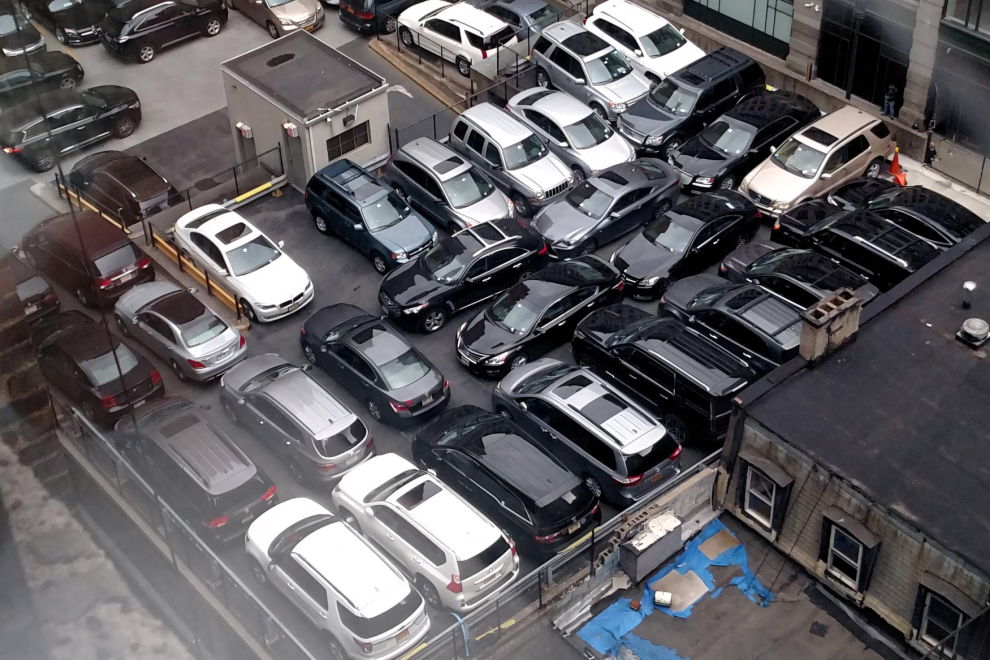
It’s a familiar experience: Your tenants and guests spend hours every year hunting for parking, fumbling with payment machines and struggling to find EV charging — all before they even step foot in your building. That first impression costs you more than you think. Consider the potential revenue lost from the trips drivers avoid undertaking, parking searches they abandon or return visits they don’t make. Keep in mind that Deloitte research shows that customers who have a positive experience spend 140% more than those who don’t. Now multiply that by every parking space in your portfolio sitting empty or underpriced.
Welcome to commercial real estate’s $35 billion (according to the National Parking Association) blind spot. While the industry has poured billions into tenant experience — from smart lobbies to premium amenities — we’ve overlooked a massive revenue opportunity hiding in plain sight. In cities like Boston and Atlanta, drivers waste over 50 hours annually searching for parking, reported parking solutions provider Inrix. In New York, it’s more than 100 hours. But a convergence of transformative technologies is about to turn this pain point into a profit center.
Parking’s Profit Potential
Think about how Uber revolutionized transportation or DoorDash transformed food delivery. Both created intelligent marketplaces that connected supply and demand in ways that grew the entire market. Now, parking is poised for its own transformation, fueled by four powerful forces.
First, consumer expectations have fundamentally shifted — 92% used digital payments in the last year, said McKinsey, yet only 10% of parking operators have adopted digital payments, according to Global Payments Report. This digital divide has created pent-up demand for change.
Second, connected vehicle production has surpassed 175 million units, according to Counterpoint research, with automakers racing to build parking and charging payments directly into their systems. These rolling computers represent an entirely new channel for reaching drivers where they are.
Third, the EV revolution is accelerating. Kelley Blue Book reports that electric vehicles captured 8.7% of new car sales last year and are growing faster than any other automotive segment. The success of automakers’ EV programs depends entirely on access to shared L2 charging infrastructure, and this can only happen in parking assets. Your parking assets. Yet today, one in five public chargers sits broken, said an article from Harvard Business School, creating an opportunity for property owners who can deliver reliable charging experiences.
Finally, artificial intelligence has reached a tipping point. AI is the accelerant that will drive more change in parking over the next 18 months than we’ve seen in the past 20 years combined. By processing complex parking, EV and spatial data in less than a second, AI makes it possible to deliver the seamless, personalized experiences that modern consumers demand.
Transforming Every Touchpoint
Together, these forces set the stage for an unprecedented possibility: an intelligent marketplace that turns static parking assets into dynamic revenue generators and transforms the parking experience for drivers from the first step in the journey to the last.
Gone are the days of circling blocks as the search goes digital and delivers personalized recommendations. When someone plans to visit your property, AI analyzes everything from events and weather to walking paths and real-time occupancy, delivering tailored parking options through apps drivers already use. From there, they can immediately reserve a space and pay through platforms like Waze — instantly putting your property in front of 50 million-plus users while you secure revenue before they arrive.
Upon arrival, AI-powered cameras trained on over 100 million images recognize vehicles instantly for truly frictionless entry. This state-of-the-art camera technology now positively identifies U.S. vehicles, despite wide variation in plate designs and formats, where earlier generations fell short. For EV drivers, the system coordinates charger availability and payment for seamless recharging. At departure, receipt of payment automatically processes through the driver’s preferred digital wallet or payment, while every transaction feeds AI algorithms that continuously optimize pricing and occupancy.
Real Revenue Gains
The numbers tell the story. Predictive analysis of our data reveals that drivers will pay an $18 premium just to avoid a 0.2-mile walk — and even more for event parking. Property owners are unlocking 30% to 40% increases in parking yield by moving to this model of driver experience. With over 25,000 locations processing 500 million annual transactions, the marketplace effect compounds. Every transaction makes the AI smarter, leading to better recommendations, higher occupancy rates and maximized revenue per space.
The Future is Here Now
Some worry autonomous vehicles will dampen parking revenue, but they’re missing the bigger picture. Even in an autonomous future, vehicles will need secure, well-managed parking facilities to charge, clean and stage between trips. Properties with intelligent, connected infrastructure will become the essential hubs of urban mobility. Property owners who move quickly to modernize their parking assets will gain a commanding position in the future of urban mobility.
The opportunity for commercial property owners goes beyond parking. It’s about transforming an undervalued asset into a dynamic revenue generator that enhances every aspect of your property’s performance. The technology is ready. The market is primed. The only question is: Will you lead this transformation or play catch-up?