
New York City property owners have spent years watching the rules surrounding Local Law 157 (LL157) and residential natural gas detection evolve. The waiting period is now over. The New York City Department of Buildings confimed that required natural gas alarms must be installed on or before January 1, 2027. The date will not be extended to 2029.
For multifamily owners, property managers, condominium and cooperative boards, LL157 compliance is therefore no longer a future planning issue. It is an operational deadline.
The requirement may sound simple: Install a natural gas alarm where the law requires one. At portfolio scale, however, owners must determine which buildings and units are covered, select properly listed equipment, understand placement rules, coordinate apartment access and plan for maintenance and replacement.
The deadline is fixed. The question is whether buildings will be ready.
Natural Gas Detection Addresses a Different Risk
Natural gas is common in residential buildings for cooking, heating and other uses. A leak, however, can allow gas to accumulate indoors and create a fire or explosion hazard. Utilities add odorants to natural gas so occupants can recognize a leak, but smell alone is not always enough.
The National Transportation Safety Board has noted that some people may not detect the odor, may be sleeping or may not recognize it as a warning. In some circumstances, gas can also lose part of its odorant before entering a building.
Natural gas alarms provide an additional layer of protection by continuously monitoring the surrounding air and warning occupants before conditions become more dangerous.
A Carbon Monoxide Alarm Is Not a Natural Gas Alarm
One of the easiest mistakes is assuming existing carbon monoxide protection already satisfies LL157.
It does not.
A carbon monoxide alarm detects CO, a toxic gas generally associated with incomplete combustion. A natural gas alarm detects fuel gas before combustion, primarily methane in buildings supplied with natural gas. A property can therefore have smoke and carbon monoxide alarms throughout every apartment and still require natural gas detection. Combination devices may exist, but owners need to verify what a device detects and which safety standards it meets.
The key procurement question is not simply, “Does this detect gas?” It is, “What gas does it detect, what standard is it listed to and does that meet New York City requirements?”
What LL157 Requires
The rules cover certain residential occupancies, including private dwellings and Class A and Class B multiple dwellings.
Buildings without natural gas piping or service are exempt, but beyond that, LL157 requirements depend on building confi guration. The Department of Buildings’ Natural Gas Detection Devices FAQs explain how requirements vary based on gas service, occupancy type and the presence of gas-burning appliances. Where a fuel-gas-burning appliance is located inside a dwelling, a natural gas alarm generally must be installed in the same room.
This is why owners should not treat compliance as a simple calculation based on apartment count. Two properties with the same number of units may have different installation needs. Compliance begins with understanding each building.
Product Selection Is a Compliance Decision
New York City does not require a particular manufacturer, but the equipment must meet applicable technical requirements. Residential natural gas alarms covered by the rule must be listed and labeled to UL 1484, the safety standard applicable to residential gas detectors. UL Solutions identifies UL 1484 among the standards used for gas detection products. For owners, this makes certifi cation review part of procurement.
Online product descriptions may use terms such as “gas detector,” “combustible gas alarm” and “methane detector” interchangeably. Those labels alone do not demonstrate compliance.
Owners should check the product listing, intended application and technical documentation before purchasing equipment, particularly when ordering hundreds or thousands of devices for a portfolio.
Placement Matters, Too
Buying the right natural gas alarm is only part of LL157 compliance.
When a fuel-gas-burning appliance is inside a dwelling, the Department of Buildings generally requires the alarm to be installed in the same room, at least three feet and no more than 10 feet from the appliance, measured horizontally. The alarm may generally be installed on the ceiling or wall.
Wall-mounted devices are typically placed within 12 inches of the ceiling, subject to the applicable rule and manufacturer instructions. For a single apartment, these details may appear minor. Across hundreds of occupied units, they become an operational challenge. Kitchen layouts and appliance locations vary. Installation teams therefore need clear instructions and a consistent process rather than a one-size-fits-all approach.
Battery Power Can Simplify Deployment
Power source can significantly affect retrofit complexity. Hardwired natural gas alarms generally require installation by a New York City licensed electrical contractor, along with required permits. Battery-powered and plug-in alarms can be installed by others, including building owners, maintenance personnel or occupants.
For multifamily properties, battery-powered equipment can simplify deployment by eliminating wiring and electrical work. That does not reduce the owner’s responsibility. Equipment must still meet applicable requirements, be installed correctly and remain operational throughout its service life. Owners should therefore consider not only installation cost but also battery life, end-of-life replacement and the ability to track devices over time.
The Bigger Challenge: Portfolio Management
For large owners, LL157 is as much a management issue as an equipment issue. A portfolio operator needs to know which buildings have gas service, which units contain gas appliances, what model was installed, where it was placed and when it will need replacement.
Then there are exceptions: inaccessible apartments, different layouts, damaged devices or alarms installed on different dates. Without consistent documentation, those exceptions become difficult to manage.
Owners should consider recording the building, dwelling unit, device model, installation date, location and expected replacement date for each alarm. That record does more than document compliance. It makes future maintenance easier.
Compliance Continues After January 1
The January 1, 2027, LL157 deadline should not be viewed as the end of the process. Natural gas alarms have defi ned service lives and eventually require replacement. Devices can also be damaged or removed during occupancy.
Owners should therefore integrate natural gas detection into their long-term building safety procedures, including installation records, replacement schedules and resident communication.
Occupants also need to understand how to respond when an alarm activates. The NTSB recommends leaving the building, calling 911 from a safe location and contacting the natural gas utility when a natural gas alarm sounds or gas is suspected. An alarm provides the warning. Residents still need to know what to do next.
What Property Owners Should Do Now
The first step is identifying every property with natural gas service or piping and determining where alarms are required under LL157.
Next comes equipment review. Owners should verify the applicable UL 1484 listing, installation instructions, power source and expected service life before making a portfolio-wide purchase.
Then comes deployment. Resident communication, apartment access, staff training, installation records and follow-up visits for units that could not initially be accessed should all be planned before installation begins.
For owners seeking a more detailed overview, Nexelec has published a LL157 guide for New York City property owners and managers covering the deadline, aff ected properties and installation requirements.
The goal is not simply to buy enough alarms by the end of the year. It is to know where they belong, install them correctly and manage them.
Designing for Multifamily Deployment
Manufacturers serving the multifamily sector also have a role in making compliance easier to manage.
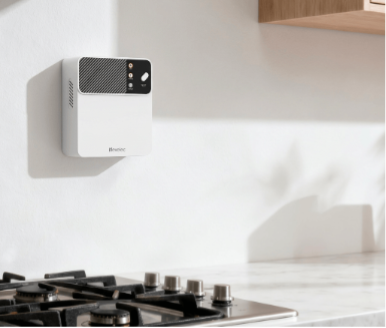
Nexelec develops residential fire and gas safety technology, including the Vigas natural gas alarm, a battery-powered methane alarm that has been designed for residential applications. Vigas is ETL Listed by Intertek and conforms to UL 1484. It continuously monitors for natural gas and provides audible and visual warning at 10% of the lower explosive limit.
The device uses a sealed lithium battery designed for a 10-year service life and requires no electrical outlet or wiring. Individual QR-based identification can also support installation and maintenance tracking across large portfolios.
Those features do not replace an owner’s responsibility to determine where alarms are required. They address another challenge: deploying and managing natural gas detection efficiently across multiple residential units.
January 1 Is Now an Operations Deadline
The regulation is established. The Department of Buildings has confirmed the January 1, 2027 deadline, and owners now have a defined window to complete implementation. Those who inventory properties, verify equipment before purchasing and establish a consistent installation and documentation process will be better positioned to manage LL157 compliance across their portfolios. Those who wait until the final weeks may discover that buying the alarm was the easiest part of the project.
For New York City property owners, January 1 is no longer a date to monitor. It is a deadline to manage.