



Recently, no less than 40 U.S. companies and government agencies announced that they would participate in drafting a new standard for ‘Consumer Protection: Privacy by Design’ in conjunction with the International Standards Organization (ISO). This is meant to complement the European Union’s GDPR effort and should be welcomed by consumers worldwide.
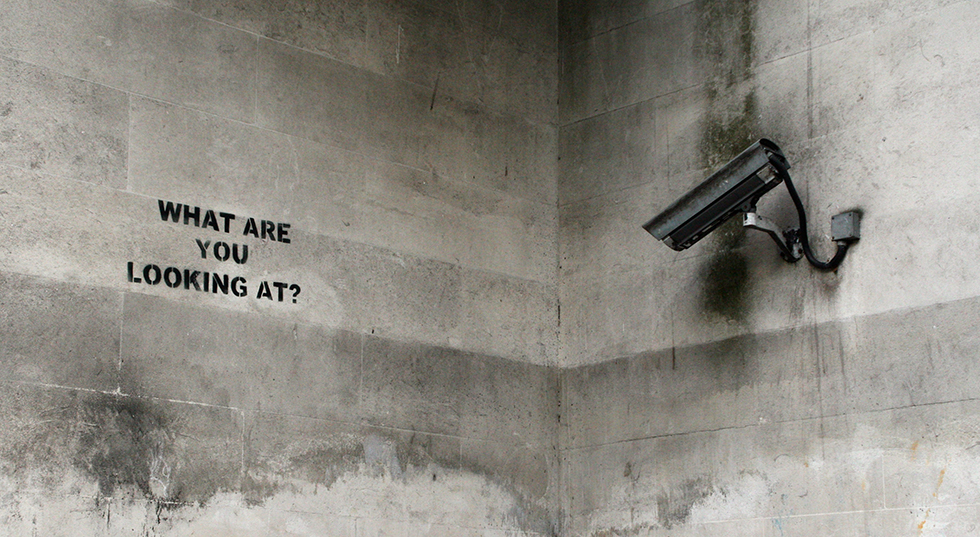
There are currently limited protections for the general public while browsing, and while many large consumer websites make promises about guarding consumer data, this does not preclude selling to third parties. There is a need for standards that comprehensively tackle information ownership, but in order to be effective, this data protection must extend beyond our online lives and into the physical spaces we inhabit. As AI for surveillance becomes ubiquitous and part of our daily lives, the best approach to controlling our information is to demand privacy.
Video surveillance has advanced exponentially with the help of AI over the past few years. Surveillance and biometric data technology help empower us and improve many of our routines, but becomes controversial when people are not informed of their use. For example, many retail establishments collect data to help define shopping patterns based on consumer demographics and geographical information. But retailers also sell data that is often mined through a series of surveillance sensors and data collection agents.
My company currently offers AI surveillance services for residential, commercial, senior living, and healthcare properties. The technology has already been proven to be quite effective, particularly with facial recognition. This is especially true with software tailored for venues with consistent populations, such as healthcare facilities, fitness centers, office buildings, residences, and houses of worship. But we are meticulous in providing landlords and managers with consent forms and documents confirming that the facial data is not shared outside of building management and ownership. In other words, we are uncompromising in the protection of this information.
As a proactive surveillance startup gaining prominence in the real estate space, we have received many inquiries from landlords seeking a tool to catch illegal sublets. We also run into a fair share of residents who complain that their landlords’ agents have free rein to record them in compromising positions, and that there is little accountability and transparency.
OWAL has effectively addressed this slippery slope of surveillance issues by taking a community approach. To begin with, our programs are used only in common areas. We have developed proprietary algorithms that identify anomalous behaviors and are capable of instantly notifying a designated manager, super, or owner of a possible problem. Our service takes out the human component as a first line of defense, so that front desk or door personnel are no longer expected to watch multiple camera feeds simultaneously and residents’ privacy is not intruded upon. Artificial intelligence algorithms can identify potential risks and mobilize the appropriate resources.
Since our launch a couple of years ago, our programs have identified such transgressions as a multi-unit Airbnb set-up, drug dealing in a stairwell, and hallway smokers; providing landlords and managers clear images as irrefutable evidence and means for action. In one senior housing facility, our software helped pinpoint an elderly resident being abused by a staff member. The footage gave management the necessary proof for an appropriate solution on behalf of the resident as well as limited exposure to legal action from the former staff member.
In each of these cases, residents had previously been made aware of the cameras and that the devices were ‘intelligent.’ The capture of their data, and the protection we promise, is entirely undisguised. If there is transparency allowing people to understand the scope, quality, and depth of the information being gathered, they are more likely to trust the service and come to a reasoned response, opinion, and reaction. Our service has been embraced, and we’ve received great feedback from both landlords and residents. This is in stark contrast to services that employ hidden cameras and eschew transparency.
In New York City, the case law is settled: landlords have the right to install cameras throughout the public spaces in their buildings, as long as they do not directly point to individual apartments and compromise privacy. Implemented correctly, this offers landlords and managers the ability to install surveillance systems in plain sight that can serve to make their residents safer as well as improve the quality of the life experience in a building. State-of-the-art AI systems no longer need to be more expensive than the standard cameras in general use, and they are readily available. Ultimately, transparency is the most important factor in this use of surveillance. Ensuring the safety of residents, managers, landlords, and properties must encompass the safety of personal information and privacy.
Chaim Fried
OWAL
137 Varick St., 2nd Fl.
New York, NY 10013
646-535-9235





Add Comment