



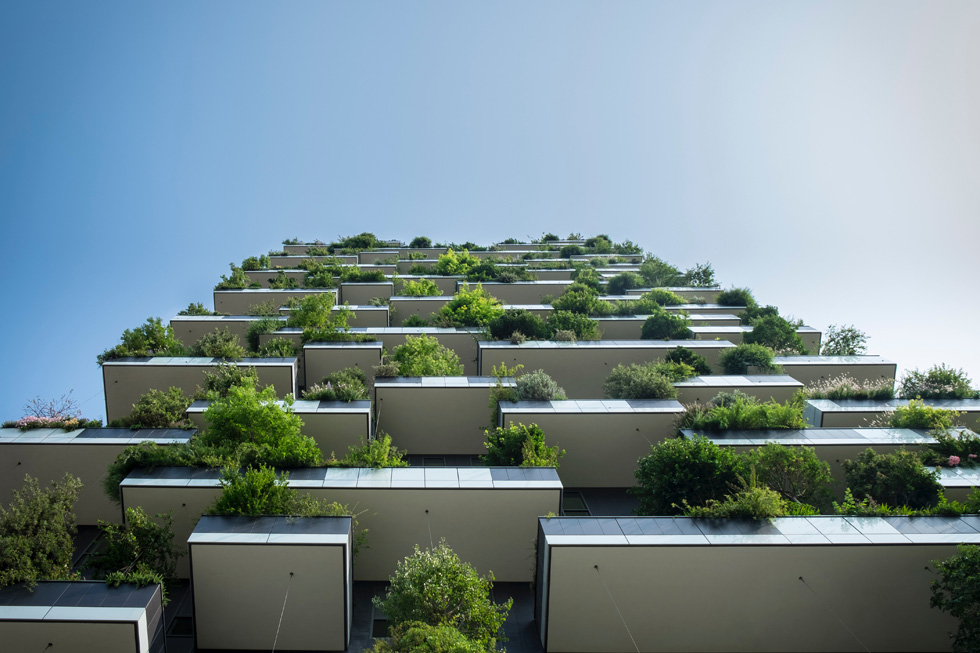
With the building sector responsible for nearly 48 percent of all energy consumption in the U.S. and global warming the subject of heated national discourse, the sector is under growing pressure to make a difficult choice—produce the best possible financial outcomes, or increase their building costs to boost energy efficiency and reduce carbon emissions.
In New York in particular, commercial buildings account for roughly 30 percent of the city’s greenhouse gas emissions, and the energy used in interior leased office space typically accounts for 40 to 60 percent of total energy consumption. Recognizing the threat that climate change poses to their city, more than 70 universities, hospitals, commercial offices, residential property management companies and hotels have joined the NYC Carbon Challenge, committed to reducing their carbon emissions by 30 percent or more. This is a part of the overall OneNYC goal of reducing citywide greenhouse gas emissions by 80 percent by 2050.
Nationally, commercial buildings are responding to the global call for change, as well. In fact, the sector is seeing the most explosive growth in green building, with a third of all new commercial construction categorized as green in 2010, amounting to a $54 billion market. According to the World Green Building Trends 2016 Smart Market Report, the average green building is worth 7 percent more than its traditional counterpart and is 14 percent less costly to operate.
Yet, green buildings typically require more upfront investment, a barrier to commercial real estate developers and building owners when considering whether to take the plunge. However, some green technology solutions reduce the upfront cost of buildings or renovations, while making the building more energy efficient, too.
Innovative Technologies Are Paving The Way
Innovative technology solutions are allowing decision-makers to achieve savings now and in the long term, while playing a significant role in reducing the threat of global climate change. For example, HVAC Load Reduction® (HLR®) technology is doing just that—reducing the required capacity of HVAC systems and their related costs, so that the incremental cost of adding this technology is zero, or even negative. This technology, designed to reduce indoor air contaminants such as carbon dioxide (CO2), aldehydes and volatile organic compounds (VOCs), has been helping global organizations reduce their energy usage and related expenses, too.
Instead of the traditional process of replacing the entire volume of a building’s indoor air every one to two hours, HLR modules clean and recycle existing indoor air. This enables a 60 to 80 percent reduction in required outside air intake, and a decrease in cooling and heating energy consumption of 20 to 30 percent (up to 40 percent in peak periods). The resulting cost savings comes from reduced energy usage, as well as lower initial capital expenses—and ultimately, is friendlier to the environment. What’s more, outside air is not always clean air, especially for buildings located near highly-trafficked roads or in busy urban centers, and bringing in less outside air can also reduce the introduction of additional harmful contaminants to the building.
The HLR system, and other technologies like it, should be top of mind for owners of large buildings in New York, since owners are now required to measure annual energy and water consumption in keeping with the NYC Benchmarking Law. That data is then disclosed in a publicly-available energy and water performance map, which could attract—or scare away—corporate buyers and tenants. In addition, these solutions can be eligible for local utility rebate programs, further increasing the savings on their building costs.
LEED-Certified Buildings Are In Demand
Another incentive to building green is that LEED-certified buildings—the international standard of excellence in green building—provide lower operating costs and better indoor environmental quality, which in turn, makes them more attractive to a growing group of corporate buyers.
These solutions can earn companies LEED points. With HLR technology in particular, companies can earn as many as 17 LEED points—over 40 percent of the points required to receive LEED certification—merely from implementing HLR technology with an indoor air quality assessment.
When it comes to savings, the operational cost savings are significant for green buildings when compared with conventional buildings. According to the aforementioned World Green Building Trends 2016 Smart Market Report, respondents expect 14 percent savings in OPEX over five years for new green buildings and 13 percent savings in OPEX over five years for green retrofit and renovation projects.
In addition to saving on costs, LEED projects are also critical to helping us combat climate change. These LEED-certified buildings have 34 percent lower CO2 emissions, consume 25 percent less energy and 11 percent less water and divert 80 million tons of waste from landfills.
The Fight For Our Planet Can Also Improve The Bottom Line
In New York, we are already seeing how the city’s Carbon Challenge participants have started to cut their energy use and carbon emissions, with 10 participants already meeting their 30 percent goal. Yet, there’s much more to be done. In New York City, in particular, there’s a clear opportunity to make improvements, with the city ranking down at 22 on the list of top 25 metropolitan areas for green office buildings.
Commercial building developers and building owners may have traditionally shied away from ‘going green’ because of misconceptions around high costs associated with boosting energy efficiency. The good news is that there are now innovative solutions, like HLR technology, that will help them to save money, use less energy and reduce their carbon footprint at the same time.
For more information, please visit www.enverid.com.





Add Comment