



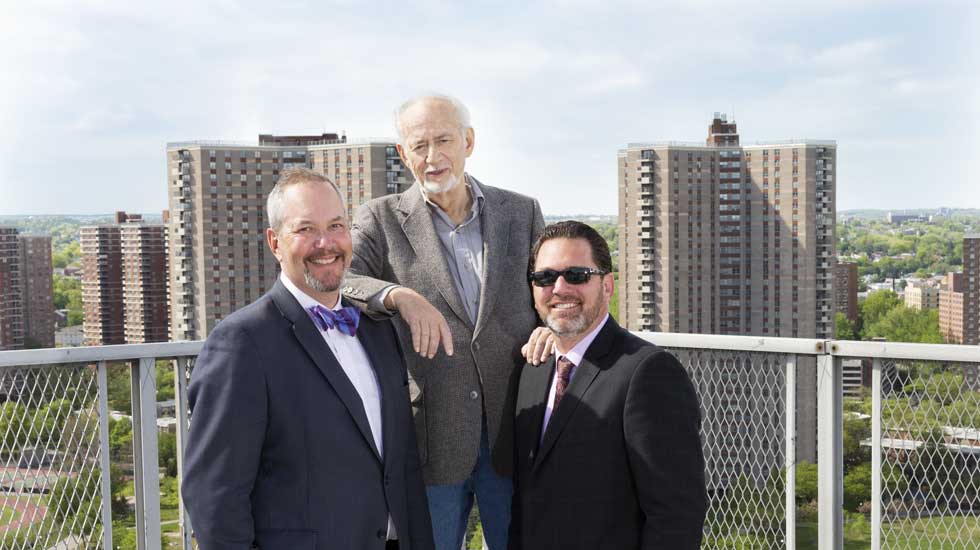
Taking on the maintenance and modernization of the elevators at the largest cooperative housing development in the world might daunt any service company, especially one that’s just three years old. But Champion Elevator is taking on the challenge, based on founder Donald Gelestino’s 32-plus years of experience, a rapidly growing staff, and a commitment to service, safety, and education.
The independently owned, full-service company provides elevator maintenance, repair, violation removal, and testing services throughout New York City’s five boroughs, Westchester, Nassau, and Suffolk Counties.
“It really comes down to personal service,” Gelestino said. “All jobs will have bumps. There’s always something. At the end of the day, our customers know I have good people in place to provide the service they deserve. Our managers are attentive, and they care. Should a situation arise beyond a manager’s level, they can always call me. I’m a 24-hour owner no matter how many employees we have. My customers know I’ll make what they need happen.”
That trust has led to a new, massive $36-million-dollar-plus modernization opportunity as well as a 24/7 per maintenance contract for the 180 elevators at Co-Op City in the Bronx, the aforementioned housing development. The complex, completed in 1973, has more than 15,000 residential units in seven clusters of townhouses and 35 high-rise buildings.
“That’s a big job,” he said. The last modernization of the complex was in approximately 2001, and technology has changed significantly since then, he observed.
Champion was one of about 10 companies that bid for the assignment, based on specifications created by DTM Elevator Consultants’ Bill Warr, eventually winning the job over the incumbent service provider.
“I previously was involved with the facility in 2010 and had Lou Persico, a terrific manager, running the maintenance for us, so ownership is familiar with my capabilities,” Gelestino said. “It ultimately comes down to numbers on such a large assignment. But when we arrived at the board meeting and gave our presentation to the board, they voted quickly, and from what I hear they are very excited to work with Champion Elevator on this long-term project.”
Gelestino got into the industry through family friends, starting with a last-minute job as a teenager, and then progressing to become a supervisor, troubleshooter, draftsperson, and engineer for projects for modernization. After leaving his first company to start Ver-Tech Elevator, his own firm, he grew his business through acquisition, then sold the company to United Technologies in 2010. After a non-compete agreement expired, Gelestino returned to the industry, founding Champion in 2015. And growth has skyrocketed from less than 50 elevators under maintenance during Q1 of the company to a bit more than 1,000, this time through new assignments including Co-Op City.
The modernization plan calls for Champion to install equipment to comply with 2020 door interlock monitoring codes as well as 2026 code requirements, installing non-proprietary equipment. This is a huge benefit to the property manager, as it reduces long-term costs for repair and maintenance. The use of non-proprietary equipment has been a Champion hallmark from its formation.
“Non-proprietary equipment is a big plus for building owners,” Gelestino said. “Any qualified and reputable elevator company should be able to maintain the equipment we install, and it’s a benefit to our staff as well.”
The company is ready: Champion now has five repair teams, two testing teams, and 24 modernization teams, all of whom will be brought in as needed over the five-year modernization period by the project manager. It also will integrate Co-Op City’s mechanical experts and helpers into its team, as well as expand its staff. The company now has about 100 employees and will look for more as needed.
Champion provides major ongoing training as well on new equipment and safety, especially important as technology has evolved quickly. The training consists of seminars led by manufacturers, in-house classes, and on-the-job experience. A Local 3 company, Champion has a four-year apprenticeship program, after which an employee becomes a helper. From there he or she can progress to a mechanic and beyond.
“Education, safety, and very good customer service is what sets us apart in putting together jobs. That’s why people have the confidence to jump on board with a relatively new organization with such a big project,” he continued.
Co-Op City is not the only large complex to work with Champion. Industry City in Sunset Park, Brooklyn, which brought Champion on board just 18 months into the company’s existence, poses a different set of challenges and opportunities, Gelestino observed. The site includes industrial, office, and retail space.
“Industry City is a busy place, always bringing in new tenants. Different vertical transportation requirements create a variety of different types of work that changes constantly,” he said.
Though the site consists of low-rise buildings, it houses high-capacity machines, with large freight and automatic passenger doors. Champion is creating new entrances in the front and rear to accommodate different tenants’ needs. These elevators are low-rise but travel at a rate of 350 feet per minute when upgraded, compared with the 500+ feet per minute speed at Co-Op City’s high rises, some more than 30 stories tall.
“We grow the business like a family. I try to find good people, find out what they like to do, how they do it, and see how they fit into the company,” he said. “You must have a good reputation to get good employees,” he said. “Thank God we have that here at Champion–people want to work here.”
Finding those employees remains challenging, he acknowledges. New construction is still taking place, and the city has 40,000 elevators already in place that require retrofitting as well as modernization to comply with new codes, including mandatory 2020 door lock monitoring and 2026 unintended motion (single plunger brakes and rope grippers) which is designed to stop an elevator if it begins to drift. Qualified contractors are all working steadily with building owners and managers to get this done, Gelestino observed.
Expanding education will be a focus for Gelestino in the coming years as he serves on the board of the NAEC (National Association of Elevator Contractors). Currently vice president-elect, he will become the organization’s president in 2020.
“I’ve been in the business for 32 years. I’m very proud of that,” he said. “Everyone I’ve spoken with around the country needs more talent. One thing we’d like to do is get our training program certified to be in technical schools and colleges as college credits! We’d also like more presence in high school programs if possible. We want people to be more aware that there’s a really good industry here. We see programs for plumbers, electricians, and carpenters, but elevator services isn’t on people’s minds. People take it for granted. I want that program into the mainstream. And I’ve never seen a slow time in this business: Even when construction is slow, maintenance takes place and older buildings compete with new ones to gain similar rent levels—elevator modernization, maintenance, and repair are always happening.”
Donald Gelestino
Champion Elevator
521 Fifth Ave, 17th Fl
New York, NY 10175
212-292-4430
donald@champion-elevator.com





Add Comment