




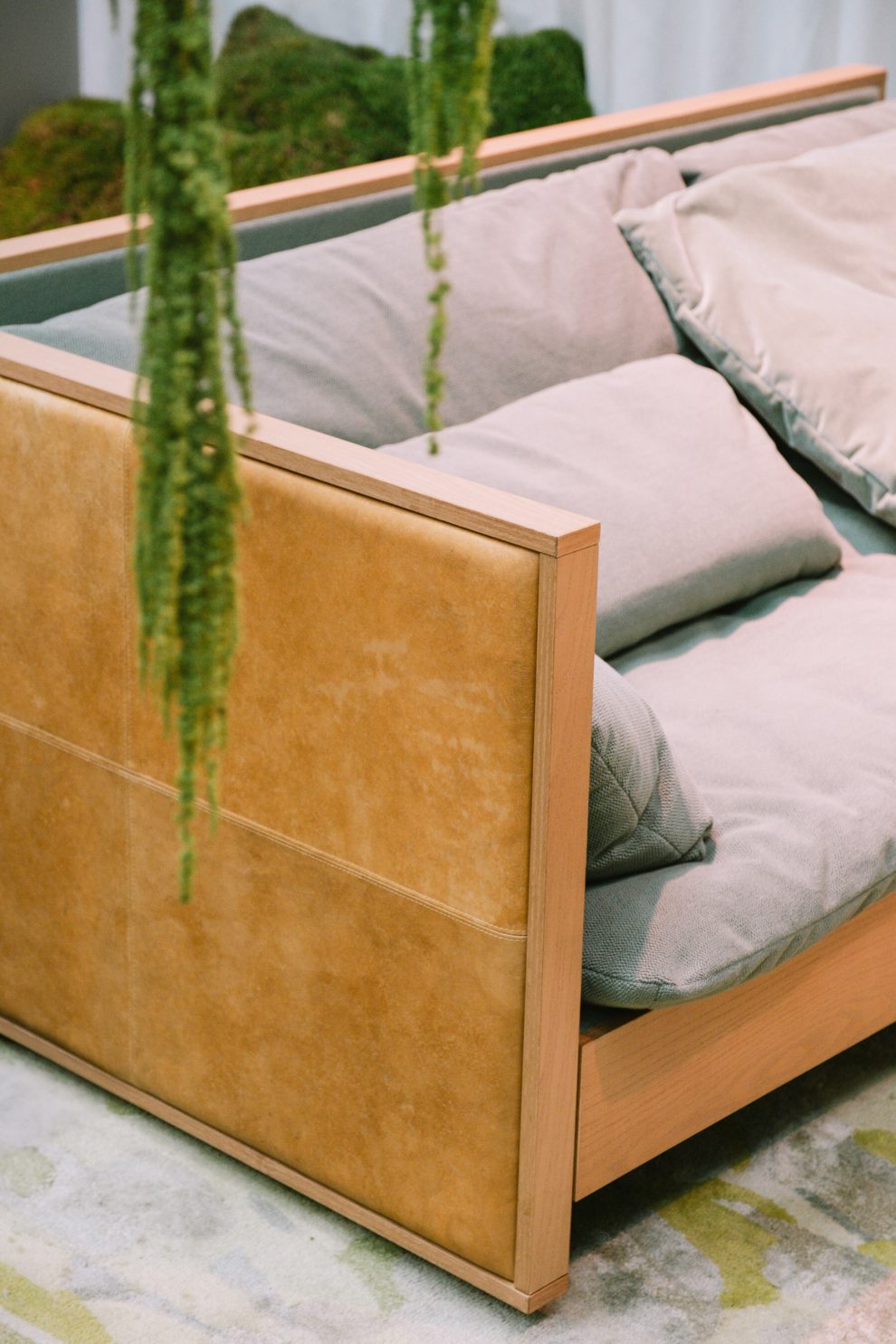
Reishi, the groundbreaking biomaterial developed by MycoWorks, has made a bold statement in the world of interior design after Ligne Roset unveiled the Kobold sofa designed by Erwan Bouroullec, marking the first large-scale integration of Reishi in luxury furniture. This milestone demonstrates that Reishi is no longer an experimental possibility—it is a ready, industrialized solution capable of meeting the most demanding standards of design and craftsmanship.
As one of the natural, non-animal materials available at industrial scale, Reishi offers a unique blend of performance, durability and aesthetics, redefining what is possible in sustainable design.
Reishi: A Game-Changer for the Future of Design
For years, biomaterials have remained on the fringes of design—too delicate, too niche or too limited for industrial application. Reishi changes this narrative. Thanks to MycoWorks’ patented Fine Mycelium technology, Reishi is the first biomaterial to deliver both exceptional aesthetics and technical performance at scale.
Chosen by Ligne Roset for the Kobold sofa, Reishi meets the rigorous requirements of contemporary furniture production while offering a new sensory and visual experience:
Unparalleled performance: Resistant to daily wear, Reishi combines strength, supple elasticity and durability—qualities essential for interior applications.
A living material: Like the finest natural materials, Reishi develops a patina over time, enhancing its beauty while preserving its structural integrity.
A unique aesthetic: Each sheet of Reishi carries its own distinctive veining and organic patterns, creating designs that are one of a kind—echoing the natural beauty of marble or leather.
Industrial scalability: Unlike other biomaterials, Reishi is available at scale, offering a reliable, sustainable alternative to traditional materials for major design brands.
“At MycoWorks, we believe that art inspires science, and that mycelium can redefine the future of design,” said Sophia Wang, co-founder of MycoWorks. “The integration of Reishi into the Ligne Roset collection is a powerful demonstration that sustainable luxury is not a concept of tomorrow—it is a reality today.”
Beyond Materials: A Vision for Sustainable Interiors
The Kobold sofa made with Reishi—now available in the Ligne Roset 2025 catalog—is more than a new product. It’s a proof of concept that Reishi can deliver the performance and beauty needed to redefine sustainable interiors.
“We have been waiting for years for a natural and sustainable material that meets our quality standards and our customers’ expectations. Our partnership with MycoWorks strengthens our commitment to ethical and sustainable development, while upholding the highest level of quality for which the Roset Group is known. By embracing innovation, it also offers us the opportunity to redefine the legacy of Made in France design,” said Antoine Roset, managing director of Ligne Roset.
Designed by Erwan Bouroullec, the Kobold is a versatile and modular seating solution that seamlessly integrates various functional elements around a central sofa unit. These sustainable features align with the choice of incorporating Reishi to make it a piece of design that embodies eco-conscious innovation without compromising on aesthetics, comfort or longevity.
The collaboration with Ligne Roset is the latest step in MycoWorks’ mission to provide scalable, sustainable materials that meet the highest standards of luxury. With Reishi, brands can move beyond imitation leather toward a new category of natural materials that are both performative and aesthetic.


