




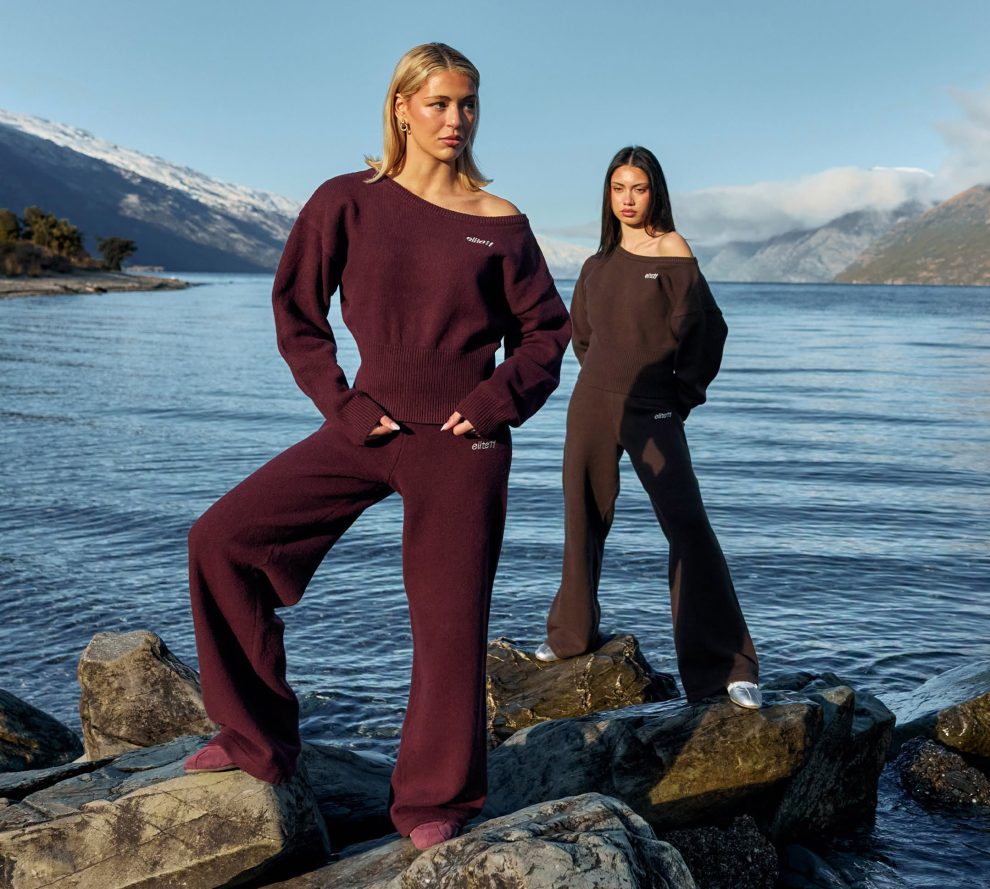
Athleisure is no longer a niche offshoot of the fitness industry. It has become a major global apparel category, shaped by a fundamental change in how consumers dress, as clothing once associated primarily with exercise now routinely crossing into travel, leisure and everyday life. That shift continues to create opportunities for brands that balance performance, comfort and fashion rather than treating those qualities as separate propositions.
The category is substantial. Grand View Research valued the global athleisure market at $422 billion in 2025 and estimates it will reach $459.8 billion in 2026, with the market projected to grow to $892.5 billion by 2033, representing a compound annual growth rate of 9.9% from 2026 through 2033. North America accounted for 32.8% of global athleisure revenue in 2025, while the United States was the largest individual country market. Women accounted for 40.5% of the market by end use, while offline channels accounted for 65.7% of athleisure sales.
The broader activewear category is demonstrating similar momentum, valued at $440.4 billion in 2025, estimated to reach $477.6 billion in 2026, and approaching $920 billion by 2033.
That convergence of fitness, fashion and daily dressing provides a fitting backdrop for Elite Eleven, the Melbourne-born activewear company whose assortment spans performance apparel, athleisure and lifestyle pieces for women and men.
Founded in Australia in 2014, Elite Eleven traces its beginnings to founder Benn Martiniello’s bedroom, where he and co-founder Lisandro Paz packed the company’s early daily orders. Sports were always central to the young business. In 2015, Elite Eleven fulfilled its first wholesale apparel orders for soccer and other sporting clubs.
The following year, the company moved further toward e-commerce, launching a new website and expanding its range in March 2016. Women’s activewear subsequently became an important part of the business, with Elite Eleven’s company timeline documenting the arrival of its first dedicated women’s collection in 2018.
Today, the brand’s assortment spans women’s and men’s activewear, athleisure, lifestyle apparel and accessories, with options designed for both training and everyday wear. That versatility reflects one of athleisure’s defining characteristics, as apparel with roots in sports and exercise increasingly plays a role throughout the rest of the day.
Elite Eleven’s evolution has also expanded from online commerce to physical retail. The company opened its first Melbourne pop-up store in November 2020 and moved into its first permanent retail location in October 2021. Its published company history records the opening of its 11th Australian retail store in 2024, while its current store locator lists 20 locations across Victoria, New South Wales, Queensland and Western Australia.
That progression from a bedroom-based operation to a multichannel activewear business parallels a broader shift across athletic apparel, as contemporary apparel increasingly moves between gyms and everyday activities, alongside the continued convergence of sports and fashion. For consumers, the result is a category increasingly difficult to define simply as workout clothing, with activewear moving among exercise, errands, travel and casual social settings.
Market forecasts suggest that crossover still has considerable runway. The global athleisure market is projected to more than double its 2025 value by 2033, and the broader activewear market is forecast to follow a similarly strong trajectory.
For Elite Eleven, those trends closely align with the territory the Australian company has progressively occupied since 2014. What began with a small assortment and orders packed by two friends has expanded into activewear, athleisure, e-commerce and physical retail.
As the traditional boundary between clothing worn for exercise and clothing worn for everyday life continues to fade, Elite Eleven is one brand building its business around that increasingly fluid definition of active style.


