




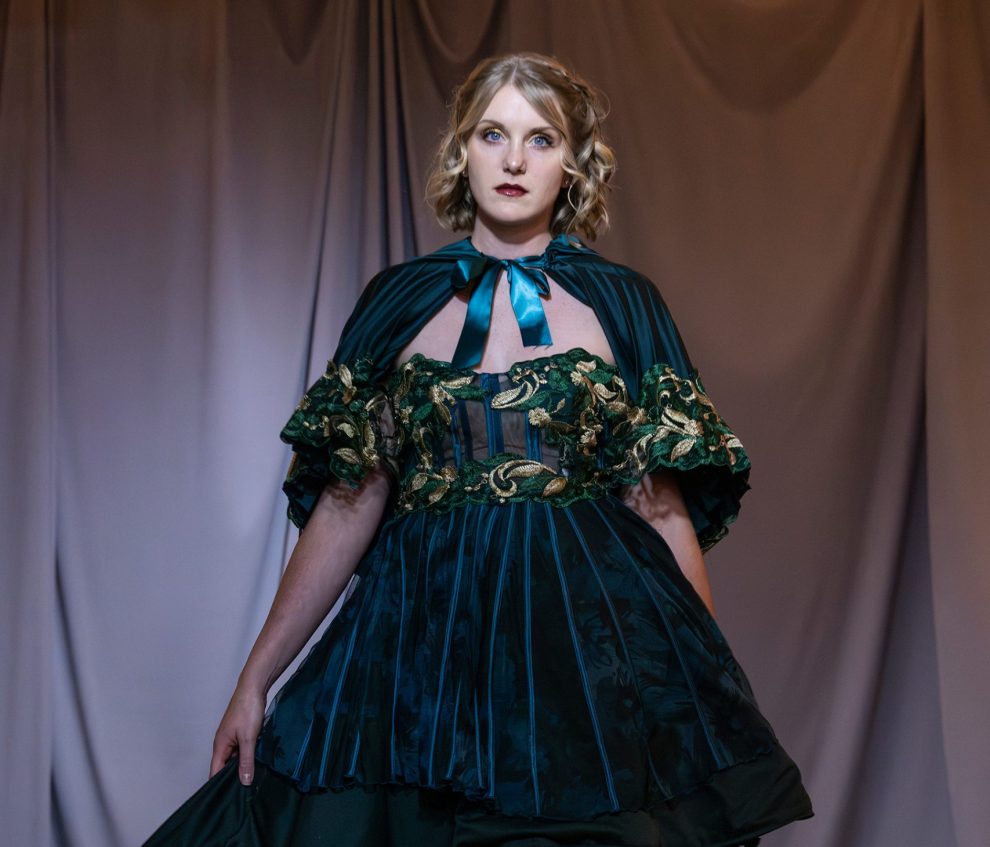
The maestro of convertible fashion turned a thrift-store discovery into a viral sensation, a three-show NYFW partnership with ShopGoodwill.com and—now—a new chapter at Kleinfeld Bridal.
It all started with a $6 dress. Not exactly the opening line one expects from a New York Fashion Week success story, but then again, Evan Hirsch has never been particularly interested in following fashion’s conventional script.
About a year and a half ago, the New York-based designer, best known for his ingenious convertible creations, wandered into a Goodwill store in Manhattan and discovered a somewhat shopworn red Bebe cocktail dress. The garment had seen better days, but Hirsch recognized something worth saving. “Good bones,” as they say in the business.
He purchased it for $6, took it home, worked his magic, added a few fashion flourishes and attached a label identifying the transformed creation as a Bebe/Evan Hirsch upcycled piece. Then came the unexpected twist. Rather than keeping his handiwork or selling it at a designer price, Hirsch returned the dress to Goodwill, where it went back on the rack for its original $6 price tag. Naturally, he documented the entire adventure on TikTok.
Seven million views and counting later, that little red dress had become considerably more valuable than its price tag suggested.
The video caught the attention of a writer at People Magazine, resulting in an exclusive feature that introduced Hirsch’s experiment to millions more. Among those watching was the CEO of ShopGoodwill.com, Goodwill’s nonprofit online marketplace. A phone call followed, then an invitation for Hirsch to become the platform’s resident secondhand fashion expert, along with a partnership that would eventually bring his distinctive approach to New York Fashion Week.
Not bad for a $6 investment.
From the Donation Rack to the Runway
Fast-forward to September, when Hirsch unveiled “New Journeys Through Old Memories,” his Spring/Summer 2027 collection created in partnership with ShopGoodwill.com. Presented at the ILA Penthouse in Chelsea to a crowd packed to the proverbial rafters, the show marked Hirsch’s third NYFW outing with the organization, following one previous runway show and a presentation.
This time, Hirsch sent 30 original looks down the runway, each created using secondhand garments and materials sourced through ShopGoodwill.com. The concept explored memory, reinvention and the possibilities that emerge when clothing that has already had a life is given another one. But if the word “upcycled” conjures visions of crafty DIY projects, Hirsch rather quickly dispensed with that notion.
There was a vibrant blue floral asymmetrical dress exploding in cascading layers, a shimmering gown that moved from delicate blush into midnight blue and a playful black-and-white polkadot creation interrupted by airy tulle. A sweeping black lace gown brought a decidedly darker romance to the mix. What Hirsch presented was not a parade of rescued clothing asking for applause simply because it had been rescued. These were fashion pieces that happened to begin somewhere else.
That distinction matters.
For Hirsch, whose reputation has been built around garments that convert, transform and reveal unexpected possibilities, upcycling feels less like a pivot than an extension of his existing design vocabulary. Transformation, after all, has always been the trick up his very well-tailored sleeve. Why accept a garment’s first incarnation when the second might be considerably more interesting?
Sustainability Without the Lecture
There is another reason the Hirsch and ShopGoodwill.com relationship feels particularly timely. Fashion has spent years talking about sustainability, sometimes so earnestly that even the most environmentally conscientious among us might be forgiven for glazing over.
Hirsch approaches the conversation from another direction. He makes the transformation entertaining.
The clothes do the talking, social media provides the megaphone, and ShopGoodwill.com supplies a seemingly endless treasure chest of raw material. The result makes circular fashion feel less like an obligation and more like the thrill of discovering what something overlooked might become in the right hands.
And the relationship does not end when the final model leaves the runway. Garments from Hirsch’s collaborative shows have been auctioned through ShopGoodwill.com, with proceeds supporting Goodwill’s nonprofit work. More than 85% of auction revenue helps fund workforce development and job placement programs around the country.
This season, the collaboration became even more local. Goodwill Industries of Greater New York and Northern New Jersey joined the partnership, and following the runway show, invited guests headed to Goodwill NYNJ’s Chelsea store for a private shopping event alongside fashion professionals, media and supporters.
Fashion insiders leaving a NYFW runway show to go shopping at Goodwill? There’s a plot twist Anna Wintour might not have seen coming.
From Goodwill to Kleinfeld
Meanwhile, Hirsch’s namesake business is having another kind of New York fashion moment. Following a wildly successful Labor Day weekend trunk show, his collection of bridal capes has officially joined the assortment at Kleinfeld Bridal in Chelsea, the world’s largest bridal store and one of the industry’s most recognizable retail destinations.
The category makes perfect sense for Hirsch. A bridal cape can transform a wedding gown in seconds, taking a bride from ceremony to reception, traditional to dramatic, or understated to entrance-making without changing the dress underneath. For a designer fascinated by the possibilities of transformation, bridal was practically waiting for him.
The Kleinfeld placement also signals something important about where Hirsch is heading. The viral videos and ShopGoodwill.com partnership may attract attention, but behind the clicks is a designer building a business. He is simultaneously operating in secondhand fashion, social media, designer ready-to-wear, bridal and experiential runway presentation without making any of it feel particularly disconnected.
Perhaps that is what makes Hirsch worth watching.
What Comes Next?
Fashion is an industry that spends an extraordinary amount of energy searching for “new,” yet Hirsch has built much of his recent momentum by asking a different question: What if what we need is already here?
A forgotten Bebe dress became a viral phenomenon. Donated clothing became a New York Fashion Week collection. A sustainability experiment became a corporate partnership. Convertible design found its way to Kleinfeld Bridal. And somewhere along the way, Hirsch made millions of people reconsider the creative potential hiding on a secondhand clothing rack.
Evan Hirsch is a designer, certainly. Increasingly, though, Evan Hirsch is also a brand, a concept and a rather clever case study in what happens when old-school design ingenuity meets the realities of a new fashion economy.
All because he saw potential in a $6 red dress that someone else had already given up on.
Now, that is a return on investment.


