


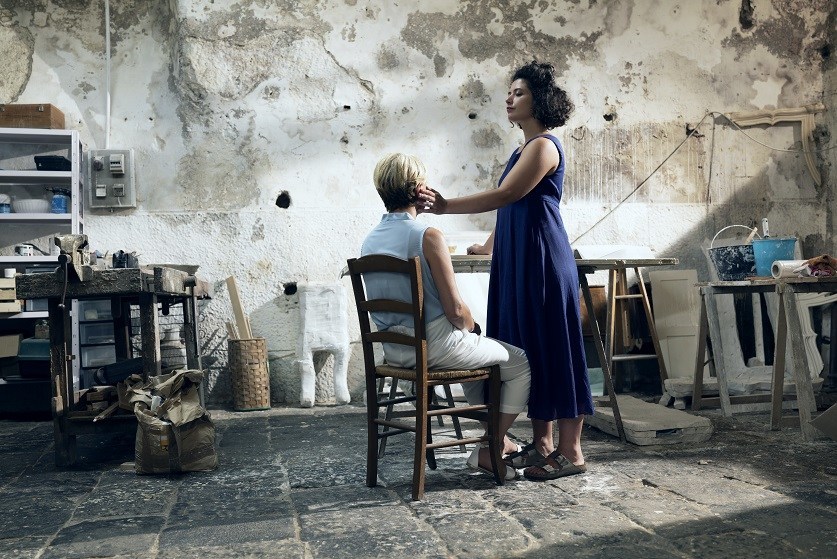
The skincare brand NIVEA is tapping into the connected world of NFTs (non-fungible token) partnering with Italian visual artist Clarissa Baldassarri, to explore and showcase the value of touch through digital art. Clarissa has suffered from temporary visual impairment early on in her career as a painter. This inspired her to rediscover art through touch. Based on the belief that a conscious touch can provide new insight to the world, and that touch should thus be accessible to all, a limited edition of a NIVEA NFT art piece is available for free for the first people interested in it.
Touch is powerful – and it’s free:
With a Nobel prize given to the science of skin receptors and the trending topic of touch deprivation during the pandemic, touch has received more attention lately. However, touch as a sense still ranks lower in most people’s perception. Recent research* concludes that 88% of people would rank sight as their most important sense, followed by hearing. With “The Value of Touch”, NIVEA wants to bring attention to the power of touch, using blockchain-based non-fungible token (NFTs) to discuss the value society currently attributes to it and spark a discussion about how touch can be valuable and powerful, even if freely available to all. NFT technology normally allows people to trade and own high-value tokens like art, collectibles, or real estate via cryptocurrencies and has recently become increasingly popular in the art world. NIVEA’s NFT art will be minted on Polygon, a blockchain that uses proof-of-stake validation, with low power consumption and is optimized for environmentally friendly NFTs. NIVEA is the first mass brand to offer free NFTs that represent “The Value of Touch” with a piece of art directly related to touch through the artist and the creative process behind it.
Touch with purpose:
When loneliness begins to take up more space in people’s lives, human touch and connection to others can make a fundamental difference. “The Value of Touch” is part of NIVEA’s brand purpose “Care for Human Touch to Inspire Togetherness”, launched in January 2021. Through this the brand supports human touch projects to promote the quality of life for people at risk of loneliness, like babies born preterm, visually impaired individuals, elderly with dementia, and girls in vulnerable situations. By 2025, NIVEA aims to invest 20 million Euro in human touch projects globally, with positive impact on the individual health and well-being of more than 150,000 people. Ultimately, each of these project outcomes cater to a strengthened sense of human connectedness and resilience, thereby alleviating feelings of loneliness. “Human touch is a powerful sense,” says Tobias Collée, Global Vice President NIVEA. “It connects us physically and emotionally, to others and to the world around us. We want to support people in their journey to rediscover the world through touch.”
Meet the artist: Clarissa Baldassarri
The artist behind NIVEA’s NFT art piece is Clarissa Baldassarri, an Italian visual artist who suffered from temporary visual impairment early on in her career as a painter. The limitations she experienced inspired her to rediscover art. As part of her exploration of touch and the limits of perception, Clarissa created the NFT artwork using a special raised line drawing kit that consists of a stiff board covered with a layer of rubber and a thin plastic sheet. The piece’s structure invites one to experience it through touch, thus making the physical piece accessible to a visually impaired audience. To create the raised line, Clarissa used a metal awl, an instrument traditionally used in the development of Braille texts. She was given this particular awl by her late friend Cecilia, a blind artist who first introduced her to the concept of seeing the world through touch. A short film produced by NIVEA documents the project and captures the artist’s creation process.
“My relationship with art is experiential and visceral,” says Clarissa. “My relationship with touch has returned to that of a child, when sight is no longer enough, and to know an object you have to touch it, handle it, risk getting burnt, stung or cut, because otherwise you would never discover it.”


