


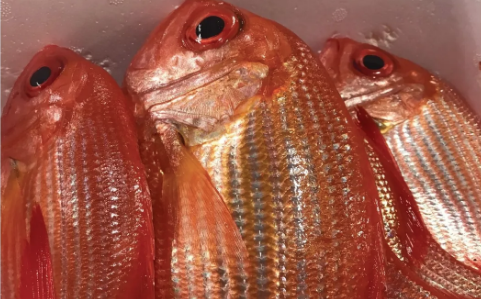
While the restaurants, hotels and clubs close and rest for the night, F. Rozzo & Sons owner and CEO, Louis Rozzo, heads to the Fulton Fish Market every day at 3 a.m. to ensure 300 businesses in New York are supplied with fresh fish and seafood that day.
F. Rozzo & Sons, a NYC wholesale seafood supplier established more than 100 years ago, has been passed down the Rozzo family for four generations. According to a recent study by Cornell University, only 40% of family-owned businesses survive the transition to the second generation. Only 13% survive the transition to a third generation, and a mere 3% of family-owned businesses make it to the fourth generation or beyond.
How F. Rozzo & Sons has been able to successfully transition from generation to generation, according to Louis Rozzo, can be summed up in one word: expansion. Each generation has expanded the Rozzo & Sons business in its own way. Felix Rozzo, the third generation to own and operate the business, put F. Rozzo & Sons on the map by expanding into notable French restaurants such as Le Cirque and Lutèce. From there, current owner Louis Rozzo expanded into hotels and clubs, taking the inherited $6 million business to the $20 million operation it is today. Today, Rozzo supplies approximately 300 businesses, including restaurants such as Daniels and Jean-Georges and hotels and clubs such as the Carlyle and the Princeton Club. Making around 100 deliveries, Rozzo supplies Manhattan, Queens and Brooklyn with 15,000 to 20,000 pounds of seafood each day.
How seafood gets from water to table, however, has come under significant scrutiny over the last several years. From overfishing to environmental concerns, the $10.58 billion U.S. industry (according to Statista) is pressured to reassess its practices for a more sustainable future.
Rozzo defines sustainability as “not taking too much out of the water to the point where a species’ future is compromised.” Overfishing practices around the world have destroyed biodiversity in certain parts of the ocean as well as the fishing communities that depend on the sea.
How seafood is caught and how it is reported to federal regulators plays a crucial role in warding off overfishing. United States federal regulations cap the amount of a species a fisherman can catch over a certain period. Net fisherman put down huge nets that catch everything in that portion of the sea. An exorbitant amount of “incidental catch” or “bycatch” results. This is when fisherman catch and throwaway seafood that they do not want or cannot sell. The National Oceanic and Atmospheric Administration (NOAA) defines bycatch as “discarded catch of marine species and unobserved mortality due to a direct encounter with fishing vessels and gear.” Bycatch can be anything from fish to seabirds or dolphins.
Rozzo notes that line fishing or gillnet fishing is a more sustainable practice because both practices reduce the amount of bycatch astronomically. He avoids buying fish caught by net fishing as much as possible. Although this is more closely monitored through federal regulations, avoiding net fishing becomes more difficult when purchasing imported fish, which is partly why Rozzo buys local as much as possible.
“Higher federal regulations don’t mean that you can’t get the fish you want. You can, you just have to pay more for it,” explained Rozzo.
On average, NOAA estimates that approximately 70% to 85% of seafood in the U.S. is imported. Rozzo, however, is a self-acclaimed specialist in “fresh fish.” In order to provide the freshest fish, he has to get it from water to table as fast as possible. This means avoiding imported fish and buying from local fisheries. Rozzo gets 80% of his seafood from Long Island, New Jersey and Massachusetts. Much of the 20% remaining is due to meeting the demand for species such as bronzini, which can only be found in Greece.
The difference in local and imported fish is visible. Picking out swordfish in the Fulton Fish Market Tuesday morning, Rozzo immediately chose the swordfish he wanted and explained that he could tell it was the freshest because of the deep red color of the veins, as opposed to the other two beside it whose colors were more muted. When he asked where each of the fish was from, the swordfish he selected was caught in Carolina, while the other two were caught in Brazil. A fish from Carolina can be caught and served at a restaurant within 24 hours. A fish from Brazil, however, can be out of water for 15 days before it reaches the plate.
Rozzo hopes to keep the business in the family for generations to come, but expanding for survival might look a little different in the next generational transition. As consumers become more conscious of their environmental impacts, fish purveyors may need to focus less on expanding the number of businesses they serve and more on reducing their carbon footprint in order to meet the coming wave of eco-conscious consumer demands.


