


When thinking about travel and those “bucket lists” or ultimate destinations where people have always desired to go, the location that often elicits the most emotion is just a single word: “Antarctica.”
The seventh continent on our planet, comparable in size to the United States, has a wintertime population of around 1,000 and is surrounded by the Southern Ocean. Antarctica is typically accessed by sea from the tip of South America across the renowned Drake Passage, and is both simultaneously awe-inspiring and off-putting to a number of seasoned travelers.
Unlike the Arctic Circle in the north, which can be directly accessed by air, Antarctica is treaty-regulated by international law and is kept as pristine as possible to enable scientific research on the ecosystem and climate conditions that affect us all. The fact that the South Pole was discovered barely a century ago adds to the mystery of the continent of wind, ice and snow.
Visiting Antarctica is typically done during the spring and summer season (from November onwards), as a winter visit would be too harsh, not to mention dangerous. Thinking about packing for the expedition requires care and should be thought of as a combination of casual clothes and apres-ski layering for the daytime expeditions. Also do not forget sunglasses, sunscreen and a camera with a landscape and/or zoom lens for wildlife – this is unlikely to be a trip that you repeat, and the photographic opportunities are immense.
The Drake Passage – typically a one-to-two-day sea crossing from South America – is often nicknamed the “Drake Shake” or the “Drake Lake,” referring to how unpredictable ocean conditions can be, which can lead to either a serene passage or a fearsome two days hanging on as the ship’s crew guide the vessel safely through. This comes after traveling from North America or Europe halfway around the globe to South America and then connecting to another flight to get to the southern tip of the continent – all this before crossing the passage.
Luxury cruise line Silversea thought about this and how valuable time can be for its passengers. Silversea has now figured out how to marry their latest expedition ship, the all-new purpose-built Silver Endeavour, with an Antarctica air-bridge from South America into King George Island (about half a day’s sailing from the Antarctic Peninsula), the most accessible region of the continent in spring and summer time. Flying conditions (particularly visibility) play a big role in the timing of the flights across the Antarctic air-bridge.
Once landed at King George Island wearing the expedition gear supplied by Silversea on the flight, you just have to be guided into a zodiac boat on the beach in full expedition clothing and journey to the ship. Just arriving at the Silver Endeavour is an expedition in itself, and a preview of the excitement to follow.
Even travelers familiar with cruise travel may well be thinking, “What is an Expedition Cruise?” or “What makes Antarctica different from Alaska or the Arctic?” These are fair questions, and having experienced others, I would suggest that Antarctica is truly a unique experience.
Expedition cruise vessels are typically highly capable for the task and more compact than a regular cruise ship in many cases. Unlike a cruise to the Mediterranean or Caribbean where the itinerary involves a port visit every day (either docked alongside or a tender ride away), the expedition cruise is all about flexibility. Nature determines the schedule, and the expedition ship has a highly experienced team who decides each day where is safe to land and reconnoiter the route for an on-land hike.
Antarctica is fantastic. What distinguishes it perhaps is not just how wild and remote it feels – for example there is absolutely no sound or smell other than the wind and occasionally the penguins. You feel like you are a visitor to another world. There are no aircraft trails in the sky, no docks, paved roads, clear pathways or basically anything other than nature and the wildlife. The rules for visitors also add to the feeling of being from another planet – maintain distance from any wildlife, don’t sit down or disturb the natural environment.
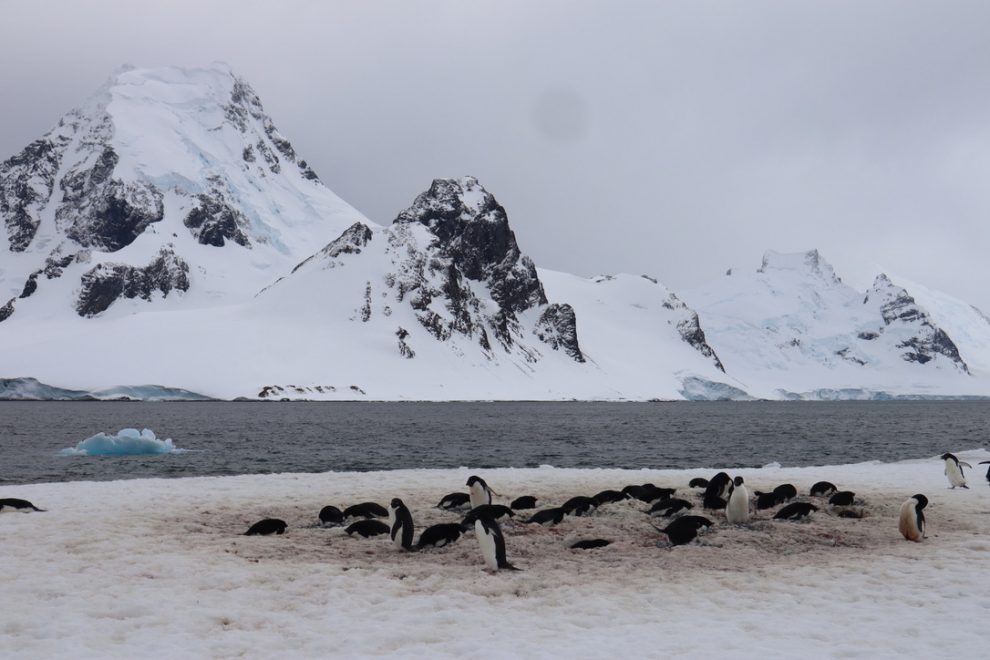
The varieties of penguins could well be the highlight of anyone’s visit – the Gentoo, Chinstrap and Adele are amazing to watch, providing endless entertainment, partly because of their having no interaction with people. Whales swimming, glaciers calving into the sea, avalanches in the mountain ranges above – it feels remote, wild, primal, God’s Country – with the benefit of a cordon bleu meal, stiff cocktail, hot shower and clean sheets in the evening – something we imagine that the great explorers dreamt of more than once.
Whilst the ship is compact, do not think for one moment it is not luxurious. Suites are well appointed and extremely comfortable. Dining options cover the spectrum with the high-end option being the La Dame restaurant. The Otium spa offers a range of treatments to relax after a day’s expedition ashore. There is even a gift shop containing useful items of clothing, expedition necessities and even the only bear you will find on this continent (at least a plush toy version of it).
For those who need to keep in touch with home, complimentary wireless internet connectivity is very good. However, the connection can be affected locally from time to time, which, given the location at the bottom of the world and satellite positioning, is understandable.
The focal point of the ship’s entertainment is the nightly briefing where the expedition team provides a brief on the day and what potentially lies ahead, as well as lectures from experts in the fields of oceanography, ornithology and history to contextualize what you have seen and will see in the coming days.
Although the itineraries can seem short, they offer a window into a unique continent and a genuine once-in-a-lifetime travel experience; and who knows, maybe it will grant you the taste for more!
For more details, please visit silversea.com


