


The Frist Art Museum presents Journey through Japan: Myths to Manga, an exhibition that shows how imagination, playfulness, and the environment have inspired Japan’s folklore, design, and technology through the centuries. Organized by London’s Victoria and Albert Museum, Journey through Japan will be on view from October 25, 2024, through February 16, 2025, in the Frist’s Upper-Level Galleries.
Designed with younger audiences in mind, yet fun and fascinating for all ages, this exhibition offers a colorful, atmospheric exploration of Japan’s visual culture. Divided into four thematic sections—Sky, Sea, Forest, and City—it presents more than 150 historic and contemporary objects, ranging from netsuke, origami, and woodblock prints to animated movies, graphic novels, and robots.
“Dynamic and innovative, this exhibition celebrates Japanese art and design of many different time periods,” writes Frist Art Museum curator at large Trinita Kennedy. “Ukiyo-e prints by Hiroshige and Hokusai from the 1800s are displayed alongside games and youth street fashion from the 2000s.” It demonstrates how works such as Studio Ghibli’s iconic animation and Shigeru Mizuki’s timeless manga have drawn inspiration from Japan’s folktales to create beloved characters in pop culture.
Journey through Japan also spotlights the current generation of Japanese artists and designers such as Mariko Kusumoto, Keita Miyazaki, and Noritaka Tatehana, as well as the creativity of young people. The latter includes a poignant installation of one thousand paper cranes—a symbol of remembrance from the Hiroshima Peace Memorial Park made by school children.
The exhibition begins with the section titled Sky, which shows how artists through the ages have drawn inspiration from the sun, stars, and moon and the stories that surround them. Objects include a woodblock print by nineteenth-century artist Utagawa Kunisada depicting the legend of the Shintō sun goddess Amaterasu. The tale of the selfless Rabbit in the Moon, famous for busily making mochi rice cakes, is represented, as is the story of the interstellar romance between the Cowherder and the Weaver Princess, told with the modern plushies of Sanrio’s much-loved Little Twin Stars.
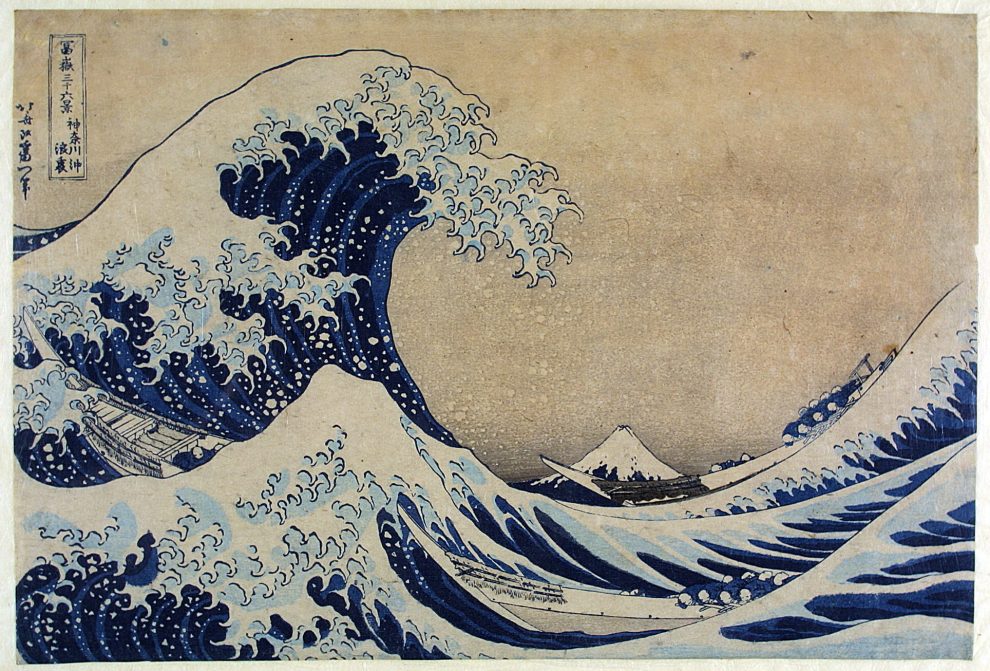
In the second section, Sea, Utagawa Hiroshige depicts the Seven Gods of Fortune, revered as symbols of happiness, luck, and prosperity, arriving in their treasure ship while a fisherman’s festival robe expresses wishes and thanks for bountiful catches. The dangers of the sea are represented in some of Japan’s most famous artworks, from Katsushika Hokusai’s Under the Wave off Kanagawa to the Studio Ghibli film Ponyo, the story of a goldfish princess who longs to be human.
The third section, Forest, explores mythical stories of shapeshifting creatures and heroes with superhuman qualities that Japan’s dense forests inspire. The Tale of the Bamboo Cutter, about a girl found in a bamboo stalk by a friendly woodcutter who raises her as his own, is illustrated with a painted wooden kokeshi doll and in Studio Ghibli’s cinematic retelling, The Tale of the Princess Kaguya.
With a focus on urban life, the final section, City, introduces the culture of kawaii (cuteness) and the global phenomena that are anime, gaming, and manga. Objects including Pokémon and Tamagotchi toys, a Hello Kitty rice cooker, and a manga-inspired Comme des Garçons dress are displayed next to Transformers action figures and futuristic robots.
Sparking social interaction, creativity, and movement, the exhibition invites museum guests to play Japanese taiko drums, create origami, illustrate and display their own manga story, read about Japan in a forest-themed book nook, compose a haiku about art, and more.
In Martin ArtQuest, the Frist’s award-winning art-making space, new stations will concentrate on character design, storytelling, festivals, folklore, and more. Traditional woodblock printmaking tools as well works by Texan artist Daryl Howard, who trained in Japan under master printmaker Hodaka Yoshida, will be on display.


