


Joanne Stone, MD, MS, recently had a long talk with a 45-year-old friend who mentioned that she was facing some new challenges. Normally vibrant and stylish, with a career in the arts, she had gained some weight, had trouble sleeping and even exhibited a bit of brain fog, when she said, “I need that thing for my phone. What is it again? Oh, right, the charger.”
Dr. Stone immediately thought, “She probably doesn’t even realize that she’s in perimenopause.”
“Like so many women, my friend was accepting and even normalizing her symptoms,” said Stone, the Ellen and Howard C. Katz chair in obstetrics, gynecology and reproductive science at the Icahn School of Medicine at Mount Sinai in New York City. “At that time, she had no idea we can do things that could make her feel better.”
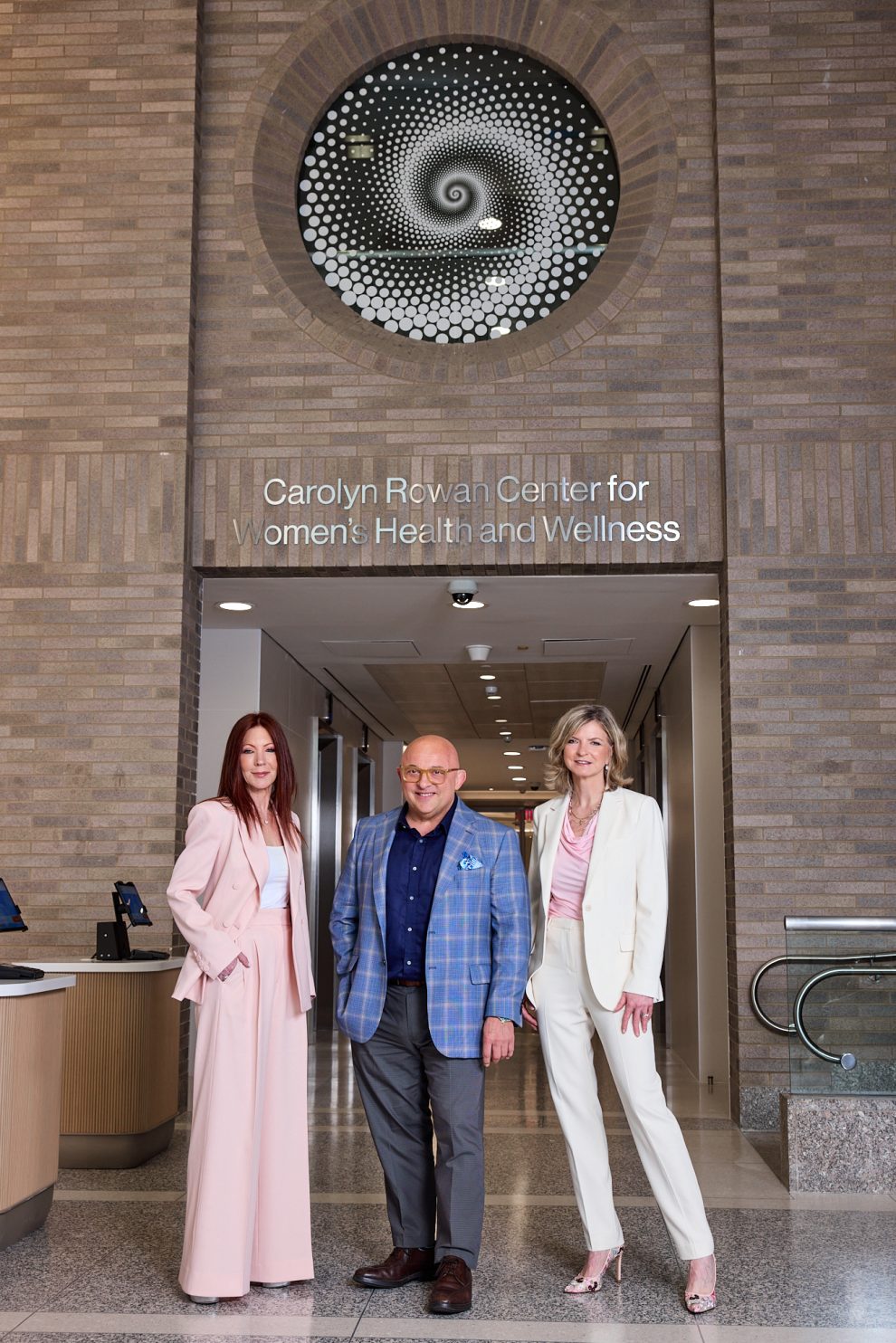
Stone is a leading specialist in maternal-fetal medicine but deeply committed to women’s health at all stages of life. Women who are looking for answers or even the right questions to ask are exactly who Stone had in mind when she helped create the Carolyn Rowan Center for Women’s Health and Wellness. The innovative facility opened at The Mount Sinai Hospital in May 2026. Spanning 11,000 square feet on the Upper East Side of Manhattan, it is a new kind of clinical destination that brings together more than a dozen specialties, structured care pathways and embedded research, all under one roof.
“It’s really hard for people to navigate their own health care, particularly if they’re going through a life stage such as menopause,” Stone said. “If they need to see a gynecologist, they might call and get an appointment six months down the road or have to try for something sooner. The same could happen with any specialty appointment.”
To ease this burden on patients, the center has a signature service—patient navigators—to make appointments for them with specialists within the center and across the Mount Sinai Health System.
“Most women find themselves navigating care with different clinicians on their own, and we are closing that gap,” Stone said.
Integrated and Personalized Care
The breadth of services offered and how care is delivered make the Rowan Women’s Health Center unique. “The center acts as a hub that ties together integrated, personalized care and education to empower each woman we serve,” said Anna Barbieri, MD, clinical strategy leader for the Rowan Women’s Health Center and a long-time specialist in menopause and integrative medicine.
The center gives women on-site access to obstetrics and gynecology, cardiology, endocrinology, gastroenterology, orthopedics, behavioral and mental health, pelvic floor physical therapy, sexual medicine and nutrition, along with diagnostics such as bone density testing, body composition analysis and gynecologic ultrasound.

Many women choose to follow one of the center’s innovative MyPath care pathways. These curated, time- limited programs are designed around a specific life stage or health theme. The first, MyPath Balance 40+, addresses the hormonal and cardiometabolic transitions of midlife. A second pathway, MyPath Moms, will focus on postpartum care. That pathway launches this summer, and additional pathways are in development for women over 60, the journey before and after pelvic surgery, and a healthspan pathway focused on adding healthy, active years to life.
A patient with experiences like Stone’s friend would be referred to MyPath Balance 40+. Her six-month care experience would include time with a gynecologist/ menopause specialist, a cardiologist, a dietitian and an orthopedic specialist with focus on bone and joint, and muscle health as well as, if needed, a pelvic floor therapist or behavioral health practitioner. Hormonal and nonhormonal therapy, lifestyle interventions and weight, blood pressure and cholesterol management may also be included, depending on personal and medical needs and preferences.
“The center brings together holistic specialty care, evidence-based strategies and clinical research within a single, coordinated model, moving beyond fragmented, episodic treatment toward personalized, longitudinal care,” said Francesco Callipari, MD, medical director of the Rowan Women’s Health Center. “Patients are guided through each step of our clinical care pathways, and we collect data at the start and completion of their journey so we can show the outcomes and improvements made within a women’s program that has never before been offered in an academic center or in such a unified way.”
A Restorative Space
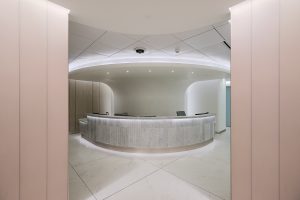
The center was created through a comprehensive renovation on the campus of The Mount Sinai Hospital to provide a modern, calm and restorative space that includes 15 exam rooms, three pelvic-floor therapy rooms, two outpatient procedure rooms, a bone density scanner room, four ultrasound rooms, a nonstress testing room, a changing suite, conference room and waiting area.
Together with Barbieri and Callipari, Stone built the center from the ground up, with welcome input from Carolyn Rowan, a member of the Mount Sinai boards of trustees, who has a background in fashion design. The center basks in a pink illuminated entry wall and features original artwork that Ms. Rowan donated to the space.
For women who need multiple services in a single visit, a dedicated changing suite, with lockers and comfortable, well-fitting robes, allows them to move between appointments with ease. “You can change your clothes, as you do at a beautiful spa for a facial and a massage,” Stone said.
The leaders of the Rowan Women’s Health Center also host a lively and informative podcast titled HERology, which is dedicated to the science and practice of women’s health. Its goal is to help listeners navigate their lifespans with empathy, clarity and confidence.
Advocating for Women
Stone’s own pathway to becoming a lifelong provider and advocate of women’s health began at an early a
ge. She grew up on Long Island, the youngest of four daughters, with a father who was a psychoanalyst and a mother who was a teacher. She always knew she wanted to be a doctor, and whose health she wanted to protect. “I was always an advocate for women,” she said. One early case in point: In junior high school, she and her best friend marched to the principal’s office to demand the right to take shop class—then the purview of boys only—instead of home economics. They won, and the classes became coed thereafter.
Her medical training led her to maternal-fetal medicine, the high-stakes care of complicated pregnancies, which remains her specialty and passion today.
“Women often focus only on their children or their parents, and not their own health,” Stone said “We want to empower them to take charge of their health and focus on themselves. We are truly changing the paradigm of women’s care, not by telling patients what to do but by partnering with them to arrive at a thoughtful plan for wellness and treatment that maximizes their long-term health.”
“If this model can be adapted into other health systems, where health is prioritized and support is accessible, we’re going to see better outcomes for women across the lifespan.”
Click on this image below to watch HERology: