


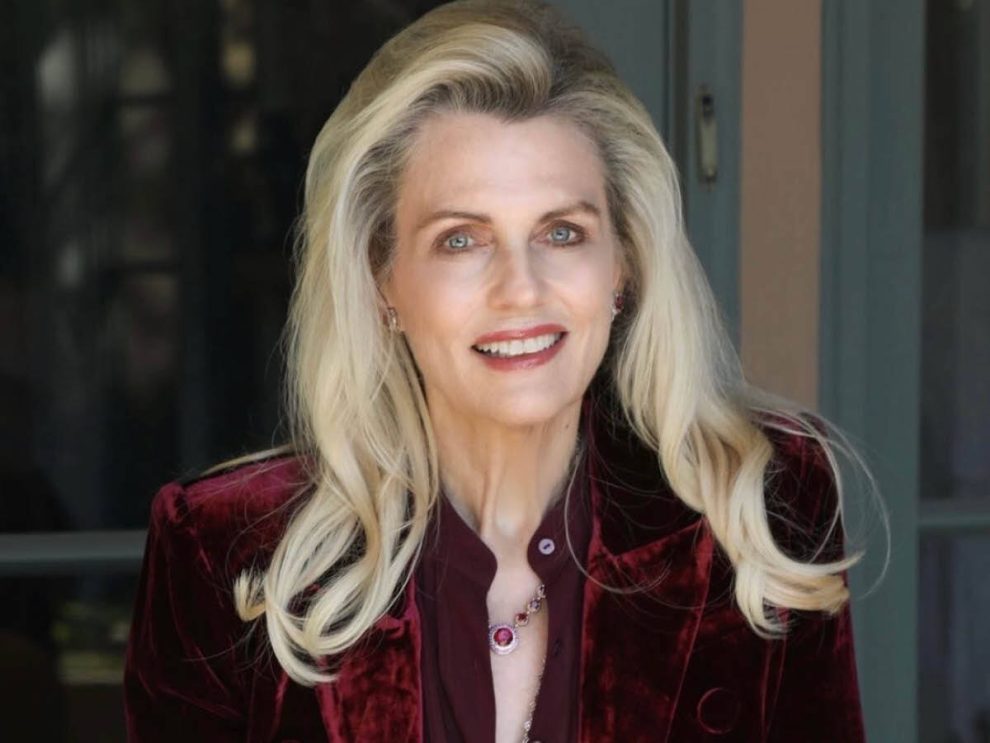
Nancy Davis has spent much of her life refusing to accept the word “impossible.” Diagnosed with multiple sclerosis at 33 and later devastated by the loss of her son Jason to addiction, the philanthropist, activist and entrepreneur transformed personal tragedy into two ambitious missions: changing the future of MS treatment and reshaping the national conversation around addiction.
Today, through Race to Erase MS and Cure Addiction Now, Davis has become one of the most determined advocates in medical research and philanthropy, someone who believes science, collaboration and compassion can accomplish what despair never will.
“Sometimes you’re just thrown into this crazy world,” Davis said. “You can sit there and feel really bad for yourself, or you can do something. You have to do something.”
That philosophy has defined nearly every chapter of her life.
Born into one of America’s most prominent business families, Davis inherited both entrepreneurial drive and a deep commitment to giving back. Her late father, billionaire Marvin Davis, built a vast empire spanning oil, entertainment, hospitality and real estate, including ownership stakes in 20th Century Fox, the Beverly Hills Hotel, Aspen Skiing Company and Pebble Beach Corporation.
But it was her mother, philanthropist Barbara Davis, who perhaps provided the clearest blueprint for Nancy’s future. Barbara Davis founded the Carousel of Hope Ball in 1978, turning it into one of Beverly Hills’ most glamorous charitable events while raising millions for juvenile diabetes research and treatment.
Nancy Davis would eventually build her own charitable empire, though not by choice but by necessity.
A Deeply Personal Cause
In 1991, Davis received devastating news. Doctors diagnosed her with multiple sclerosis, a chronic neurological disease that attacks the central nervous system. At the time, MS research offered little reassurance.
“When I was diagnosed, I was told there was no cause, no cure, no medications, no treatments whatsoever,” Davis recalled. “I was told I’d never walk again and that the most I could look forward to was operating the remote control on my TV set.”
Rather than surrender to fear, Davis sought second opinions from specialists across the country. What she discovered frustrated her almost as much as the diagnosis itself: many of the nation’s top MS researchers were working in isolation, often unknowingly duplicating one another’s efforts.
“I found out the best and brightest doctors from Harvard, Yale, Johns Hopkins, UCLA, USC, the Cleveland Clinic, they were all doing very similar research, but they weren’t communicating,” she said. “I thought if I could put the best and the brightest together as a team, we would find a cure much quicker.”
That idea became the foundation of Race to Erase MS, which Davis launched in 1993. Central to the organization is its Center Without Walls program, which requires funded researchers to openly share both successful and failed research findings.
“The bad research is just as important as the good,” Davis explained. “Maybe a dosage is too high. Maybe there’s a dangerous side effect when combined with another compound. If doctors share that information, others don’t waste years repeating the same mistakes.”
The collaborative model helped accelerate scientific progress in the field. When Davis was diagnosed, there were no FDA-approved treatments for MS. Today, there are more than 25.
“For someone diagnosed today, there’s so much more hope,” Davis said. “When we started, people thought this disease was impossible. Now, I truly believe we will find a cure.” erasems.org
Bringing People Together & Fostering Dialogue
That momentum will be celebrated June 5 at the 33rd annual Race to Erase MS Gala at the Fairmont Century Plaza in Los Angeles. Long considered one of Hollywood’s premier philanthropic events, the gala has attracted stars including Neil Patrick Harris, Kathy Hilton, Kelly Osbourne, John Travolta, and Tommy and Dee Hilfiger.
This year’s event will feature a performance by Snoop Dogg, a fashion show by L’Agence, and Jesse Palmer as master of ceremonies.
“We always want it to feel exciting and fun,” Davis said with a laugh. “I think I’ve thrown 33 weddings at this point.”
The day after the gala, Davis hosts a medical symposium where the researchers funded by Race to Erase MS gather to present their latest findings. Patients can attend in person or online, ask questions directly to doctors and learn about emerging treatments and therapies.
“It’s really hard to get that many brilliant MS researchers into one room,” she said. “The world of MS is evolving so quickly that patients need access to the newest information.”
Reshaping the Addiction Conversation
But even as Race to Erase MS became one of the country’s most influential MS charities, another deeply personal battle was unfolding in Davis’s life.
Her son, Jason Davis, struggled with opioid addiction for years before his passing in 2020 at age 35.
“He was an amazing son,” Davis said. “Smart, funny, compassionate. He sat in every doctor’s meeting with me when I had MS and pushed doctors to work harder because he didn’t think his mother should be sick.”
Jason’s own experiences with addiction inspired a second mission.
Before his death, he challenged his mother with a blunt question: Why had addiction treatment barely evolved in decades?
“He said, ‘Mom, this is crazy. AA works for some people, but what about everybody else?’” Davis recalled. “The system had stayed almost exactly the same for 80 years.”
In response, Davis founded Cure Addiction Now in 2018, an organization focused on funding basic science research into addiction and substance use disorder.
Unlike traditional recovery programs centered primarily on behavioral treatment, Cure Addiction Now funds research into medications, therapies, vaccines and neurological interventions aimed at treating addiction as a biological disease rather than a moral failing.
“It’s genetics. It’s chemistry. It’s biology,” Davis said. “Some people can try a drug once and become addicted immediately. Others never do. We have to stop shaming people and start treating this like the disease it is.”
Among the initiatives Davis says show enormous promise is an experimental vaccine designed for opioid addiction.
“The idea is that you could take this vaccine once and never crave opioids again,” she explained. “And if you did take opioids, they wouldn’t get you high.”
Her organization is also supporting research into non-addictive sleep medications that may help people in recovery avoid relapse during early sobriety, when insomnia often becomes overwhelming.
“We’re trying to solve problems people don’t talk about enough,” Davis said. “If someone can’t sleep for days, they relapse. We need real medical solutions.”
Equally important to Davis is dismantling the stigma surrounding addiction.
“If I called a friend and said I had MS, they’d bring flowers,” she said. “If I called and said I was addicted to drugs, they’d say, ‘Go to rehab and call me when you get out.’ We push people away instead of helping them.” cureaddictionnow.org
Looking to the Future
That mission has expanded beyond medicine into storytelling. Davis is currently writing a book about grief and addiction inspired by Jason’s writings and their relationship. She is also producing a short film exploring addiction through the story of two sisters, one a movie star, the other battling substance use disorder.
“The whole purpose is to take away shame,” she said. “People need to understand what this disease really looks like.”
Even Davis’ jewelry line, Peace & Love by Nancy Davis, carries symbolic meaning. One recurring motif, the teddy bear, has become associated with Jason’s legacy and Cure Addiction Now’s message of compassion.
“Instead of pushing people away,” she said, “we embrace them.”
Despite decades of fundraising galas, advocacy work, research meetings, and public appearances, Davis remains intensely hands-on. She still speaks regularly with doctors, researchers, patients and families.
And while many would have retreated after enduring so much personal pain, Davis continues to move forward with relentless energy.
“If we keep people talking, collaborating and caring,” she said, “we get closer. That’s how this started. And that’s how we’ll finish it.”
By Jeremy Murphy


