


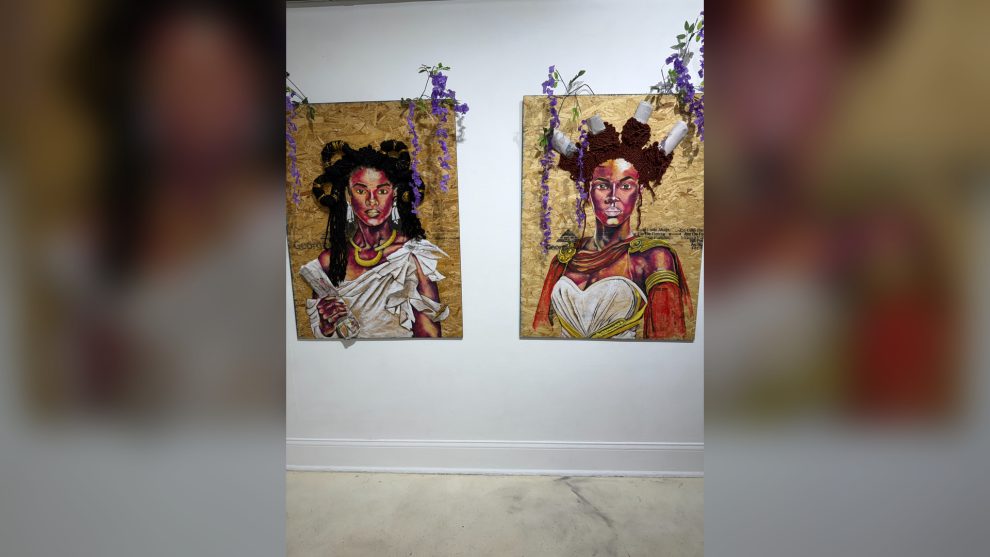
Brooklyn-based visual artist Afrocentric Keyy, also known as Kiarra Elliott, presented her third solo exhibition, Garden of the Nine Muses, at Seven House Gallery in Brooklyn on July 17 and 18, 2026.
The two-day exhibition featured nine large-scale oil portraits created on reclaimed wood, with each work transforming one of the Greek Muses into a living, multifaceted Black woman. Rooted in memory, lineage, creativity, cultural identity and divine femininity, the collection invited audiences to consider one central question:
What if the Muses had always looked like us?
For more than thirteen years, Afrocentric Keyy has created portraiture centered on Black identity, ancestry and cultural memory. Her artistic practice, which she describes as Contemporary Afro-Realism, combines richly layered oil painting with reclaimed materials to examine the relationships between history, identity, spirituality and transformation.
The reclaimed wood serves as more than a canvas. Its knots, rings, scars and natural grain mirror the structure of human DNA, carrying visible evidence of growth, endurance and time beneath every painted figure. For Elliott, each brushstroke becomes an act of ancestral remembrance, honoring the lives, stories and cultural traditions that continue to shape the Black diaspora.
Throughout the exhibition, the nine Muses represented history, music, dance, love, tragedy, comedy, astronomy, poetry and sacred thought. Rather than presenting them as distant mythological ideals, Elliott grounded each figure in the beauty, resilience, complexity and lived experiences of Black women across the diaspora.
Each Muse’s hairstyle was chosen with intention, using braids, locs, natural textures and Bantu knots as visual languages of ancestry, identity and cultural memory. Throughout the series, hair becomes more than adornment—it serves as a bridge between mythology and the living traditions of the Black diaspora.
Garden of the Nine Muses encouraged visitors to move beyond simply viewing the artwork and instead enter a space shaped by reflection, storytelling, imagination and creative discovery. The exhibition began with an opening-night unveiling and continued with a slower, more intimate Saturday immersion, allowing guests to engage more deeply with the collection and its themes.
Representatives of the CFC Foundation attended the exhibition to show their support for Afrocentric Keyy, the local creative community and the continued growth of Black artists. The Foundation’s presence reflected its commitment to uplifting creatives and recognizing the natural connection between art and fashion as powerful forms of cultural expression, storytelling and representation.
By supporting community-based artistic events, the CFC Foundation seeks to help bring greater visibility to artists, designers and other creatives whose work celebrates heritage, identity and diverse cultural narratives.
Ultimately, Garden of the Nine Muses asks viewers to reconsider where inspiration comes from—and to recognize that perhaps the Muses have always been among us.


